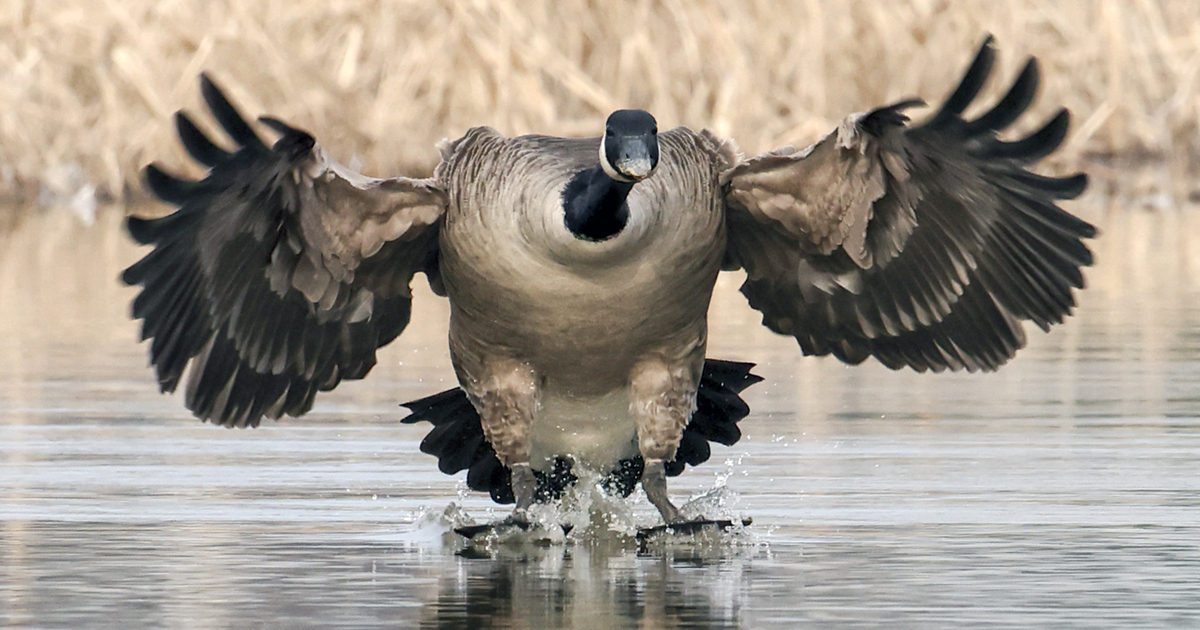
“North Dakota saw a big push of geese over a few days, just about every species of goose you can imagine — Canada geese, cacklers, light geese, and specklebellies — and we finally saw a good push of mallards as well,” said Mason Ryckman, a migratory game bird biologist with the North Dakota Game and Fish Department.
A cold front and strong northwest winds drove large numbers of waterfowl and sandhill cranes south through the Central Flyway over the weekend, Ducks Unlimited reported. The movement pushed birds from the Prairie Pothole Region into South Dakota and Nebraska, where ice on smaller waters concentrated flocks on larger lakes and reservoirs.
In South Dakota, Bruce Toay, manager of conservation programs for Ducks Unlimited, said hunters observed a similar arrival of new birds across the eastern half of the state. “It certainly was a big migration event over the weekend. Lots of light geese, Canada geese, ducks, and a surprising number of sandhill cranes flying over,” Toay said. “Ice is the big concern, but the larger lakes remain open for now.”
Farther south in Nebraska, Jeff Drahota of the U.S. Fish and Wildlife Service’s Rainwater Basin Wetland Management District said water conditions in the eastern basin look favorable for attracting migrants. “Hunting pressure is pretty high, though, and the birds are already responding by moving to areas of refuge,” Drahota said. He believes a large movement of mallards into Nebraska has not happened yet.
Hunter and waterfowl photographer Doug Steinke agreed.
“I know that there are hunters who are shooting mallards on the rivers here in central Nebraska, but they’re just not down here in huge numbers yet. There are some new ones starting to trickle in, however,” Steinke said.
Ryckman said temperatures are expected to moderate this week, which he hopes will keep larger waters open and give hunters more time to pursue the birds that have arrived.
Keep reading

Nebraska Beats Purdue to Reach Big Ten Championship Match
Top-ranked Nebraska overcame a 1–0 deficit and 19 hitting errors in the first two sets to beat Purdue...

Fulton County Judge Orders 2020 Ballot Copies Turned Over to Georgia State Election Board
A Fulton County judge ordered the county to hand over digital copies of 2020 ballots and election records...

Virginia May DeLaughter, 88, Former Unarco Employee, Dies
Virginia May DeLaughter died on Thursday at 2 p.m., at the age of 88, with her grandchildren by...

Sutherland Scores 21 as Green Bay Holds Off Kansas City 77-72
Isaiah Sutherland scored 21 points to lead Green Bay to a 77-72 victory over Kansas City on Tuesday...