
Hundreds of flights were delayed at Denver International Airport on Saturday after a cold front brought high winds and snow to the metro area, prompting the Federal Aviation Administration to briefly impose a ground delay program.
As of 5 p.m., 506 arriving and departing flights had been delayed and five had been canceled, according to flight-tracking service FlightAware.
The FAA issued the ground delay about 4 p.m., citing wind in the Denver area, and lifted it by 5 p.m. The program assigned controlled departure times to Denver-bound flights at their origin airports to match the reduced arrival rate controllers could safely handle. While departures from Denver generally continued, overall airport throughput dropped, causing delays both in and out of the hub.
Southwest Airlines recorded the most delays with 229 flights, followed by SkyWest with 120, United Airlines with 85, Frontier Airlines with 23, and American Airlines and Key Lime Air with 15 each. Nine other airlines delayed between one and eight flights each. SkyWest canceled three flights and United canceled two.
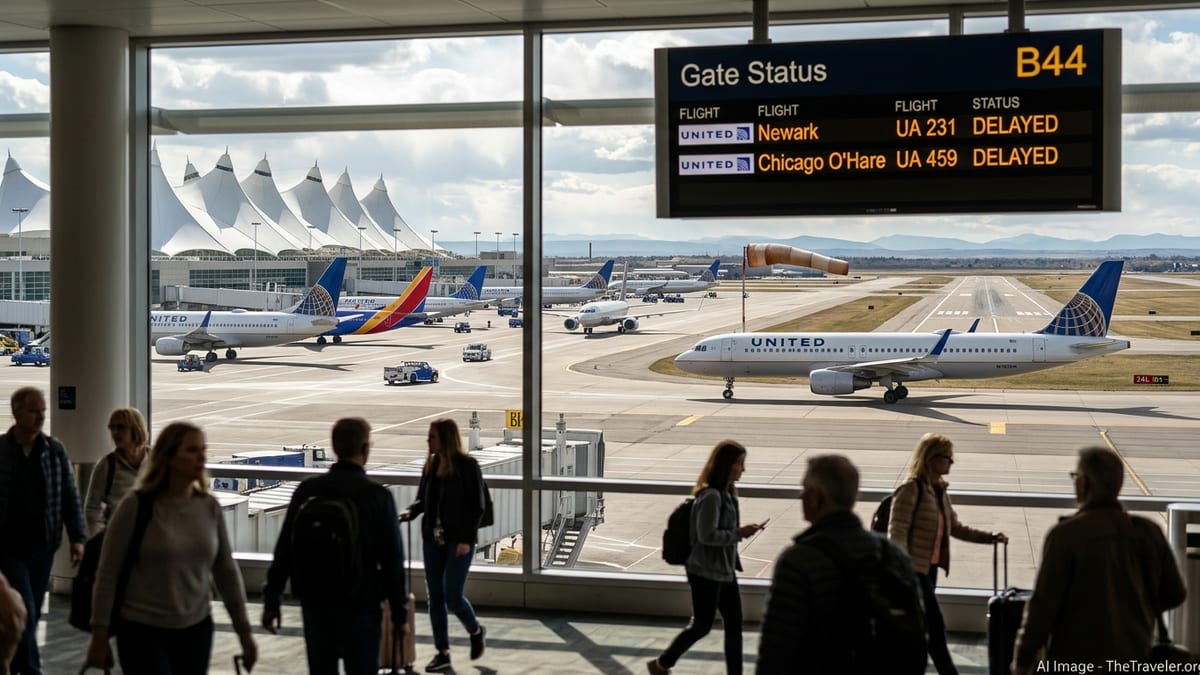
The National Weather Service had placed Denver and much of the Eastern Plains under a high wind warning until 5 p.m., forecasting sustained winds of 30 to 40 mph with gusts up to 60 mph. Denver International Airport, situated on exposed high prairie east of the city, is particularly vulnerable to crosswinds, low-level wind shear and turbulence on approach and departure in such conditions.
The FAA confirmed the constraint was driven by wind and weather rather than any failure of airport infrastructure, navigation equipment or air traffic control systems. Weather-driven restrictions affect all airlines simultaneously and limit rebooking options, especially on busy weekends when load factors are high.
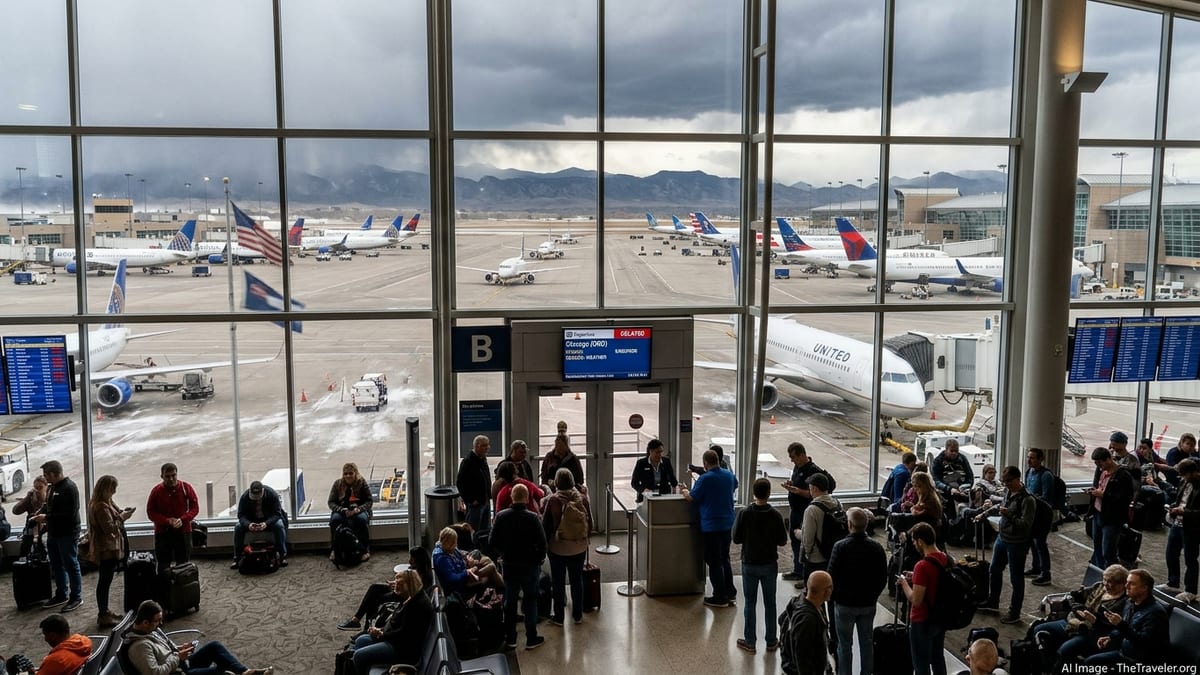
Regional operators serving smaller communities along the Front Range and neighboring states reported significant schedule adjustments. Because these flights rely on tight aircraft and crew rotations, a delay on one sector can cascade into subsequent segments. Travelers on short hops into Denver sometimes faced disruptions far exceeding their scheduled flight time as aircraft were held at departure points until arrival slots opened.
On longer routes from coastal hubs, airlines attempted to absorb delays by flying at higher cruise speeds or adjusting routings. Even so, many flights arrived well behind schedule, compressing connection banks and leading to missed connections for passengers relying on tight transfer windows.
Related reading

Aaron Rodgers Keeps $15M Asking Price on NJ Mansion After Steelers Release
Aaron Rodgers is holding a $15 million asking price on his Cedar Grove mansion despite being released by...
West Virginia Football: 21 Players Out of Eligibility, Full Roster Breakdown Published
West Virginia football ended its 2026 season with a loss to No. 2 Utah on Friday night, and...

SUU Beats San Diego 88-65 Behind Career Highs from Nelson, Trigueiro
Southern Utah shot 56.9 percent from the field and made 12 three-pointers in an 88-65 victory over San...

Catmandu Names Tortoiseshell Kara Cat of the Week in Carson City
Catmandu, a cage-free nonprofit cat sanctuary and rescue in Carson City, introduced Kara as its Cat of the...