
“The fact is, I would say very few actually know how,” said Jori Ernst, a program manager at CDOT’s Office of Emergency Management.
The Colorado Transportation Commission unanimously approved a new chain-assistance program Thursday, Nov. 19, allowing private vendors to help truckers install tire chains at mountain chain stations this winter.
Program targets I-70 bottlenecks
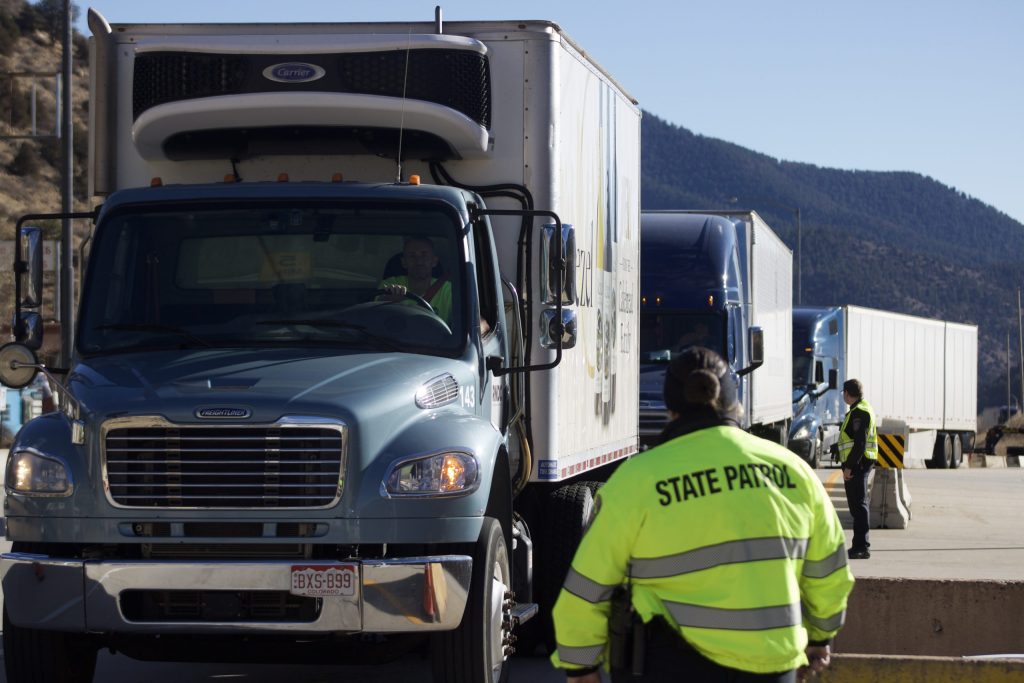
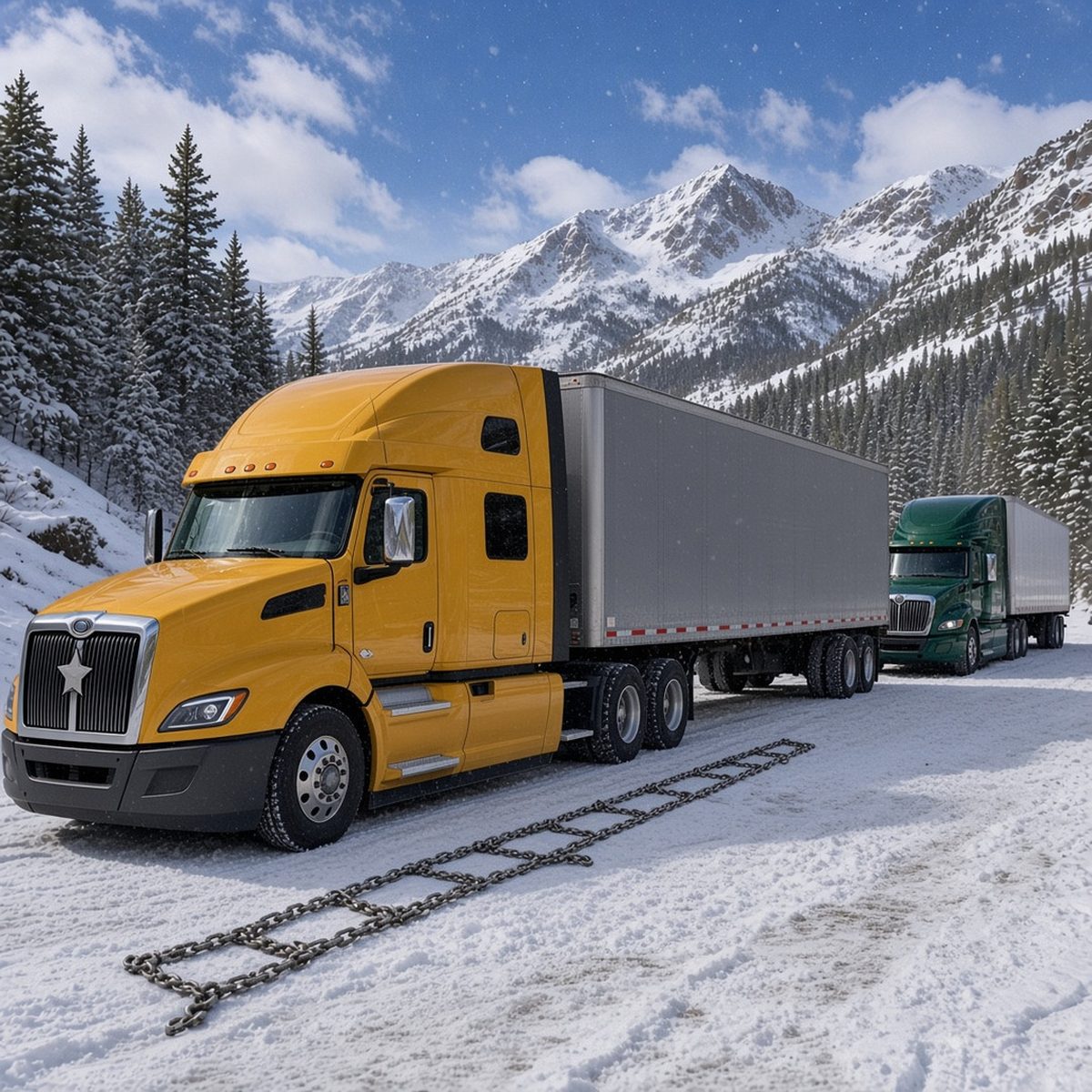
Colorado requires commercial vehicles to carry chains on certain mountain roads from Sept. 1 through May 31. When chain law activates, truckers must install them to proceed. Yet recent enforcement found roughly 90% of semitrailers complied with the must-carry rule while many drivers still cannot install chains properly, Ernst told steamboatpilot.com.
“Many times truckers will pull into our chain stations, plug them up — and then they either don’t have chains or they won’t know how to install them,” said Jori Ernst, a program manager at CDOT’s Office of Emergency Management. “So they just sit there, which causes safety concerns with all the other truckers out there that are trying to do the right thing: chain up and move on.”
“When we pull up on a truck that spun out on our highway, lots of times these guys are getting out with shorts and flip flops on,” Ernst said. “They’re not going to put chains on. They’re just going to sit there and wait.”
Chain stations approaching the Eisenhower–Johnson Memorial Tunnels and near Vail Pass can back up for hours when drivers struggle with installation.
A skilled installer needs 30 to 45 minutes; an inexperienced driver may spend three to four hours and still get it wrong, damaging vehicles and littering chains on the roadway, Ernst said.
“The bottleneck at chain-up areas has been a consistent headache,” explains CDOT spokesperson Rebecca Martinez. “We’ve seen backups exceeding two hours during heavy snow events. We’ve documented accidents caused by improper chain installation.”
One vendor per station, rotating at busy sites
The program permits one company at a time per chain station, with a few employees directing traffic and installing chains. CDOT expects several tow companies to seek permits at high-traffic locations near the tunnels and Vail Pass, so permits will likely rotate among vendors, Ernst told steamboatpilot.com.
Rural stations may be harder to staff, but CDOT hopes local tow operators will participate.
First permits could be issued by early 2027, likely after the holiday season, according to CDOT. The rollout will involve “trial and error,” Ernst said. “This will not be set in concrete. We’re going to test it out.”
Senate Bill 69 authorizes the program and funds management
Senate Bill 69, signed by Gov. Jared Polis in 2025, authorized the program and funded one full-time employee to manage it. Sponsors included Sens. Dylan Roberts, D-Frisco, and Marc Catlin, R-Montrose, and Reps. Meghan Lukens, D-Steamboat Springs, and Elizabeth Velasco, D-Glenwood Springs.
CDOT is working with the Colorado Motor Carriers Association to finalize pricing rules for chains and installation.
The goal is to avoid price gouging, Ernst told steamboatpilot.com: “We don’t want a monopoly out there where one company is going to come in and sell a set of chains that cost them $400 and sell them for $1,600 or some astronomical number.” The program modeled its cost guidelines on Washington, the only other state with a similar program, bigrigdaily.com reported.
Fines remain in force
Washington is the only other state with a similar program.
Local reaction
“I’ve sat in those chain-up lines before.”
Keep reading

Seven Roosters Found Abandoned Near Echo Cove Taken to Juneau Animal Rescue
Seven roosters found abandoned near Echo Cove at the end of Juneau’s road system are being held at...

Union Scores Late to Beat Brown Women’s Hockey 4-2
Union scored twice in the final three minutes to defeat Brown 4-2 on Sunday afternoon at Messa Rink....

Navy Women’s Basketball Makes History at Baha Mar Pink Flamingo Championship
The Navy women's basketball team will play its first international games this week at the Baha Mar Pink...
Seattle Residents File Claims Over Bogus Extra Garbage Charges
Four Seattle residents have filed claims against the city alleging they were charged for extra garbage they never...