
Connecticut law bars police from sending a child to a juvenile residential center without a judge’s order, limiting initial holds to six hours in most cases.
When a child is arrested, officers have three options under § 46b-133(c): release the child to a parent or guardian, release the child on their own recognizance, or seek a court order for detention.
A Superior Court judge must find probable cause, determine that detention is more appropriate than a less restrictive alternative, and identify a specific need — such as a risk to public safety that cannot be managed elsewhere, a documented history of failing to appear in court, or a hold for another jurisdiction — before ordering detention.
If a judge declines to detain, the judge must write down the reasons. Before that hearing, § 46b-133(e) caps the hold at six hours, extendable to eight only if a detention application is still pending or the officer has not reached the child’s parent or guardian.
Bail legally available but rarely used
Bail is legally available in juvenile cases under § 46b-133(b), though release to a parent or guardian — sometimes with electronic monitoring for certain repeat offenses under § 46b-133(c)(2) — is the far more common outcome. Confusion persists partly because a separate statute, § 46b-131, titled "Custody of alleged delinquent child pending disposition. Bail," was repealed, while the bail reference in § 46b-133(b) remains in force.

That changes if the case is transferred to adult court. Under § 46b-127, capital felonies, class A felonies, and most class B felonies committed after age 15 move automatically to the regular criminal docket; other felonies can be transferred after a hearing. Once transferred, the child "shall stand trial and be sentenced as if eighteen years of age," triggering standard adult bail procedures.
Detention orders reviewed every seven days
If a child is detained, § 46b-133(j) limits any single order to seven days or until the dispositional hearing, whichever comes first. The order can be renewed for additional seven-day periods after a detention review hearing.

The law requires voice communication services at no charge to the child or the person communicating with them, and permits video and email services as supplements — not replacements — for in-person visits. Independent ombudsperson services are available to receive and investigate complaints about facility conditions.
Records stay confidential with limited exceptions
Under § 46b-124, juvenile records are confidential and reserved for the court, the child’s attorney, parents or guardian until the child reaches adulthood, certain Judicial Branch and Division of Criminal Justice employees, and the Department of Children and Families. Information from a detention risk screening is used only for that purpose and kept confidential from other proceedings.
If a child is adjudicated delinquent, § 46b-134 requires a full investigation — covering background, home conditions, school attendance, any individualized education program, the offense circumstances, and victim impact — before disposition.
Under § 46b-140, the court weighs the child’s age, the offense seriousness, prior record, and willingness to participate in services. Options range from discharge to probation up to 18 months, extendable by 12 months, or probation with residential placement, which requires a current predispositional study and a clinical or public-safety justification.
Flannery Law represents families from offices in Hartford, Westport, and Farmington, appearing in Superior Court for Juvenile Matters statewide.
Keep reading

Former Polk County Deputy Charged With Falsifying Evidence, 31 Cases Dismissed
Polk County authorities dismissed 31 criminal cases Friday after a former sheriff's deputy was charged with falsifying evidence...

Traore Scores Career-High 22 as Marquette Beats Milwaukee 61-57
Amina Traore scored a career-high 22 points to lead Marquette past Milwaukee 61-57 Monday night at the Klotsche...
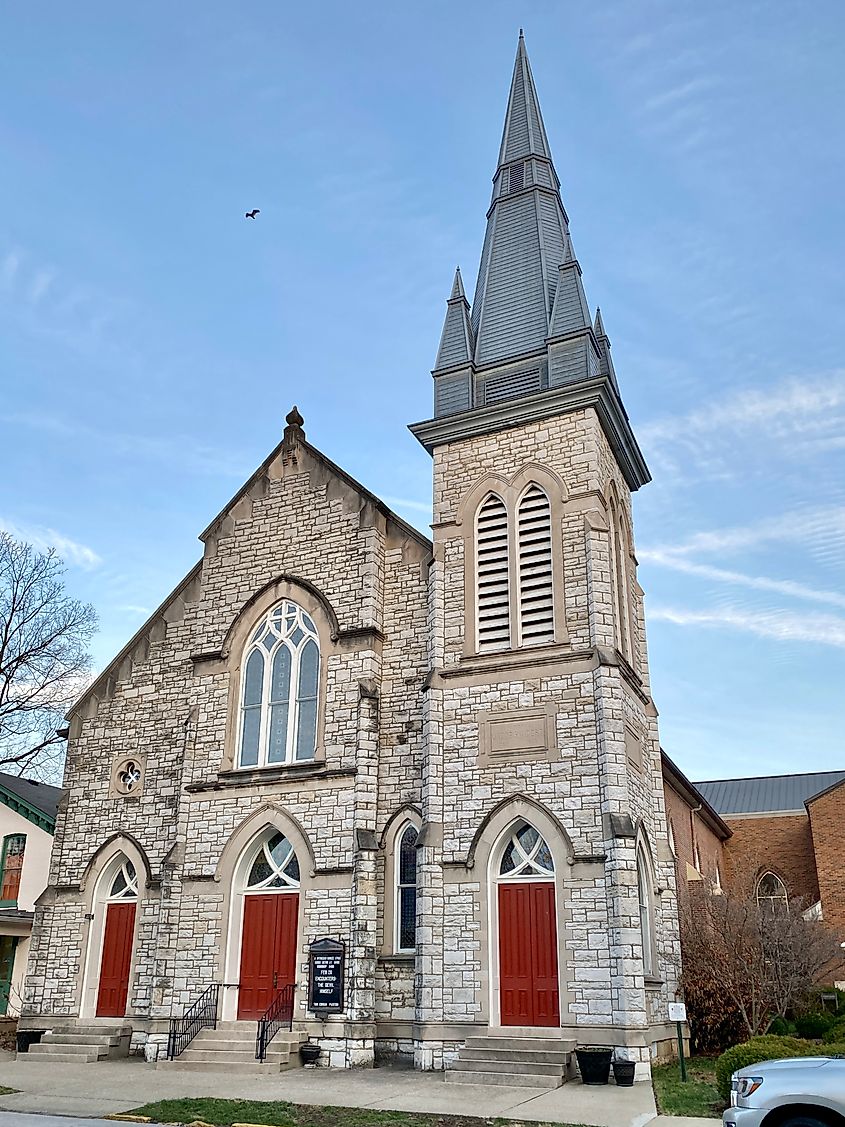
First United Methodist Church Frankfort Seeks Organist for $17K-$20K
First United Methodist Church of Frankfort is seeking an organist for its traditional worship ministry, a part-time position...

Brown Splits Road Trip With Holy Cross Win, Vermont Loss
Brown men’s basketball split its three-game road trip, beating Holy Cross 74-63 last Wednesday before dropping an 84-71...