
A Jury’s Verdict in the Death of Sophie Ringquist
After a trial that spanned four and a half days, a six-person jury in New Britain Superior Court reached a decision on Friday regarding the 2023 death of 17-year-old Sophie Ringquist. The jury found 21-year-old Cooper Ouellette guilty of second-degree manslaughter and delivering alcohol to a minor. While prosecutors had initially pursued a first-degree manslaughter charge, the jury’s verdict on the lesser count marked a significant, if contested, conclusion to a case that has left two families and a community grappling with the aftermath of a single night in Burlington.
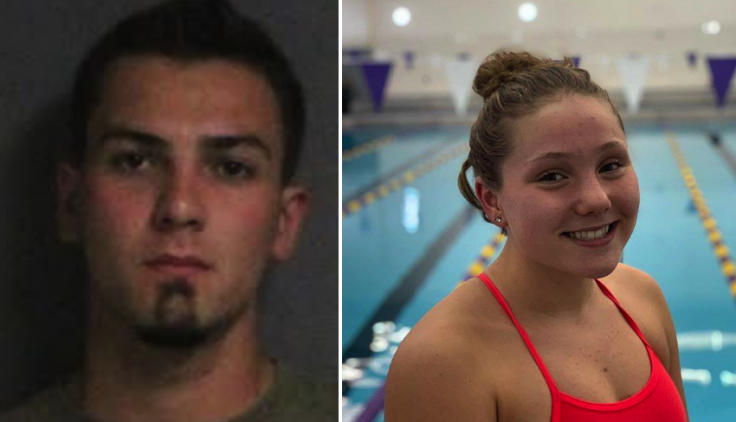
The proceedings, as reported by Hearst Connecticut Media, concluded after less than three hours of deliberation. The courtroom atmosphere was heavy, with audible reactions from both the Ringquist and Ouellette families as the verdict was read. Following the announcement, Judge Chris Pelosi increased Ouellette’s bond to $200,000, requiring it to be posted at the courthouse, and the defendant was led away in handcuffs. Sentencing is currently scheduled for January 12, 2027.
Conflicting Narratives of a Tragic Night
The trial hinged on two fundamentally different accounts of what transpired on May 20, 2023. Prosecutors characterized the incident as the culmination of a “campaign of terror” that began at an underage drinking party at the Schultz Corporation. According to Senior Assistant State’s Attorney David Clifton, Ouellette had been abusive toward Ringquist throughout the evening, eventually running her down with his mother’s Chevy Silverado on Fieldview Drive.

The state’s case relied heavily on the assertion that Ouellette remained at the scene for approximately eight minutes without calling 911, an inaction they argued demonstrated a lack of concern for Ringquist’s life. State’s Attorney Christian Watson highlighted the severity of the victim’s injuries—which included displaced rib fractures and a torn lung—to challenge the defense’s claim that Ringquist had simply jumped from the truck and told Ouellette she was “fine.”
In contrast, the defense team, led by attorney Martin Minnella, argued that the state had transformed a “tragic accident into a crime.” Minnella contended that the police investigation was inadequate from the start, specifically criticizing the failure to secure a blood sample or test Ouellette for sobriety immediately following the incident. The defense maintained that Ringquist had jumped from the moving vehicle to vomit, suggesting the fatal outcome was an unintended consequence of an intoxicated passenger exiting a truck.
Technical Evidence Under Scrutiny
A significant portion of the trial focused on the digital evidence presented by the prosecution, particularly a reanimation of the couple’s route created using data from the Life360 app. Minnella challenged the reliability of this evidence, noting that the app’s own consumer disclaimer advises against using it for precise speed determination. The defense also called an expert witness, Dr. Alex Williamson, to dispute the findings of the Connecticut Office of the Chief Medical Examiner, arguing that the victim’s injuries were consistent with a fall rather than being run over by a vehicle.
The prosecution countered these claims by emphasizing the thoroughness of the state’s medical examiner, Dr. Gregory Vincent, who concluded the death was a homicide after months of review. Watson pointedly questioned the defense’s experts, noting that they were paid for their testimony and, in the case of Dr. Williamson, had spent only five minutes examining the victim’s shirt before offering an opinion. The jury was encouraged to review the physical evidence themselves, including the clothing worn by Ringquist, to determine the nature of the impact.
The Human and Civic Stakes
The case touches on broader concerns regarding the dangers of underage drinking and the legal complexities of proving intent in vehicular incidents. For the community in Burlington, the trial has served as a grim reminder of the volatility that can arise when alcohol is introduced into youth social environments. The reliance on digital tracking data, like Life360, also highlights an evolving frontier in criminal investigations, where consumer-grade technology is increasingly scrutinized for its accuracy in forensic reconstruction.
As the legal process moves toward sentencing, both families have maintained their privacy, declining to comment to reporters outside the courthouse. The defense has indicated that they anticipate Ouellette will post the required bond prior to his January sentencing date. For now, the verdict leaves a community to process the loss of a Lewis Mills High School junior, with the legal accountability for her death now resting on the jury’s decision to convict on the lesser manslaughter charge.

Cascade Point Ferry Terminal Project Mobilizes Equipment Near Juneau
Heavy Machinery Arrives at Cascade Point Amidst Terminal Dispute Heavy equipment moved onto the site at Cascade Point...

The Real Life Marriage Struggles of Bewitched Star Elizabeth Montgomery
The Reality Behind the Nose Twitch For eight years, Elizabeth Montgomery defined the American suburban ideal as Samantha...

Social Security 2027 COLA of 3.6% offers largest boost in four years
The 3.6% Social Security Adjustment and the 2027 Fiscal Reality The Social Security Administration has confirmed a 3.6%...

Madison Artists Sandra Schoen and J. Myszka Lewis Win $10,000 Forward Art Prize
Madison Artists Secure $10,000 Forward Art Prize Amid Funding Shortfalls Madison artists Sandra Schoen and J. Myszka Lewis...