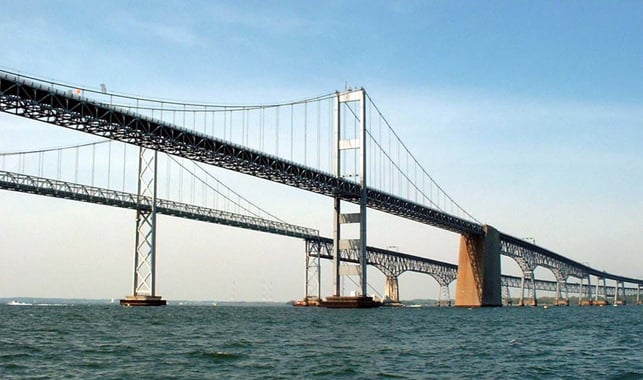
A containership lost steering control near Maryland’s Chesapeake Bay Bridge on November 20, prompting the vessel’s pilot to request an immediate highway bridge closure.
- The 300-meter container vessel GSL Nicoletta experienced steering issues about three miles south of the Bay Bridge.
- The ship dropped anchor approximately 1.5 miles from the span after slowing down.
- The U.S. Coast Guard advised that a bridge closure was unnecessary because the ship anchored safely away from the span.
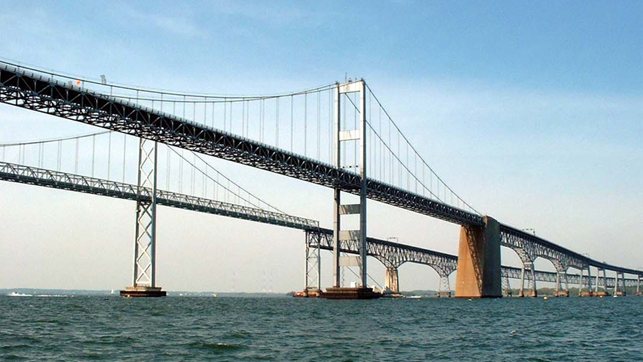
The inbound containership was traveling toward Baltimore around 12:30 a.m. when the steering failure occurred, according to The Maritime Executive. The vessel carried a pilot on board who contacted the Maryland Transportation Authority to request a traffic suspension on the critical transit route, CBS News Baltimore reported. The steel bridge spans more than four miles and serves 60,000 to 80,000 vehicles on a typical day.
Dispatchers at the Maryland Transportation Authority conferred with the U.S. Coast Guard while gathering information on the unexpected request. After about eight minutes, authorities confirmed the situation was stabilized. “The Coast Guard confirmed they were also in contact with the vessel and advised that a bridge closure was not necessary since the vessel was anchoring away from the bridge,” the Maryland Transportation Authority said to CBS News Baltimore.
The 78,183-dwt vessel came to a halt roughly eight ship lengths from the structure. Built in 2002 and registered in Liberia, the 6,858 TEU ship operates under charter to Maersk. The exact speed of the vessel during the incident remains unclear from available reports.
Inspections and Repair Process
Maersk confirmed that the GSL Nicoletta experienced steering trouble prior to reaching the bridge. “The cause of the steering issue is still being reviewed,” the company said in a statement provided to CBS News Baltimore. “Safety is always our priority, and the vessel remained under a U.S. Coast Guard Captain of the Port order while the necessary repairs and inspections were completed.”
Following the repairs, a class surveyor inspected the ship and approved the work. Required documentation was submitted to the U.S. Coast Guard, which subsequently rescinded its order. The ship proceeded to dock in Baltimore, completed its port call, and departed on Monday toward the Charleston area.
Steering failure spurs bridge closure request
The ship’s pilot, aboard the 300-meter Liberian-flagged vessel, contacted the Maryland Transportation Authority and asked officials to suspend traffic on the span immediately, according to the MDTA statement to CBS News Baltimore.

MDTA dispatchers conferred with the U.S. Coast Guard while evaluating the request. After roughly eight minutes, the Coast Guard told the authority the situation was “under control” and a closure was not needed, the MDTA said. The vessel slowed and dropped anchor approximately 1.5 miles from the bridge, or roughly eight ship lengths away, the Baltimore Banner reported.
Recent incidents heighten safety concerns
Cargo ships pass under the Bay Bridge more than 3,000 times annually, the Baltimore Banner reported, and a string of mechanical failures has renewed worries about bridge safety. Two weeks before the Nicoletta incident, a bulker on the Delaware River hit a bridge, forcing a closure for inspection, the Maritime Executive reported.
Bridge Safety Concerns
Cargo ships pass beneath the Chesapeake Bay Bridge more than 3,000 times each year, according to reporting by The Baltimore Banner. The incident revived local anxieties regarding regional span safety following the 2024 collapse of Baltimore’s Francis Scott Key Bridge after an allision with the cargo ship Dali.
Plans to install additional protective measures around the Bay Bridge have faced setbacks. The Maryland Transportation Authority encountered delays after issuing a request for proposals for the $175 million protection project, pushing its expected completion date from 2027–2028 to 2029. Meanwhile, the authority recently secured federal approvals to study and eventually construct a total replacement for the original 1952 and 1972 spans, with construction anticipated to begin by 2032.
Related reading
Detroit Student’s Dream School Float Debuts at 100th Thanksgiving Parade
Detroit’s 100th Thanksgiving Parade will feature a dream school float designed by Brewer Academy eighth grader Ali’anna McZick,...

Georgia DCA Relocates North Regional Office, Updates HCV Contact Directory with New Caseload Assignments
The Georgia Department of Community Affairs has moved its North Regional Office to 60 Executive Park S NE,...

LSU Students Remaining in Baton Rouge for Thanksgiving Access Meals, Events
LSU students remaining in Baton Rouge for Thanksgiving break can access local meals, volunteer opportunities, and holiday events...
FlixBus Offers Lugoff to Springfield Route From $152.45; Return Currently Unavailable per Site
Passengers can book bus travel between Lugoff, South Carolina, and Springfield, Missouri, through FlixBus. Tickets for the route...