
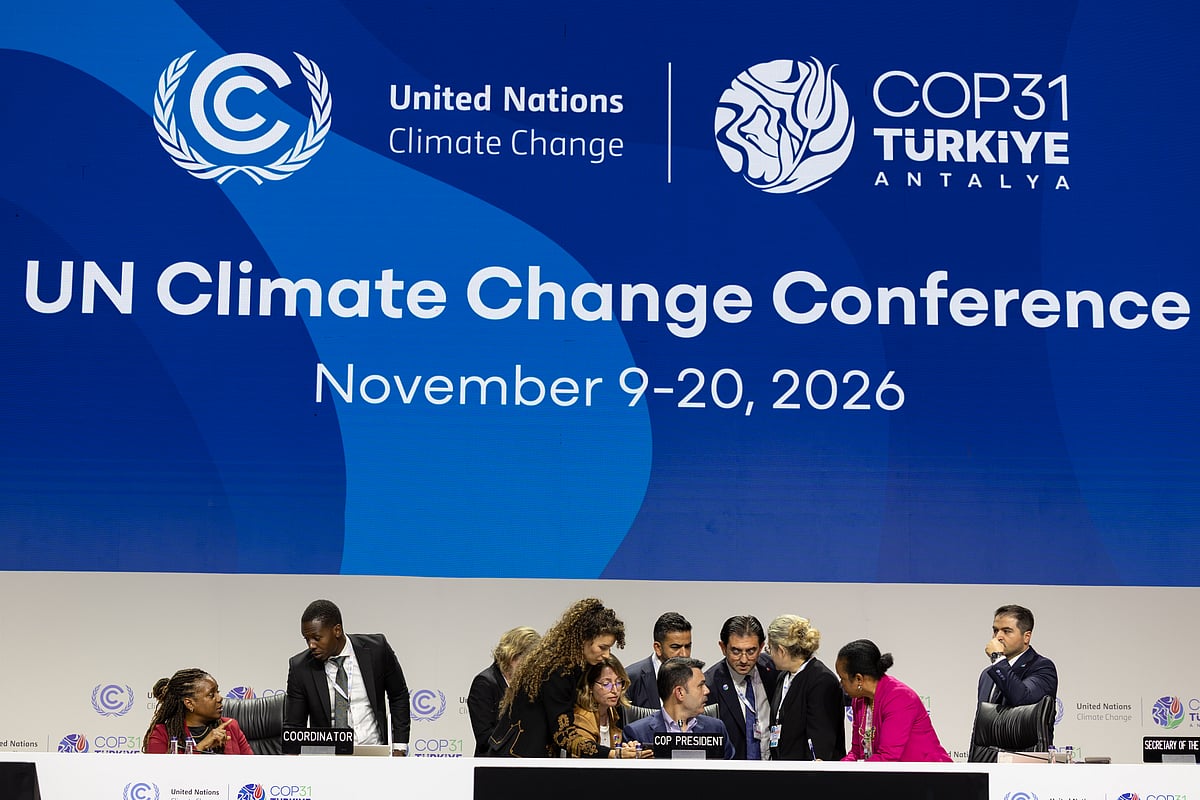
COP31 collapsed in Antalya, Türkiye, on Sunday without a cover decision, the first such breakdown since Copenhagen in 2009.
The European Union, Panama and a bloc of Pacific island states formally rejected the final draft because it omitted any reference to fossil fuels — the primary driver of global warming — while oil-producing nations including Saudi Arabia resisted stronger language. Negotiations ran nearly 48 hours past the scheduled 20 November close, making this the longest summit in the convention’s history, Premium Times Nigeria reported.
“Your Excellency, be aware of the principle of primus inter pares, and I take this opportunity to state that there is a code of conduct during our deliberations, and yours towards me was unacceptable,” she told the COP president.
Jo Tyndall, New Zealand’s climate ambassador for nearly a decade and co-chair of the Paris Agreement rule-book negotiations, called the lack of consensus “disappointing” but said refusing a weakened text was “important and no bad thing.”
“History will record that COP31 ended in no-deal. But whereas for certain rich nations ‘no-deal’ typically sustains lucrative business-as-usual, for the most vulnerable countries and communities it means consequences that are felt with ever-increasing ferocity, from extreme…”
Tyndall told RNZ.
“They really felt they’d given away too much and they’ve dug their heels in increasingly with each COP since then.” Attendees “will be leaving feeling very deflated,” Tyndall said. “The negotiators who are there at the end will not have slept for one, possibly two nights, nor have they had showers often — which makes it slightly, you know, less than pleasant to be in a crowded hall.”

Adrian Macey, Tyndall’s predecessor and former chair of the Kyoto Protocol talks, argued the annual conference format itself has outlived its usefulness.
Macey told RNZ.
With a “robust” Paris Agreement system in place, the processes underlying the agreement had “their own rhythm and momentum that should continue.” “We must keep remembering that when there are claims that this is a blow to all that, that multilateralism is suffering and not working, we do have the bones of the architecture well in place.” “All of that has just become bigger and bigger and bigger and … they don’t sit that easily together, I don’t think.”
Now that #COP31 has concluded, I want to send a message to civil society, young people, Indigenous Peoples, scientists & frontline communities: Keep spreading the facts. Keep demanding #ClimateAction. Keep turning up the heat. Hold governments and companies to account.… pic.twitter.com/Nvsp2FOHeh
“I’ve had enough of it now. I’ll never go to another one, I think.”
Macey told RNZ.
Draft decision details
The draft decision retained a voluntary “35 by 35” pledge — 80 percent of countries backing a goal to raise electricity’s share of total final energy consumption to 35 percent by 2035 — but left the fossil-fuel transition and climate finance unresolved. A proposed $120 billion annual adaptation-finance target by 2035, present in the 16 November draft, was dropped in later versions, Down To Earth reported.
“The Antalya outcome does not define our climate future.” Following #COP31, UNEP Executive Director Inger Andersen calls for greater political will, faster emissions cuts and more adaptation finance to bring global temperature back below 1.5°C. Read her full statement:… pic.twitter.com/wOWn2HbXKU
Against this backdrop, the COP31 draft reiterated efforts to at least triple adaptation finance by 2035. It also linked the tripling commitment to the NCQG and called for further work on its baseline and implementation pathway. But it set no monetary target for adaptation finance.
Ghana criticised the summit’s assessment of the $100 billion climate-finance goal, arguing developing countries’ reporting had not received adequate consideration. “The process did not provide sufficient space for negotiations,” Ghana’s representative told the closing plenary.
UN chief warns against repeating summit failure
UN climate chief Simon Stiell warned as talks fell apart: “The world cannot afford a repeat of this moment,” Stuff reported.
“A teaspoon of carbon capture cannot excuse an ocean of fossil fuel expansion.”
said Denise Cauchi from Climate Action Network Australia.
“Especially if we want to look our Pacific neighbours in the eye.”
🌍 Calls for a stronger climate deal intensified as #COP31 reached its final scheduled day. Countries across regions demanded explicit action on fossil fuels and stronger climate finance. Read the report from Antalya 👇https://t.co/hrgsH3Zfb9
“The transition away from fossil fuels in the real world is inevitable.”
Bowen told the press after the agreement failed.
“Fossil fuels dumped from latest draft deal at climate summit.”
Petro-states resist fossil fuel language
The final draft presented at the closing plenary contained no mention of fossil fuels, the principal cause of global warming. Earlier versions had included language on moving away from oil, gas and coal, but that wording was weakened as negotiations proceeded, Al Jazeera reported.
Jo Tyndall, New Zealand’s former climate ambassador, said some petro-states experienced “post-purchase regret” after agreeing to the 2023 pledge. The European Union, Panama and several Pacific island states formally objected to the final draft because it failed to name fossil fuels, walking away from a text they viewed as a step backward.
Denise Cauchi from Climate Action Network Australia told the summit: “A teaspoon of carbon capture cannot excuse an ocean of fossil fuel expansion.” One analyst described carbon capture and storage as “a Trojan horse for fossil fuel interests,” noting the technology has mostly been deployed by fossil fuel companies so far.

Adaptation finance target dropped
“The process did not provide sufficient space for negotiations,” Ghana’s representative said, questioning the limited attention given to Parties’ Biennial Transparency Reports compared with assessments by the OECD and Oxfam.
Their representative said she had to change her flights twice and extend her stay to fulfil her obligation to participate.
Former ambassadors argue COP format outdated
Jo Tyndall and Adrian Macey, New Zealand’s two most recent former climate ambassadors, said the annual conference format needs fundamental change. “We must keep remembering that when there are claims that this is a blow to all that, that multilateralism is suffering and not working, we do have the bones of the architecture well in place.”
Macey, who chaired the Kyoto Protocol negotiations, said the conference produces “diminishing returns” every year. “It gives people this false impression that the barometer of global progress on climate change is words coming out of the COP, and that’s absolute nonsense — the barometer is actually what transitions are happening in what countries,” he told RNZ.
The trade fair alongside negotiations has ballooned to 90,000 attendees, and “they don’t sit that easily together.”
Ethiopia is slated to host COP32 next year. Macey suggested the treaty’s requirement for annual summits could be changed, separating the “climate-fest” trade fair from formal intergovernmental negotiations. “I’ve had enough of it now. I’ll never go to another one, I think,” he told RNZ. Tyndall added there is “a bit of a feeling that, to some extent, it’s been a case of negotiating for its own sake.”
Next steps
Ethiopia is slated to host COP32 next year. Macey suggested the treaty’s requirement for annual summits could be changed, separating the “climate-fest” trade fair from formal intergovernmental negotiations. “There is a bit of a feeling that, to some extent, it’s been a case of negotiating for its own sake,” Tyndall said.
Related reading

A Senior U.S. Lawmaker Warned European Allies Not to “Backslide” on Defense Spending
A senior U.S. lawmaker warned European allies not to “backslide” on defense spending as EU leaders prepare to...

Ireland to Pilot Electronic Tagging for Up to 150 Inmates to Ease Overcrowding
Up to 50 ankle tags will monitor 90–150 people over one year. Prisons hold 700 inmates above capacity;...

Study Links Air Pollution Metals to Asthma Mechanism; CaSR Block May Help
Researchers have identified a biological mechanism linking metal particles in air pollution to asthma attacks and chronic bronchitis,...

Father Jailed for Murder, Daughter for Helping Dump Body in Canal
A father and daughter wheeled a murdered woman's body to a canal in a wheelchair with orange wheels,...