
Chicago Public Schools is preparing for a potential mid-December crisis, with internal memos revealing plans to lay off approximately 280 school-based staff members unless the state provides more funding before winter break.
The personnel slated for termination—comprised of 128 teachers and 153 support staff—were previously cut earlier this year, only to be rehired in July when the district moved forward with a budget amendment banking on $150 million in additional state aid.
The looming deadline of December 18, just one day before classrooms shutter for the holidays, marks a high-stakes pivot point for the district. The Chicago Tribune reported that this precarious situation stems from a budget gamble taken by school board members aligned with the Chicago Teachers Union, who opted to shield classrooms from cuts while pushing for the state to bridge the district’s financial deficit.
While union leadership has emphasized that lawmakers in Springfield hold the power to prevent this outcome, the path to such a rescue remains narrow and politically fraught.
The Legislative Barrier to Funding
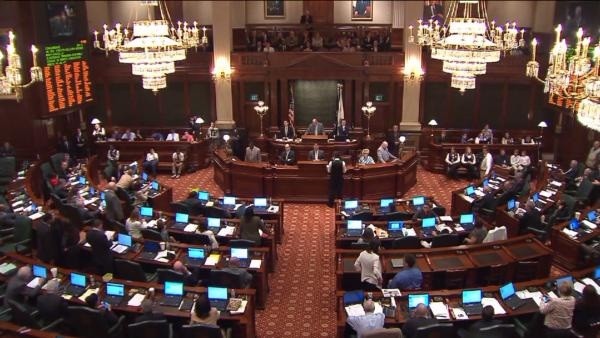
Any supplemental spending plan requires a three-fifths supermajority in both chambers of the Illinois General Assembly. Lawmakers are scheduled to convene in Springfield for the fall veto session next week, followed by another meeting in early December.
Even if a legislative breakthrough occurs, CPS officials have cautioned that the timing of any new cash flow might be too late to impact the current fiscal year. Governor JB Pritzker noted in late October that there has not been an ongoing discussion regarding supplemental funding for the district, casting further doubt on the viability of a last-minute legislative bailout.
The financial strain on CPS extends beyond the immediate need for state dollars. The district is currently managing a $732 million deficit, a hurdle that previously forced officials to consider measures like furloughs and spending freezes. A major contributor to the current cash flow squeeze is the delay in Cook County property tax collections.
While the second installment typically arrives on August 1, the payment was pushed to October 1. Even with that delay, the district reports it has received only 80% of the expected revenue, leaving roughly $320 million outstanding. To cover the gap, CPS has been forced to rely on short-term borrowing, incurring millions in interest costs that ultimately drain resources from the classroom.
Compounding Financial Pressures
Adding to the volatility, the district is grappling with internal budget miscalculations and rising demand for services. CPS has exceeded its special education contingency budget by $17.8 million, a surge driven by more students qualifying for specialized services than originally anticipated.
Simultaneously, the district faced an unexpected $19 million shortfall from the state’s evidence-based funding formula, partially caused by a shift in how Illinois calculates the count of low-income students. These compounding factors place the district in a position where it is considered only 70% adequately funded by state standards.
The district’s reliance on tax increment financing (TIF) surplus funds remains another variable in the equation. Mayor Brandon Johnson has proposed a $522 million TIF surplus, with $286 million earmarked for CPS.
While this aligns with the district’s summer budget projections, the funds are not guaranteed until the city budget is finalized. A spokesperson for CPS confirmed that the finance team is actively monitoring the situation, though the district has remained tight-lipped regarding specific contingency plans should the state funding fail to materialize.
“Our lawmakers in Springfield can prevent the chaos and harm of midyear cuts by investing in schools across the state during the veto session, said Stacy Davis Gates, president of the Chicago Teachers Union.”
If necessary, the decision to proceed with these layoffs would force the district to manage the fallout of losing nearly 300 staff members halfway through the academic year. For the affected educators and support personnel, the uncertainty is a repeat of the volatility they faced this past summer.
As the veto session approaches, the administration finds itself caught between the promise of fiscal prudence and the political pressure to maintain staffing levels, all while the clock ticks toward December 18.
Related reading

Thunder Face Clippers in NBA Cup Amid Mounting Injury List
The Oklahoma City Thunder face a grueling test in Inglewood on Friday as they visit the Los Angeles...

FAA Nationwide Ground Stop Disrupts Albany International Airport Flights
A nationwide FAA ground stop is disrupting air travel at Albany International Airport and across the United States...
Trenton Police Use-of-Force Incidents Rise Despite Claims of Reform
Trenton police use-of-force incidents in the first half of 2026 are trending upward, threatening to erase a reported...

UNR Bluebird Saxophone Quartet Inspires Rural K-12 Students
The Bluebird Saxophone Quartet brought jazz and classical music to K-12 students across Northern Nevada and surrounding communities...