Connecticut’s most coveted ZIP codes share a striking pattern: high incomes, majority-white populations and top-ranked schools, according to a CT Insider analysis published by Greenwich Time.
Of the 25 ZIP codes with the hottest housing markets, 16 have median household incomes above the state median of $100,000 and none fall below $80,000, the analysis found. All are majority-white, and all but two are at least 70% white.
The ZIP codes rated best for raising families were nearly all suburban, majority-white and had six-figure median incomes. Those ranked least desirable almost all had below-average incomes and many were majority non-white.
Adjacent ZIP codes, divergent outcomes
West Hartford’s 06117, among the state’s most desirable communities across CT Insider’s metrics, abuts Hartford’s 06105, among the least desirable. Fairfield’s 06824, a top Fairfield County ZIP code, touches Bridgeport’s 06605, which placed toward the bottom of the rankings.
‘A long history of exclusion’
Connecticut’s divide stems from decades of redlining, restrictive covenants and racial steering, the analysis reports. Redlining maps from nearly a century ago show areas labeled “hazardous” to investment — often due to racial and ethnic minorities — remain some of the state’s poorest ZIP codes today.
In recent decades, discrimination continued in subtler forms. Real estate agents steered white homebuyers toward West Hartford and Black ones toward Bloomfield, according to a 2012 Journal of Urban History article. Glastonbury blocked low-income development to impede integration.
One prominent bank settled a $15 million lawsuit alleging it offered inferior mortgage terms to Black and Latino buyers.
Woodbridge, whose 06525 ranked as the best ZIP code to raise a family, faces a pending lawsuit alleging its zoning code “unjustifiably restricts” multifamily housing, keeping the town wealthy and white.
Woodbridge denies the allegations and is contesting the suit.
“If you look historically at what different suburban areas have done, it’s a long history of exclusion,” said Erin Boggs, executive director of Open Communities Alliance, which brought the suit against Woodbridge.
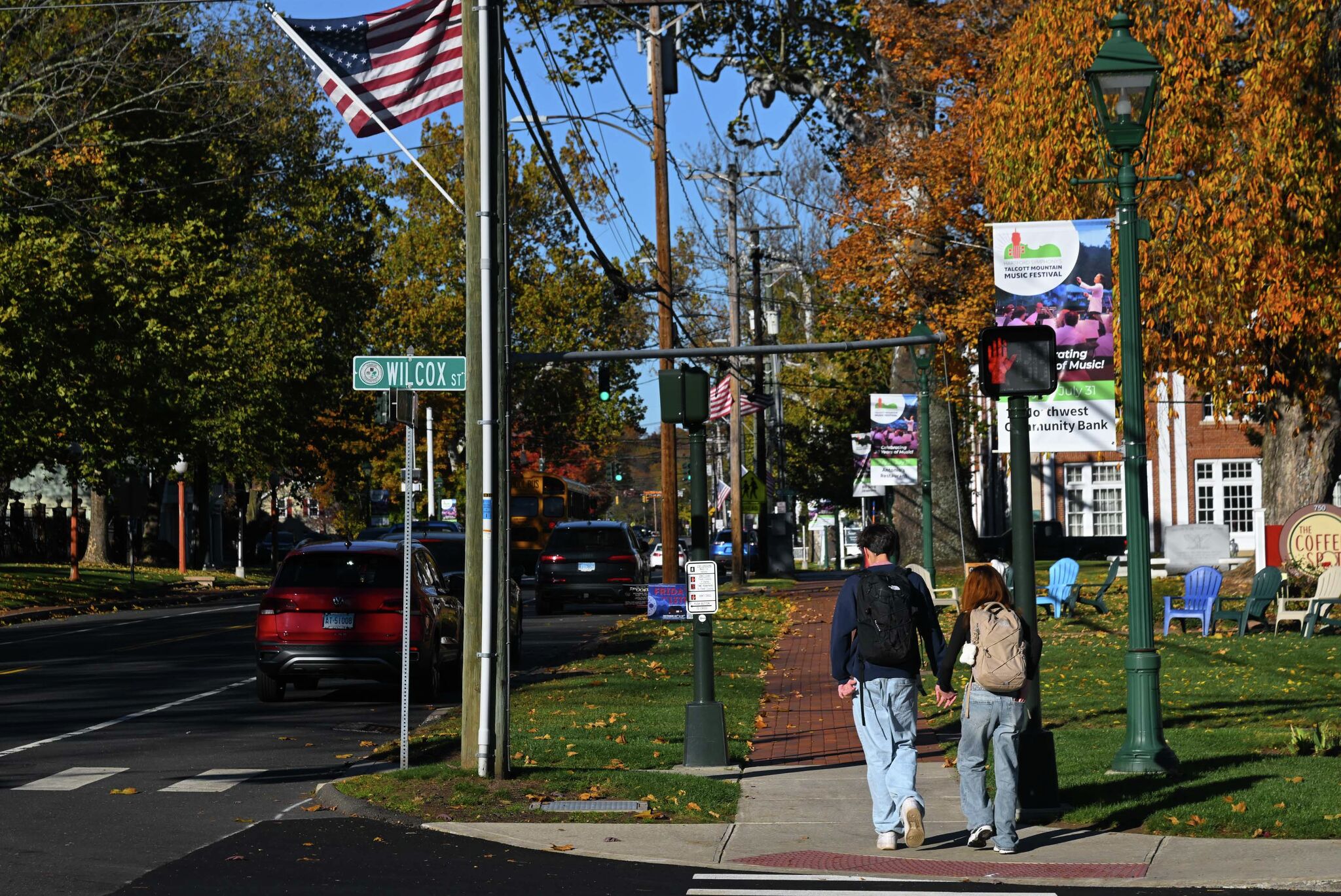
Resource gaps and regional disparity
Connecticut’s 169 towns operate with little resource sharing, so wealthy tax bases fund better schools and services. Towns considered best for families tend to have more single-family homes and higher incomes — places that “can afford to take care of its residents,” Boggs said.
Community activist Constanza Segovia, a Hartford resident and co-director of CT For All coalition, notes many desirable suburbs benefit from proximity to cities that provide entertainment, culture, universities, hospitals, homeless shelters and methadone clinics — services some towns don’t want within their borders.
“We’re out here holding the things that you are not holding but are using,” Segovia said. “We need them, nobody can go without them, but some towns don’t want them in their borders.”
Housing market diverges in neighboring cities
Stamford home sales rose 11% in the first half of 2025 compared with the same period a year earlier, while Greenwich sales fell 4%, according to Hearst Connecticut Media reporting cited by CT Insider.
The neighboring Fairfield County communities sit on opposite sides of the same ZIP-code divide that separates high-income, majority-white areas from lower-income, majority non-white ones.
Advocates say inequality is racialized and structural
Erin Boggs, executive director of the Hartford-based Open Communities Alliance, which brought the suit against Woodbridge, argues that many of Connecticut’s exclusionary patterns persist through zoning that restricts multifamily housing and through municipal structures that concentrate resources in wealthy, white towns.
Open Communities Alliance, led by executive director Erin Boggs, works to address Connecticut’s deep level of segregation and support policies that lead to housing choice. In September 2020, the organization filed a proposed zoning amendment with the Woodbridge Planning & Zoning Commission to move the town toward compliance with state fair-share requirements.
After the town’s response proved inadequate, Open Communities Alliance filed a civil rights lawsuit on August 30, 2022, arguing Woodbridge’s zoning “unjustifiably restricts” multifamily housing and erects walls that result in racial and economic exclusion.
Some desirable areas show integration and diversity
Not all desirable areas fit the exclusive pattern. Stamford and New Haven areas rank among the best for young professionals due to transit access and affordable housing density. Bloomfield, the state’s only majority-Black municipality, has a hotter housing market than many whiter, wealthier communities.
South Windsor ranks among the top places to raise a family while maintaining a fairly diverse population, as does West Hartford, which has added affordable housing in recent years. Even Greenwich has neighborhoods with significant racial diversity and some affordable housing.
“There are places that have been highly successful at both being very prosperous and resource-rich and also racially and economically diverse,” Boggs said. “West Hartford is an example.”
Advocates suggest promoting affordable housing in exclusionary towns, regionalizing local governments, and increasing funding for disadvantaged schools and municipalities.
Segovia says the goal should be ensuring quality of life for all residents, “whether their communities are considered desirable or not.”
“How do we balance the scales so that everybody can have the quality of life that that we all want?” she said.
Keep reading
- No. 1 South Carolina Routs Tennessee State 119-38 in PowerHER Player Classic
- UNL Professors Host Black Friday Pizza, Pie and Board Games for Students
- SpaceX Share for Every Kid Needs a Charity and Treasury's Approval (daybreakwire.com)
- Food experts share tips for recreating restaurant quality dining at home (newsarchyuk.com)

No. 1 South Carolina Routs Tennessee State 119-38 in PowerHER Player Classic
No. 1 South Carolina routed Tennessee State 119-38 on Saturday in the PowerHER Player Classic, improving to 8-0...
UNL Professors Host Black Friday Pizza, Pie and Board Games for Students
University of Nebraska–Lincoln mathematics instructor Kevin Gonzales and accountancy instructor Amanda Gonzales hosted their annual Thanksgiving-week gathering for...

Patrick P. Henry, West Seattle Mortgage Lender and Bocce Player, Dies at 68
Patrick Picardo Henry, 68, of Seattle, died on November 12, 2026, West Seattle Blog... reported. He was born...

Globe: Lawmakers Load Essential Bills With Giveaways in Lame-Duck Session
Massachusetts lawmakers were expected to use a new lame-duck rule to pass essential bills but instead loaded major...