
Nearly 1,500 Idahoans died from asbestos-related illnesses between 1999 and 2017, with lung cancer accounting for the largest share, a guest column in the Idaho Capital Sun reported.
The column, written by Cristina Johnson, argues that current U.S. Preventive Services Task Force guidelines overlook veterans whose primary lung cancer risk stems from military asbestos exposure rather than smoking.
The task force recommends annual low-dose CT screening only for adults aged 50 to 80 who have a 20 pack-year smoking history and currently smoke or quit within the past 15 years. Under those criteria, a veteran with prolonged asbestos contact but no qualifying smoking record may not be eligible for covered screening.
Many served aboard Navy ships built before 1983 or worked in shipyards operating from the 1930s to the 1990s, where asbestos was used extensively for insulation and fireproofing. The Naval Surface Warfare Center Detachment in Bayview is among the Idaho facilities that contained asbestos materials, the column noted.
An interactive map referenced by Johnson shows that between 1999 and 2017, 1,068 Idaho residents died from lung cancer linked to asbestos, while 267 died from mesothelioma and 161 from asbestosis. Lung cancer represented the leading cause of death among the three asbestos-associated diseases.
The Navy’s birthday provides a moment to recognize service members whose duties placed them around asbestos long after their retirement, according to the guest column by Cristina Johnson published in the Idaho Capital Sun.
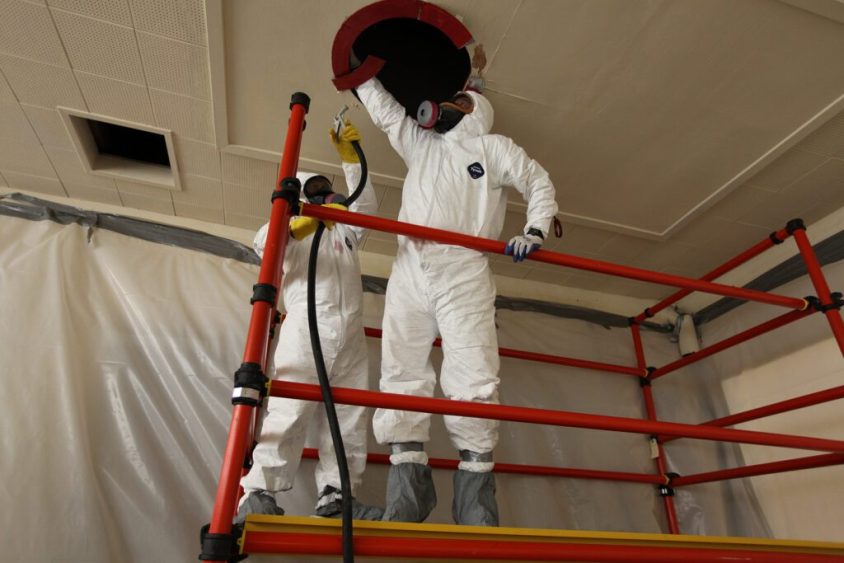
The image, credited to Mario T. Icari of the U.S. Navy, accompanied the column’s discussion of the mineral’s lasting presence in the fleet’s infrastructure.
The column argues that assessing lung cancer risk should incorporate a veteran’s complete service and health history rather than relying on smoking history alone.
Johnson wrote that asbestos is a known carcinogen that can increase malignancy risk decades after exposure, independent of tobacco use. “Simply put, a sailor who spent years around asbestos, for example, may carry an alarming occupational exposure even without ever having smoked,” she wrote. Conversely, veterans who both smoked and encountered asbestos face a combined risk that the current framework does not fully address.

Broncos Beat Raiders 38-24; Fernando Mendoza Throws Three TD Passes
Las Vegas Raiders quarterback Fernando Mendoza threw three touchdown passes in his first road start Sunday, yet Denver...
Port of Olympia Approves 50-Year Lease, Building Sale to Vesper Aviation
The Port Commission voted 5-0 on Monday to approve a new lease and sale of a building to...

Republican Rep. Scott DesJarlais defeats Democrat Victoria Broderick in Tennessee’s 4th District
Democrat Victoria Broderick ousted eight-term Republican Rep. Scott DesJarlais in Tennessee’s 4th District on Tuesday, flipping a seat...

Boise State Faces Colorado State: No. 9 Offense vs. Defense Near Historic Lows
Boise State faces Colorado State on Saturday in a Pac-12 flex week rematch that pits the nation’s ninth-ranked...