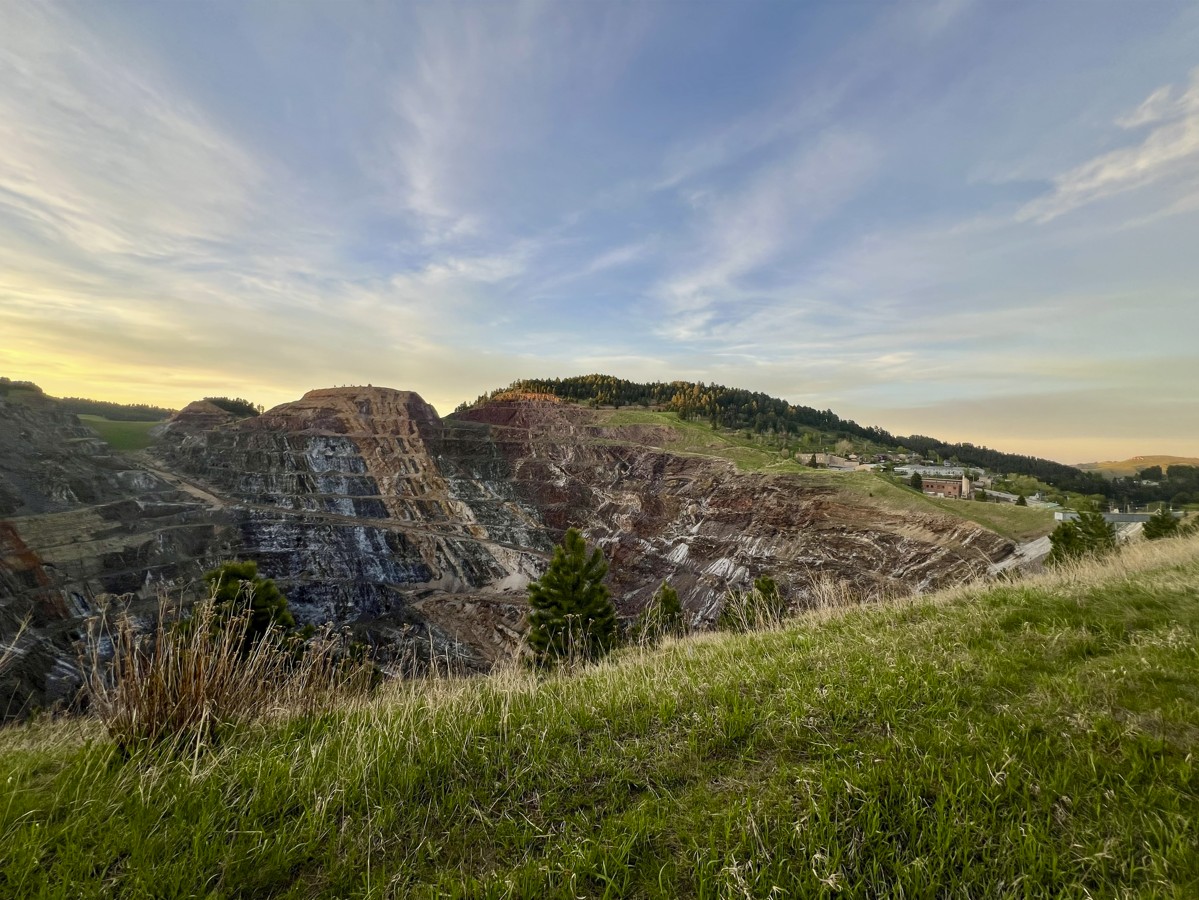
“further de-risks and re-confirms Richmond Hill as one of the few advanced development projects globally, with commercial production targeted for 2030.”
Dakota Gold released a prefeasibility study Monday that cuts the Richmond Hill mine life nearly in half while raising annual output, sending shares down 8% to $4.02 Tuesday morning in New York, The Northern Miner reported.
The study outlines a nine-year, open-pit heap-leach operation producing 171,000 ounces of gold annually — 12% more per year than the 2025 assessment — but total payable production drops 40% to 1.56 million ounces from 2.6 million. Initial capital jumps 40% to $538 million (C$773 million). Gold recovery falls to 72.4% from 85.1%, and reserves are calculated at a $2,600 gold price.
Economics improve at higher gold prices
Despite the shorter life and lower recovery, Dakota lifted its base-case after-tax net present value to $2 billion at a 5% discount rate, up from $1.6 billion last year. At a $3,500 gold price, the project returns a 71% internal rate of return and a $2.7 billion NPV at $4,250 gold, the company said in its news release.
All-in sustaining costs are estimated at $1,289 an ounce including South Dakota’s severance tax.
Proven and probable reserves as of Nov. 23 total 119.6 million tonnes grading 0.56 g/t gold and 6.61 g/t silver for 2.16 million ounces of gold and 25.4 million ounces of silver. Measured and indicated millable resources add 3.2 million ounces of gold, providing long-term optionality beyond the heap-leach plan.
Analysts cut targets but keep ratings
BMO lowered its price target to $10 from $11 while keeping an Outperform rating, calling the plan “a de-risked conservative mine plan.” Investing.com noted the stock has declined 12.6% over the past week and trades 23% lower year-to-date. Scotiabank analyst Eric Winmill said the feasibility study and permitting “are the next de-risking steps.”

Leadership brings major mine-building experience
The Northern Miner reported that Quartermain’s track record includes developing one of Canada’s highest-grade gold mines. That experience is now being applied to advancing the Richmond Hill project through permitting and feasibility.
Valuation scenarios shift with gold price assumptions
At that higher price, the project shows a 71% internal rate of return and a $2.0 billion after-tax NPV at a 5% discount rate.
Using a $2,750 gold price, the new valuation comes to $1.25 billion against last year’s $2.15 billion under the prior assessment. At $4,250 gold, the NPV rises to $2.7 billion with a 94% IRR, the company said in its news release.
Capital costs rise on crusher and leach pad requirements
Initial capital increased 40% to $538 million, including an $84 million contingency.
Life-of-mine all-in sustaining costs are estimated at $1,066 per ounce before South Dakota’s severance tax and $1,289 per ounce including it.
Analyst views diverge on price targets after study
Freedom Broker raised its target to $14.80 from $12.50, maintaining a Buy rating on progress advancing Richmond Hill.
The Richmond Hill Gold Project is located in the western portion of Lawrence County, South Dakota, USA, approximately five miles northwest of Lead in the northern Black Hills at an altitude of approximately 6,000 feet, within the historical Carbonate Mining District.
Geologically, the project sits in the Black Hills, an isolated mountain range rising from the Great Plains, and is an important component of Dakota Gold’s exploration strategy for the Homestake District, hosting gold mineralization associated with the past-producing Richmond Hill mine and historical mines of the Carbonate District. The company holds the permits required to conduct infill and expansion drilling at the Richmond Hill Project.
Drilling targets breccia zone for reserve growth
Dakota is drilling 3,800 metres of metallurgical holes and 11,000 metres of definition drilling to convert inferred material in a high-recovery breccia zone not included in the PFS economics. The company aims to add at least 10% to reserves for a feasibility study due mid-2027, targeting a 2029 production start subject to permits and a construction decision.
Keep reading

Mississippi State’s Ryan McPherson Earns Second Straight USA Baseball Collegiate National Team Selection
Mississippi State right-hander Ryan McPherson struck out a career-high 11 batters in his second start of the season,...
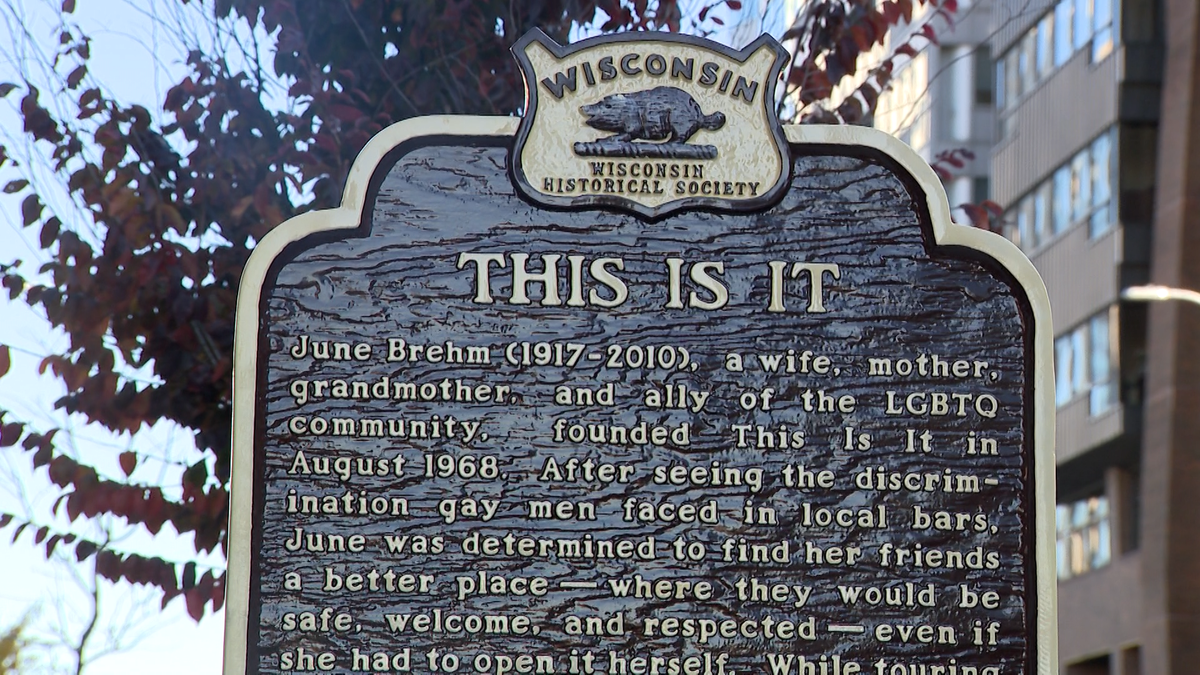
Historic Marker Unveiled for Wisconsin’s Longest-Running LGBTQ+ Bar and Founder June Brehm
A state historic marker was unveiled Thursday at 418 E. Wells St., where Wisconsin’s longest-running LGBTQ+ bar served...

Signs of Danger at Iowa Plant Emerged Months Before Army Says It Knew, Emails Show
Contractors at the Iowa Army Ammunition Plant in Middletown sought to chemically neutralize 68 drums of degrading lead...

Colorado Supreme Court Vacates Dismissal, Reinstates Crabtree Appeal
The Colorado Supreme Court vacated an appellate order that had dismissed Charles James Crabtree's appeal of a postconviction...