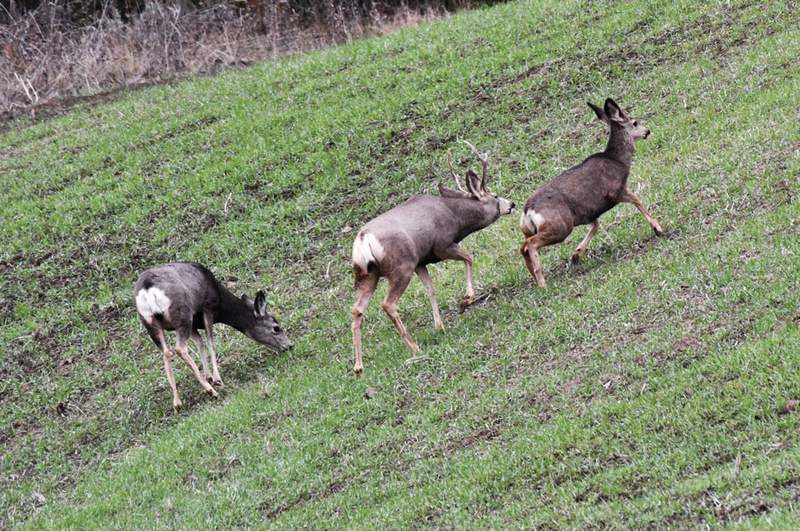
Deer across eastern Idaho have shifted from the frantic chase of the rut to a period of heavy feeding and rest, though mature bucks remain near does ahead of a secondary breeding window in mid-December, East Idaho News reported.
- Rut activity peaked during the first two weeks of November east of Rexburg.
- Bucks are now feeding heavily and will rest for two to three weeks.
- A secondary estrus period arrives about 28 days after the first window.
- Clark’s nutcrackers appeared at a local feeder for the first time on Thanksgiving.
Peak rut fades across the Mud Springs area
Two weeks ago, white-tailed and mule deer bucks were chasing does across open fields and meadows in the mountains east of Rexburg, East Idaho News reported. Dominant bucks had pushed younger males away from herds of does and fawns by late October.
On Nov. 9, a mule deer buck shadowed a doe feeding on fall wheat in the Mud Springs area just before snowfall. After more than an hour, the doe allowed him to mount three times before he moved on to check three other does and retreated into thick timber, East Idaho News reported.
Biology drives the timeline
During the first rut window — typically the first two weeks of November — a doe’s estrus lasts 24 to 72 hours, East Idaho News reported. If unbred, she enters a second estrus roughly 28 days later. Bucks begin accompanying a doe about a day before her window opens and stay until breeding occurs, East Idaho News reported.
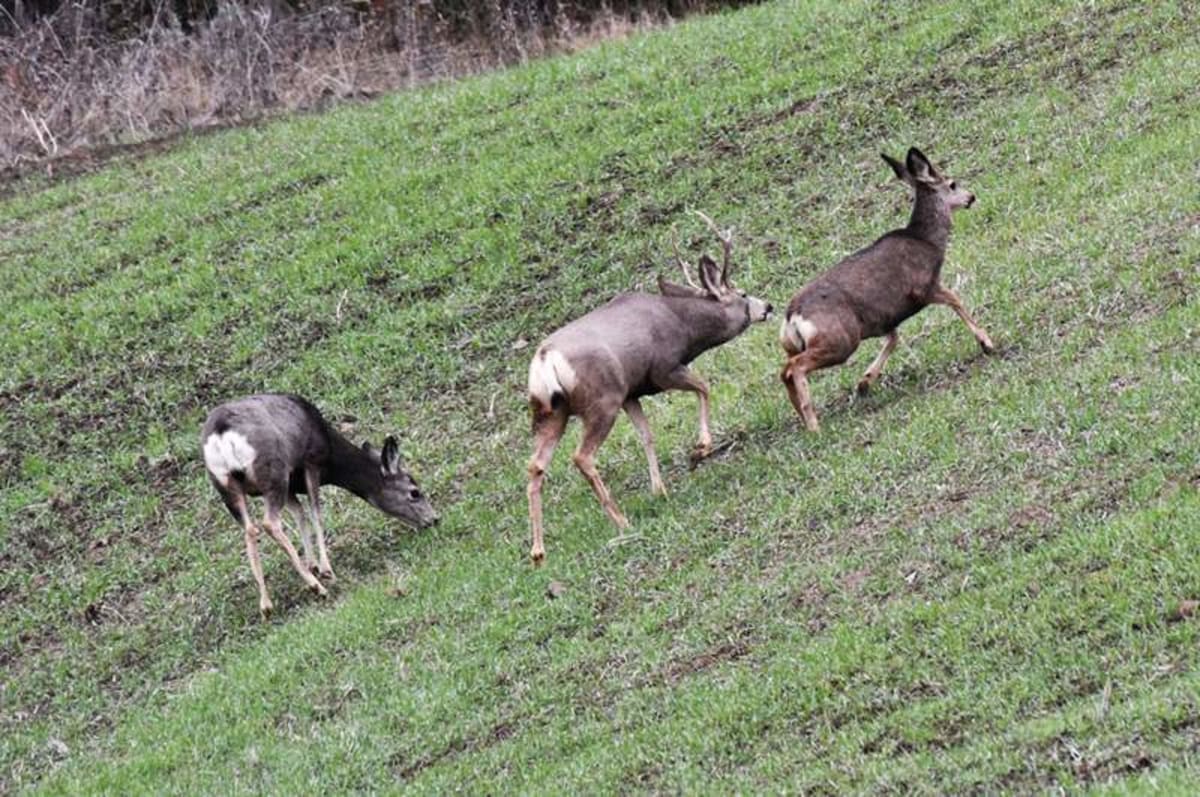
When multiple does in a group cycle simultaneously, bucks become agitated. This fall, a young white-tailed buck and a young mule deer buck stood confused side by side while their respective does chased each other, East Idaho News reported.
Mature bucks scent-test does and shift groups
By Nov. 17, fewer bucks were visible, but large mature bucks were feeding and resting alongside groups of does, East Idaho News reported. One buck scent-tested each doe in a herd of 12 before crossing an open field to another group in a stand of trees.
Experienced bucks know unbred or late-cycling does will hit a secondary rut window around mid-December, East Idaho News reported. If snow levels stay low, that activity will be watchable. Whitetail female fawns born early last spring will also enter their first estrus then, often drawing aggressive defense from their mothers, East Idaho News reported.
Photographs capture bucks resting and scent-testing does
Bill Schiess photographed a large mule deer buck resting during a snowstorm east of Rexburg, East Idaho News reported.
By the week of Thanksgiving, Schiess documented a buck surrounded by part of a herd of 12 does, East Idaho News reported.
Yearling whitetail does face aggressive mothers in December
Bucks will chase them, but the mothers remain protective and can be very aggressive and mean toward the bucks.
Schiess said he plans to watch for that activity if snow levels stay low. He said that the interactions can be fairly entertaining to observe.
On Thanksgiving, a pair of Clark’s nutcrackers visited a local feeder and consumed suet cakes steadily, a first for that yard, East Idaho News reported.
Worth a look

Louisiana Homeowners Insurers Log 649 Complaints in 2025 as Premiums Rise 5% to $3.31 Billion
Louisiana homeowners insurers logged 649 complaints in 2025, a 2.1% drop from 2024, while premiums rose 5% to...

Utah Hosts Utah State in Big 12 Home Opener as Girardi Leads Nation in Scoring
Utah (6-2) hosts Utah State (3-6) Tuesday at 7 p.m. MT in the Jon M. Huntsman Center. Girardi...

Four Actors Join ‘Days of Our Lives’ Cast This Fall’
Four actors joined the cast of "Days of Our Lives" this fall, introducing new storylines for the show's...

Harvard Study: Phone Bans Could Regain Up to Two Weeks Learning; Mass. Bill Pending
Massachusetts students could regain up to two weeks of learning per year if the state adopts the strict...