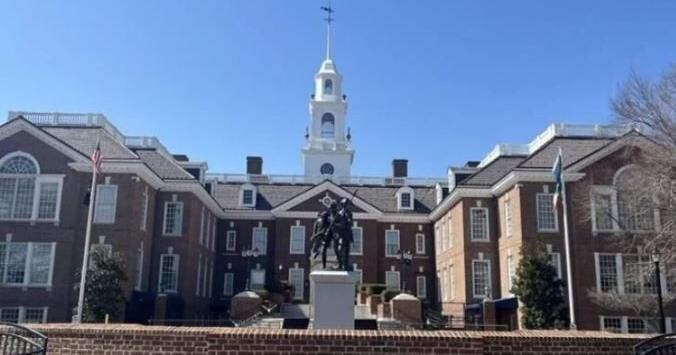
Delaware Secures Federal Green Light for 25 Opportunity Zones
Starting January 1, 2027, Delaware will officially open a new chapter in its economic development strategy. The U.S. Department of the Treasury and the Internal Revenue Service have granted federal certification to 25 specific census tracts across the state, designating them as Qualified Opportunity Zones. This status is designed to catalyze private investment in areas that have historically struggled to attract capital, providing a framework for tax-advantaged development starting early next year.
CoastTV reported that the state’s path to this certification began well before the federal announcement. Governor Matt Meyer initiated the process in December 2025, coordinating a series of research efforts and community input sessions to identify the tracts most likely to benefit from the designation. This collaborative approach was intended to ensure that the 25 nominations submitted to federal regulators were grounded in local needs rather than purely top-down policy.
Connecting Capital with Community Projects
To bridge the gap between abstract tax incentives and tangible construction or business expansion, the state has partnered with the Milken Institute’s Community Infrastructure Center. This digital platform serves as a central clearinghouse for the program, allowing project sponsors to list eligible developments while providing investors and financial professionals with a dedicated space to scout for opportunities. Registration, listing, and searching on the site are free, a move intended to lower the barrier to entry for smaller entrepreneurs.

Governor Meyer emphasized that the goal is to translate these federal designations into concrete economic outcomes, such as job creation and business stability. “I firmly believe every community in Delaware can help drive our state’s economy,” Meyer said. “With all 25 of Delaware’s Opportunity Zones now officially certified, we’re focused on turning investment into good-paying jobs, stronger local businesses and lasting benefits for all our residents.”
The Mechanics of the Investment Advantage
The core appeal of the Opportunity Zone program lies in its potential tax benefits for investors. Individuals or corporations holding realized capital gains from asset sales—such as the sale of stocks or real estate—can potentially defer or reduce their federal tax liability by reinvesting those gains into a Qualified Opportunity Fund. Because these funds are directed specifically toward the certified census tracts, the policy aims to steer liquidity toward projects that might otherwise be deemed too risky or underserved by traditional commercial lenders.

Beyond simple matchmaking, the Internal Revenue Service provides the regulatory framework that governs these funds, ensuring that the investments meet specific criteria for economic impact. The Community Infrastructure Center supplements this by offering technical assistance and connecting project organizers to a broader network of philanthropic organizations and public funding sources. This layered approach is designed to increase the likelihood that a project can secure the necessary capital stack to move from a blueprint to a groundbreaking.
Economic Stakes and the Counter-Argument
While proponents argue that Opportunity Zones are a vital tool for revitalizing distressed areas, the program has faced scrutiny from economists and policy analysts nationwide since its inception under the Tax Cuts and Jobs Act of 2017. The central critique often centers on the risk of “gentrification without displacement” or the possibility that tax breaks primarily benefit high-net-worth investors who would have moved their capital into these areas regardless of the incentive. Critics frequently point out that if the zones are located in areas already experiencing appreciation, the tax benefit acts more as a subsidy for wealthy developers than a spark for genuine community-level poverty alleviation.
For Delaware residents and business owners, the “so what” of this announcement is local control and accessibility. By launching a centralized platform, the state is attempting to democratize the visibility of these zones, preventing the benefits from being siloed within the inner circles of institutional real estate firms. The success of this initiative will ultimately depend on whether the projects listed on the new platform move beyond luxury residential builds and toward the small-business infrastructure and essential services that define a stable, local economy.
As the January 1, 2027, start date approaches, the focus for the Governor’s office will likely shift toward oversight and the vetting of the projects that appear on the platform. With the certification now secured, the state has moved the primary responsibility for economic growth from the regulatory phase into the hands of local entrepreneurs and private investors. Whether this shift produces the intended prosperity for all residents remains the primary metric by which this program will be judged.
Keep reading

BIG EAST Wins Four More Games as UConn Defeats Michigan
BIG EAST Basketball Dominates Non-Conference Play The BIG EAST Conference is proving its depth early in the 2026-2027...
New Maryland IRP Base Jurisdiction and Business Location Requirements
Maryland’s New Physical Presence Rules for Trucking Fleets For trucking companies operating under the International Registration Plan (IRP)...

North Augusta workshop set for 10-year Comprehensive Plan update
The next decade of growth in North Augusta will be defined by how the city chooses to handle...

Kentucky Men’s Basketball Announces 2026-27 Fan Themes and Promotions
The 2026-27 Rupp Arena Experience: Kentucky Athletics Unveils Promotional Slate For the Big Blue Nation, the atmosphere inside...