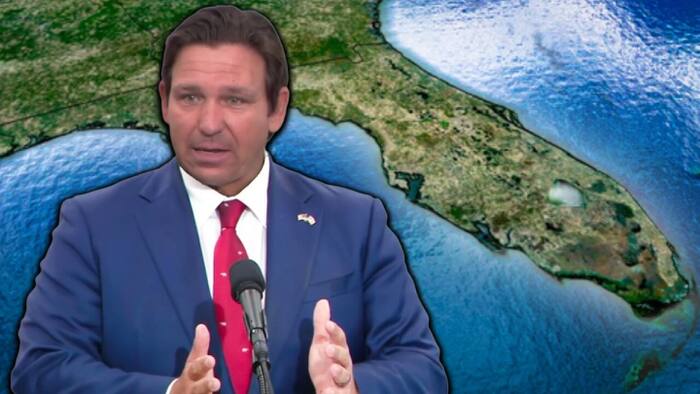
Florida Gov. Ron DeSantis vetoed at least nine bills this year, including measures on e-bike speed limits, inmate commercial driver training and trust fund interest rules, according to veto letters released by his office.
The governor has signed more than 200 new state laws, some taking effect as late as last month, WKMG reported. In veto messages, DeSantis cited fiscal risk, public safety concerns and constitutional objections.
DeSantis rejects e-bike speed limit bill
DeSantis rejected SB 382, which would have prohibited electric bicycles from exceeding 10 miles per hour within 50 feet of a pedestrian. Violators would face nonmoving traffic fines surpassing $100, enforced with speed detection and surveillance devices.
“This bill will likely lead to enhanced surveillance by local governments against citizens,” DeSantis wrote.
“Moreover, the bill creates a task force, yet substantive changes are also implemented prior to any task force recommendations.”
The measure also created a Micromobility Device Safety Task Force with no sunset date to recommend limitless regulations related to e-bikes.
DeSantis vetoes inmate commercial driver program
The governor vetoed HB 325, a bill requiring state correctional institutions to provide Class A and Class B commercial driver’s license training. It allowed inmates to operate state-owned vehicles outside the fence under correctional officer supervision.
“Not only is this new program unnecessarily burdensome to the Department of Corrections staff and its facilities, but it also creates signification public safety concerns by authorizing incarcerated individuals to operate commercial vehicles in public thoroughfares,” DeSantis wrote.
He said workforce development goals can be achieved through existing oversight of the Department of Corrections and Department of Transportation without putting roads at risk.
DeSantis vetoes bill raising government damage caps
DeSantis vetoed HB 145, which would have increased damage caps awarded in lawsuits against local government entities.
“HB 145 imposes new costs on taxpayers by increasing the damage caps awarded in lawsuits against local government entities,” the governor wrote. “Florida law already provides a well-established and thoughtful claims bill process to review and ultimately determine if a judgment above the statutory limits should be awarded.”
DeSantis rejects student poll volunteer bill
The governor rejected HB 461, which sought to clarify high school students’ ability to volunteer at polling locations for community service hours.
“While the House and Senate sponsors had a noble intent in filing the bill, the application of the bill may result in an avenue for polls to be staffed with volunteers that may not be subject to Florida’s prohibition on single party registered poll workers for general elections,” DeSantis wrote.
He noted the bill received committee support from representatives of the Southern Poverty Law Center, which he said may indicate the consequence of the legislation. Florida high school students can already receive service hour credit for paid work and volunteering.
Naturopathic medicine licensing
DeSantis vetoed SB 688, which would have created a Board of Naturopathic Medicine under the Department of Health and required licensure from accredited institutions, all of which are out of state.
“If enacted, this legislation may negatively impact Floridians who currently work in alternative medicine by mandating post-graduate education that cannot be obtained in Florida and require them to pay costly licensure fees to do the work they are already performing,” the governor wrote.
“There is no need to create additional bureaucratic hurdles.”
He said current law allows physicians, osteopaths, acupuncturists and dietitians to employ naturopathic methods, and Floridians can access natural remedies without prescription or FDA approval.
Biosolids management and vendor provisions
The governor vetoed HB 1245, citing unnecessary regulations on Class AA biosolids and vendor-specific provisions requiring enrollment in fee-based accreditation programs created by an industry trade association.
“Further, the bill subjects landowners to onerous recordkeeping requirements for irrelevant information to the matter at hand, which would undoubtedly be used to file dubious legal actions,” DeSantis wrote.
He said water quality goals can be achieved through existing oversight of the Department of Agriculture and Consumer Services and the Department of Environmental Protection.
Town of Davie billboard exemption
DeSantis rejected HB 4075, which created an exemption from state and federal outdoor advertising laws for a parcel abutting I-75.
“Given that the bill provides an exclusive exemption to the Highway Beautification Act, it may result in a reduction in Florida’s funding apportionment under federal law,” the governor wrote. “While the bill has the intent of promoting the agricultural heritage of the community, the fiscal impact from noncompliance with the Highway Beautification Act outweighs any revenue that may be derived from the promotional signage planned by the Town of Davie.”
Correctional officer pay tied to prison hospital debt
The governor vetoed HB 5403-E, which he said attempted to force the state to take on new debt to build a prison hospital by holding hostage pay increases for correctional officers.
“During my time as Governor, Florida has paid off over fifty percent of its historical debt,” DeSantis wrote. “Florida has reduced its debt from $17.5 billion to $8.7 billion since 2018, paying off approximately $3 million a day.”
He said his budget proposed a pay increase for correctional officers totaling almost $374 million, but it was not contingent on incurring massive new debt obligations.
“This bill takes a D.C. swamp approach to correctional pay,” DeSantis wrote. “We cannot reduce debt with one hand while adding debt with another.”
Trust fund interest and constitutional concerns
DeSantis vetoed HB 893, which pertained to the Interest on Trust Accounts (IOTA) program established by the Florida Supreme Court in 1978 and implemented in 1981.
“HB 893 perpetuates an Interest on Trust Accounts (IOTA) Program of dubious constitutionality,” the governor wrote. “The Florida Supreme Court established this program in 1978 and implemented it in 1981 in a series of opinions that were unduly dismissive of constitutional concerns.”
He argued the court’s limited constitutional authority to regulate attorney admissions and discipline does not extend to regulating financial institutions or compelling donation of interest earned on client funds.
“Signing HB 893 would, in effect, represent my ratification of the constitutionality of this dubious arrangement,” DeSantis wrote. “This I am not willing to do.”
The governor cited due process concerns, noting it is left to the lawyer’s judgment whether to place client funds into IOTA accounts with no input from clients. He also said HB 893 expressly disclaims any limitation on use of funds for legal aid to the poor, authorizing use “for such other purposes” the Supreme Court may authorize.
“The IOTA program also raises due process concerns, as it is simply left to ‘the sound judgment of the lawyer or law firm’ to decide whether to place client funds into IOTA accounts, with no input from clients,” DeSantis wrote.
He said the program may be read to authorize the Supreme Court to expand the scope of IOTA, and even if it declined, “nominal or short-term funds” have generated hundreds of millions of dollars in earnings in the past fiscal year alone.
Keep reading

Nick Walker Retains Mr. Olympia Title by Two Points Over Samson Dauda
Nick Walker retained the Mr. Olympia title in Las Vegas by two points over Samson Dauda, despite Dauda...

HMG Careers Hiring Remote Insurance Sales Reps, Offers Leads and Licensing Support
HMG Careers is hiring remote insurance sales representatives to work from home in Montpelier, Vermont, offering leads, training...

Eastern Kentucky Routs Alice Lloyd 114-85 Behind Ball’s Career-High 23 Points
Eastern Kentucky routed Alice Lloyd 114-85 on Sunday at Baptist Health Arena, improving to 5-2 on the season...

Bar Harbor Story Weekly Roundup Lists MDI Events: Run Club, Knitting, Bird-Watching, Live Music, Wood Bank
Bar Harbor Story published its weekly roundup of events across the Mount Desert Island region for the week...