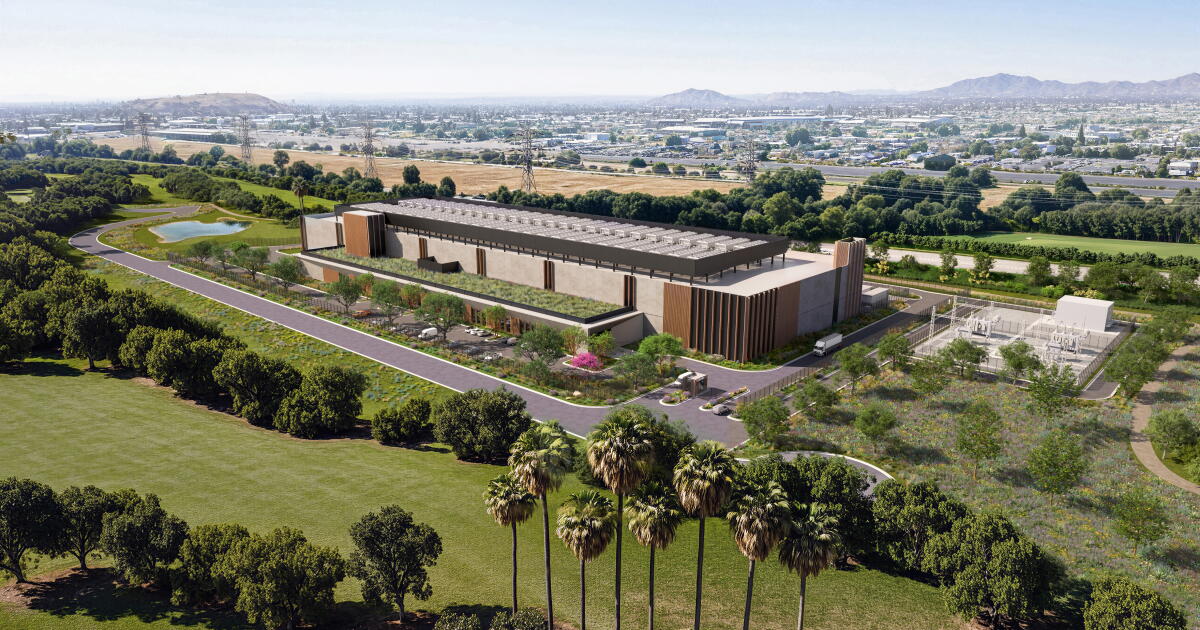
Developers propose converting half of a 124-acre Los Angeles County golf course into a 374,000-square-foot data center, betting the site’s existing infrastructure and distance from homes can overcome the community opposition stalling projects nationwide, Los Angeles Times reported.
Ramus Development Inc., which owns California Country Club along the 605 Freeway near Whittier, submitted a plan to the City of Industry to redesign the 18-hole course into a nine-hole layout and the LA Recreation and Technology Park. The data center would occupy 18 acres; the existing clubhouse would remain.
“We are committed to a transparent entitlement process and community-focused design,” said Stephen Cho, president of Ramus.
Birtcher Development, an Orange County firm, is shepherding the entitlement process and would build the project if approved.
“The quarter reflected a structural shift rather than a cyclical spike: communities have internalized an opposition playbook, legislative sessions introduced formal regulatory uncertainty, and the number of active opposition groups more than doubled across 49 states,” Data Center Watch said.
The proposal arrives as local resistance blocks data center construction across the United States. Data Center Watch reported that the first quarter of 2026 produced the largest single-quarter concentration of blocked and delayed projects on record, with at least 75 projects worth approximately $130 billion disrupted by local opposition.
In Southern California, Monterey Park scuttled a proposed data center after vocal community opposition, and Vernon is considering a ban on new development. Los Angeles County has separately blocked large-scale data centers in unincorporated areas while officials develop permanent zoning restrictions. The City of Industry has no such restrictions but would need to change the golf course’s zoning before development could proceed.
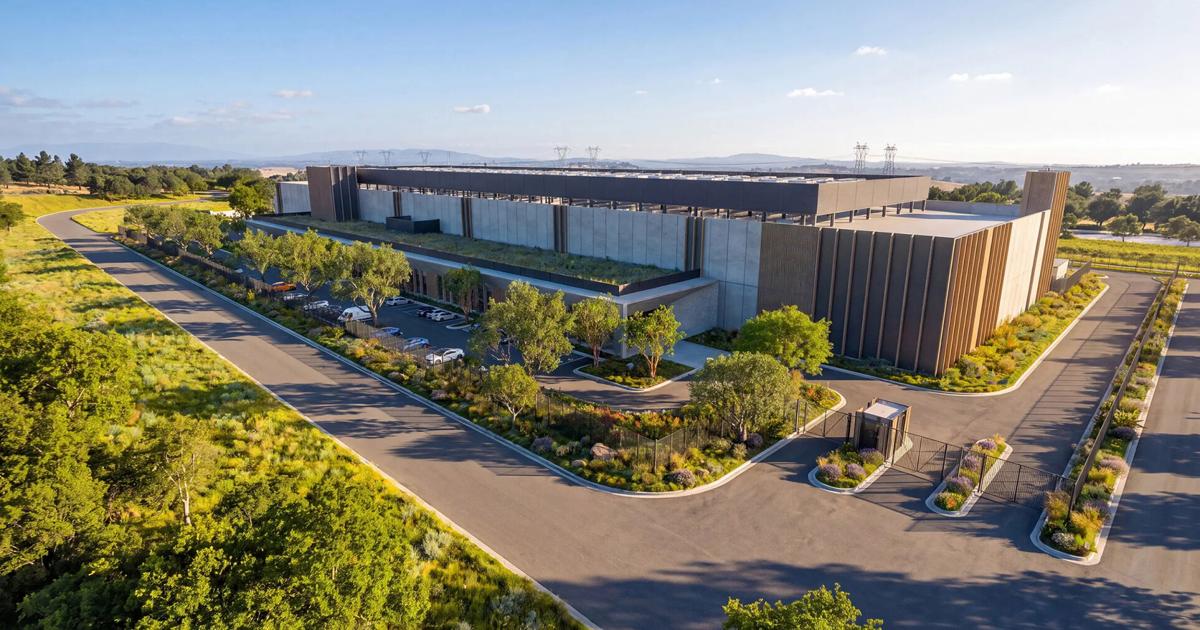
The developers argue the conversion would use less water than maintaining the golf course and, with new power infrastructure, could potentially reduce electricity prices in the neighborhood.
The site sits near high-voltage transmission lines and fiber-optic cables, allowing the project to build its own substation and “take power off the grid in an elegant manner that doesn’t impact other users and ratepayers,” said Mikey Jaillet, an analyst with CBRE’s Data Center Solutions team, who is not involved in the proposal.
The project would be subject to oversight by the California Energy Commission and the South Coast Air Quality Management District, and would receive a city environmental impact report.
“We sincerely want to work with the surrounding community on this project, get input and feedback, and be transparent,” Gustafson said.
The City of Industry has no standalone zoning restrictions blocking large-scale data centers, unlike Los Angeles County, which has halted such projects in unincorporated areas while drafting permanent rules, according to the article.
As a charter city incorporated in 1957 with a 1971 general plan — amended as of 2020 — that explicitly identifies its primary goal as “creating and maintaining an ideal setting for manufacturing, distribution and industrial facilities,” the City of Industry operates under a regulatory framework built for heavy industrial use.
A similar golf-course conversion is planned for a former course site in Pittsburg, an industrial-oriented city in the San Francisco Bay Area.
Keep reading

Missouri Troopers Host Benefit BBQ Dec. 3 for Trooper Injured in DWI Stop
The Missouri State Troopers Association will hold a benefit barbecue on December 3 at the Eagles Club in...

Youth Unemployment Hits 11.3% as Young Australians Face 200 Applications With No Offers
Australia's unemployment rate climbed to 4.9% in October while inflation hit 4.9% for the year to October, pushing...

Albuquerque Opens Holiday Calendar Friday With ‘Nutcracker’ and Bobby Rush Shows
Albuquerque opens its post-Thanksgiving holiday calendar Friday with multiple ticketed events across the city and Santa Fe, abqjournal...
262-Acre Cheyenne Property With 1930 Barn Lists for $2.8 Million
A 262-acre property on Cheyenne’s northwest edge is listed for $2.8 million, ranchandrecreation.com reported. Roundtop Crossing sits about...