
“The DNC is keeping our foot on the gas as we head into the 2028 cycle,” DNC Chair Ken Martin said Monday.
The Democratic National Committee announced a schedule of 12 presidential primary debates beginning in June 2027 and ending in March 2028, mirroring the structure the party used in 2020.
Five debates will take place in 2027 and seven in 2028, the DNC said, with exact dates and locations to be released in January. The cap for any single debate is 20 candidates; if more qualify, the field will be split across back-to-back nights with lineups drawn at random to ensure parity. Qualification thresholds will rely on polling and grassroots fundraising benchmarks similar to those used in 2020.
First dark-money pledge required for debate entry
Corruption in government was a top concern for voters in the midterm elections, according to the same report. The debates return the party to a competitive primary process after there were no primary debates in 2024, when then-Joe Biden didn’t face a serious primary challenger before dropping out of the race and endorsing Kamala Harris to take his place.
Potential field includes Harris, Newsom, Buttigieg, Ocasio-Cortez
No major candidate has formally entered the race. Other potential contenders include Governors Andy Beshear of Kentucky, Wes Moore of Maryland and JB Pritzker of Illinois, along with Sen. Chris Van Hollen of Maryland. In 2020, 28 Democrats ran for the nomination.
Debates seen as winnowing mechanism and media strategy
“These days, candidates spend so much time in their own ecosystems and don’t subject themselves to kind of going outside debates,” Aaron Kall, director of debate at the University of Michigan, said.
DNC ties debate entry to dark-money pledge
For the first time, the Democratic National Committee will require presidential candidates to pledge they will disavow dark money as a condition of participating in primary debates.
DNC Chairman Ken Martin has pushed the requirement that candidates must pledge to disavow dark money to make the debate stage, which the committee announced Monday, according to PBS NewsHour. The move follows midterm elections in which corruption in government ranked as a top voter concern, the same report said.
The pledge rule accompanies a debate structure that caps each event at 20 qualifying candidates. Qualification benchmarks will mirror those used in the 2020 cycle, when the party also held a dozen debates.
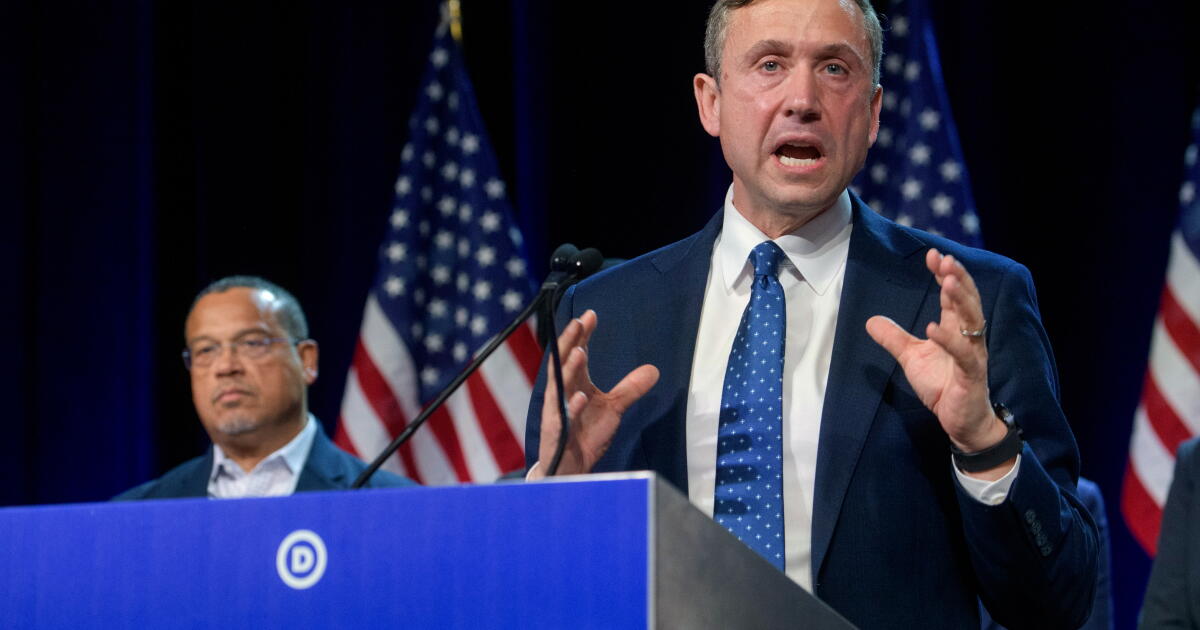
Midterm gains frame early 2028 strategy
The debate announcement comes after Democrats flipped both the House and Senate in the 2026 midterms, securing their largest congressional majority in decades, the DNC said. Chairman Ken Martin stated in an emailed release that the party is focused on staying united and helping the eventual nominee win the White House. “The DNC is keeping our foot on the gas as we head into the 2028 cycle,” he said.
No major candidate has formally entered the race to succeed term-limited President Donald Trump, the committee noted. Potential contenders who have been active during the midterms include former Vice President Kamala Harris, former Transportation Secretary Pete Buttigieg, and Governors Gavin Newsom, Andy Beshear, Wes Moore and JB Pritzker, along with Senator Chris Van Hollen and Representative Alexandria Ocasio-Cortez.
DNC Chair Ken Martin, who has led the Democratic National Committee since February 1, 2025, announced Monday that the committee will require presidential candidates to pledge they will disavow dark money as a condition of participating in primary debates.
Before his election as DNC chair, Martin served as state chair of the Minnesota Democratic–Farmer–Labor Party from 2011 to 2025, president of the Association of State Democratic Committees in 2017, and vice chair of the DNC. In those roles, he oversaw statewide campaigns and party infrastructure that helped Democrats win legislative majorities and constitutional offices in Minnesota.
Revised early-state calendar begins in South Carolina
The first nominating contest will be held Jan. 22, 2028, in South Carolina, followed by Nevada, New Hampshire, New Mexico, Michigan and Virginia through February. The Republican primary calendar differs, keeping Iowa first, and the Republican presidential nominating process is likely to move more slowly with Donald Trump still in office. The DNC has narrowed its 2028 convention site search to Boston, Denver and Philadelphia.
Keep reading
USD Elevates Jarren Duffy to Senior Associate AD for External Affairs
University of South Dakota Athletic Director Jon Schemmel announced Tuesday that Jarren Duffy has been elevated to Senior...

FBI Investigates Fatal Shooting by Tribal Officer on Fort Berthold Reservation
An FBI press release confirmed that a Three Affiliated Tribes police officer fatally shot a person during a...

Lawfully Present Immigrants Sue to Restore Medicaid After CMS Cuts Coverage for SSI Recipients
Five lawfully present immigrants who receive Supplemental Security Income lost full Medicaid coverage on Oct. 1 and have...

Virginia Tech Wins Emerald Coast Classic Championship Over Michigan State 69-68
Virginia Tech women’s basketball defeated Michigan State 69–68 on Monday in the Emerald Coast Classic championship game, securing...