
The DOJ trial over Alabama's men's prison system begins Nov. 30 after more than 1,700 incarcerated people died since 2019.
A federal trial over conditions across Alabama’s entire prison system for men begins Nov. 30 in Huntsville, the first time the U.S. Department of Justice has sued a state over conditions found throughout an entire prison system, as opposed to just one facility.
The case, filed in December 2020 after settlement talks collapsed, will be heard by U.S. District Judge Harold D. Mooty III without a jury. The Justice Department argues Alabama leaders have been deliberately indifferent to pervasive violence, sexual abuse, excessive force by officers, overcrowding, understaffing and the flow of contraband across the system’s 23 prisons.
Since the DOJ issued its findings in 2019, more than 1,700 incarcerated people have died, according to a tally by journalists and the Alabama Appleseed Center for Law & Justice, The Marshall Project reported.
Alabama, represented by Butler Snow attorney Bill Lunsford reporting directly to Attorney General Steve Marshall, contends the problems do not amount to systemic constitutional violations and that the state is actively working to improve conditions. Lunsford declined to comment publicly. Neither Marshall’s office nor the Alabama Department of Corrections responded to requests for comment about the upcoming trial, The Marshall Project reported.
“Violence in ADOC is not isolated. Violence is pervasive throughout the system and has been for many years,” federal prosecutors wrote in a September court filing. “Alabama’s prisons are chaotic,” al.com reported.
An expert for the Justice Department described living units as “Hobbesian Worlds,” where life is “nasty and brutal and ruled by the inmates, not the State.” Court filings cite an average of 30 documented inmate-on-inmate sexual assaults per month since 2022, with many more going unreported. Prisons fail to enforce housing assignments, leaving “homeless” inmates to sleep on floors, in day rooms, or outside, according to prosecutors, al.com reported.
A brother’s death, a family’s search for answers
Kim Baker learned of her brother Brett Baker’s death in November 2025 at Bullock Correctional Facility in Union Springs. The warden told her he was found unresponsive in his solitary confinement cell. Days later, an agency investigator said there were no signs of trauma and the death was likely natural.
When Baker viewed his body at a funeral home, she said she almost passed out. “His face had been beaten, the top of his head was cracked open, and he had dried-up blood in his nose,” she said. “I had my husband and my friend with me, and they had to catch me.”
Brett Baker, 58, was serving 18 months for attempted arson and had been diagnosed with schizophrenia and bipolar disorder. His death certificate, signed by the prison doctor, listed the cause as natural — cardiopulmonary respiratory arrest — with no mention of the head and facial injuries visible in photos Baker took, The Marshall Project reported.

The Corrections Department said in a statement that Brett Baker injured his head while alone in his cell and told staff he had fallen. “The incident was documented by facility staff, and available video evidence is consistent with that documentation,” the agency said, adding it found no evidence of foul play.
Baker said an investigator later told her Brett had been taken to the infirmary with an injury five days before he died, but offered no details. The agency did not respond to follow-up questions. It also never returned his belongings, she said, The Marshall Project reported.
Baker testified before the Joint Prison Oversight Committee in July, holding enlarged photos of her brother’s injuries. She said no one followed up. “My brother was more than a number; he was part of me,” she said. “What they did to him was horrific and inhuman. I hope we get some answers,” she told The Marshall Project.
Audit, film and a supervisor with 13 lawsuits
A 367-page legislative audit released Nov. 6 by Rachel Riddle, chief examiner with the Alabama Department of Examiners of Public Accounts, substantiated many DOJ findings. It documented unsanitary conditions at Kilby Correctional Facility — roaches, rats, soiled laundry, dirty bathrooms including in the infirmary — and “inconsistent and inaccurate data on deaths.”
Riddle described an “underlying sense of secrecy” and had to subpoena records, which she wrote “is not typical and should not be normal procedure,” The Marshall Project reported.
Corrections Commissioner Greg Lovelace responded that findings came from limited samples and time, and that disagreement “should not be mistaken for resistance to oversight.” He said the agency has been “deliberately working to strengthen leadership, improve accountability, modernize operations, rebuild our workforce, and provide better support to our facilities,” The Marshall Project reported.
The 2025 Oscar-nominated documentary “The Alabama Solution” detailed record overdoses and the beating death of an incarcerated man by Lt. Roderick Gadson, a supervisor sued 13 times for alleged excessive force. The state paid settlements in 10 cases; one was dismissed after a judge found the force not excessive because the plaintiff had a knife.
Two recent suits allege Gadson assaulted a handcuffed man in an infirmary and beat another so severely he required intubation. Gadson has not filed responses; in a past deposition he denied ever using excessive force. Requests for comment through the Corrections Department went unanswered, The Marshall Project reported.
Construction over reform, costs soaring
Facing pressure, Alabama officials have focused on new construction. In 2021, the legislature approved Gov. Kay Ivey’s plan for two mega-prisons at $1.3 billion. Costs have more than doubled. The 4,000-bed Governor Kay Ivey Correctional Complex in Elmore County is 85% complete but will not open until mid-2027 — a second delay.
A second prison in Escambia County has not begun; the Corrections Institution Finance Authority sold $190 million in bonds in a private deal to help finance it, The Marshall Project reported.
House Speaker Nathaniel Ledbetter, a Republican, called for an investigation, writing that project management “had descended into a complete and total chaotic mess.” Rep. Chris England, a Democrat on the oversight committee for a decade, said the state has spent nearly $100 million on private lawyers to defend the system. “We are spending $100 million dollars to defend the indefensible,” he said.
What comes next
If Judge Mooty rules against the state, he could impose sweeping reforms and appoint a federal monitor at Alabama’s expense. Most similar DOJ investigations end in settlements; Judy Preston, retired deputy chief of the Civil Rights Division’s Special Litigation Section, said this was the only prison-conditions case in her career that could not be settled.
“The conditions that I saw while working on that case were among the most horrific of anything I had seen. I would come home and feel like I had PTSD. It is something that still boggles my mind,” she said.
The two sides will meet for a procedural hearing Friday to set the stage for a trial expected to last up to eight weeks. The federal government has listed 169 witnesses it expects to call and nearly 600 more it might call; the state listed 127, including 74 current or former employees and 38 inmates. Together they have identified roughly 14,000 potential exhibits, al.com reported.
The Alabama Department of Corrections (ADOC), headquartered in Montgomery’s Alabama Criminal Justice Center, has overseen the state’s 23 prisons for men since its establishment in 1983, succeeding agencies dating back to the 1841 Board of Inspectors of the Penitentiary.
By 2015, the department housed more than 24,000 inmates in a system designed for 13,318, operating the nation’s most crowded prison system while spending the least per prisoner of any state. That same year, ADOC settled a class-action suit over physical and sexual violence at the Julia Tutwiler Prison for Women in Wetumpka, highlighting long-standing systemic issues.
Cayce Moore, released on parole in October after nearly 40 years, called the department a “poisoned well.” “We watched conditions inside the prisons deteriorate for decades, and they’re not the kinds of problems that can be fixed with new buildings,” Moore said. “Alabama needed transparency about these issues and an honest conversation with taxpayers. Instead, state leaders wasted tens of millions of dollars on litigation,” he told The Marshall Project.
Keep reading
- South Lake Tahoe Resident Glad Scott Robbins’ Council Term Ended, Cites Division
- Florida, Federal Officers Arrest Several at Orlando Halal Shop; Aggravated Animal Abuse Charges Expected
- Inflation Since October 2024 Adds About $4,720 a Year to Household Costs (daybreakwire.com)
- Democrats win largest House majority since 1992 with North Carolina seat (newsarchyuk.com)
South Lake Tahoe Resident Glad Scott Robbins’ Council Term Ended, Cites Division
In a letter published by South Tahoe Now, South Lake Tahoe resident Justin Davis writes that he is...

Florida, Federal Officers Arrest Several at Orlando Halal Shop; Aggravated Animal Abuse Charges Expected
State and federal officers arrested several people Friday at Ali Meat International, a halal butcher shop on Dean...
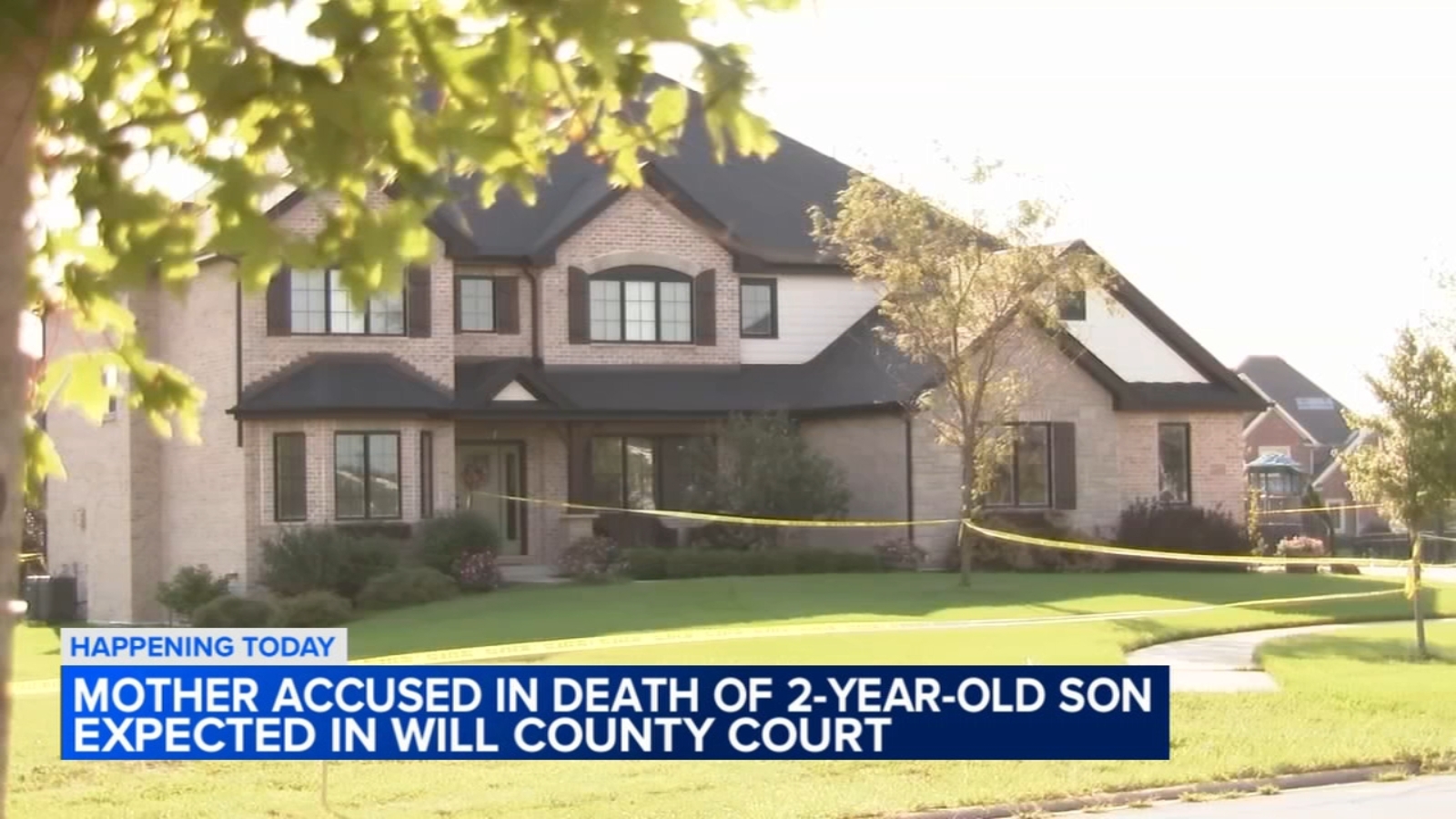
Frankfort Mother Corie Walsh Appears in Court for Discovery Status Hearing in Son’s Death
Frankfort mother Corie Walsh appeared in Will County court Monday for a discovery status hearing in the death...
Maine Brothers Bag 582-Pound Cow on Third Day of Antlerless Moose Hunt
Brothers Bill Lander and Chris Lander filled an antlerless moose permit in Wildlife Management District 8 on the...