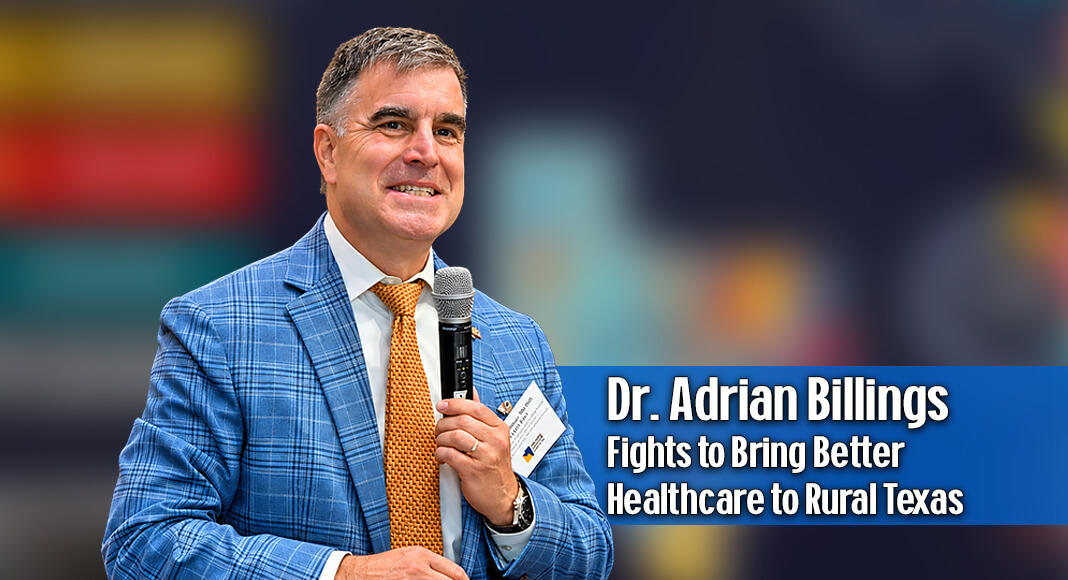
Dr. Adrian Billings is advocating for systemic changes to address the critical lack of medical infrastructure in rural and border communities across Texas, Mega Doctor News reported.
During the Texas Medical Association’s 22nd Annual Border Health Caucus Conference held August 21, 2026, in Edinburg, Dr. Billings presented data detailing the specific gaps in care facing the state’s most underserved populations. The presentation highlighted a stark reality for many residents who must travel hundreds of miles for basic medical needs or specialized treatment.
The statistics provided by Dr. Billings illustrate a crisis in medical accessibility. For many rural Texans, the absence of local facilities or specific practitioners turns routine health management into a logistical hardship.
| Type of Medical Shortage | Number of Texas Counties Affected |
|---|---|
| Counties with no hospitals | 55 |
| Counties with no primary care physicians | 40 |
| Counties lacking endocrinologists | 179 |
The lack of endocrinologists is particularly concerning given the prevalence of metabolic disorders in these regions. Without these specialists, patients in isolated areas face greater difficulty managing chronic conditions like diabetes.
Dr. Billings, a Texas Tech University Health Sciences Center physician, argues that the solution is not to lower the quality of care, but to build the systems necessary to support it. He noted that the disparity is a matter of infrastructure rather than a question of medical standards.
“We don’t need different standards,” Dr. Billings told conference attendees. “Our patients deserve and have earned the same standards, but we need the same standards with systems to support them.”
The human impact of these shortages is evident in the daily lives of border communities. Residents often face three-hour drives to reach a maternity unit or must travel 250 miles to see a specialist.
Dr. Billings has attempted to model potential solutions through his work in Presidio County. By integrating his private medical practice with a federally qualified health center, he worked to expand available services and recruit new healthcare professionals to the area.
This approach aimed to provide more resources to patients who previously had extremely limited medical options. His experience suggests that combining private practice with community-focused health centers can help stabilize the medical workforce in underserved zones.
24-Team CFP Expansion: What the New Format Means for the Group of Six
The College Football Playoff is shifting to a 24-team model starting with the 2027 season, fundamentally altering the...

CSU and Wyoming to End 81-Year Border War Streak in 2027
The Colorado State and Wyoming football teams will not meet on the gridiron in 2027, marking the first...

Mandela Barnes Sues Milwaukee Journal Sentinel for Defamation
Former Lieutenant Governor Mandela Barnes has filed a defamation lawsuit against the Milwaukee Journal Sentinel, alleging the newspaper...

Charleston Leaders Consider Raising Parking Violation Fines
Charleston city leaders are considering increasing parking violation fines to discourage illegal parking. The proposal, discussed during a...