This year’s El Niño-driven rainy season could test California’s flood control system as never before in its more than 100-year history, the Department of Water Resources reported Wednesday.
“It’s impossible to fully predict the impacts of this El Niño on Northern California,” said Laura Hollender, DWR Deputy Director of Flood Management and Dam Safety. “But if we get hit with a series of powerful atmospheric river storms, this could be the year we will need to open the gates again.”
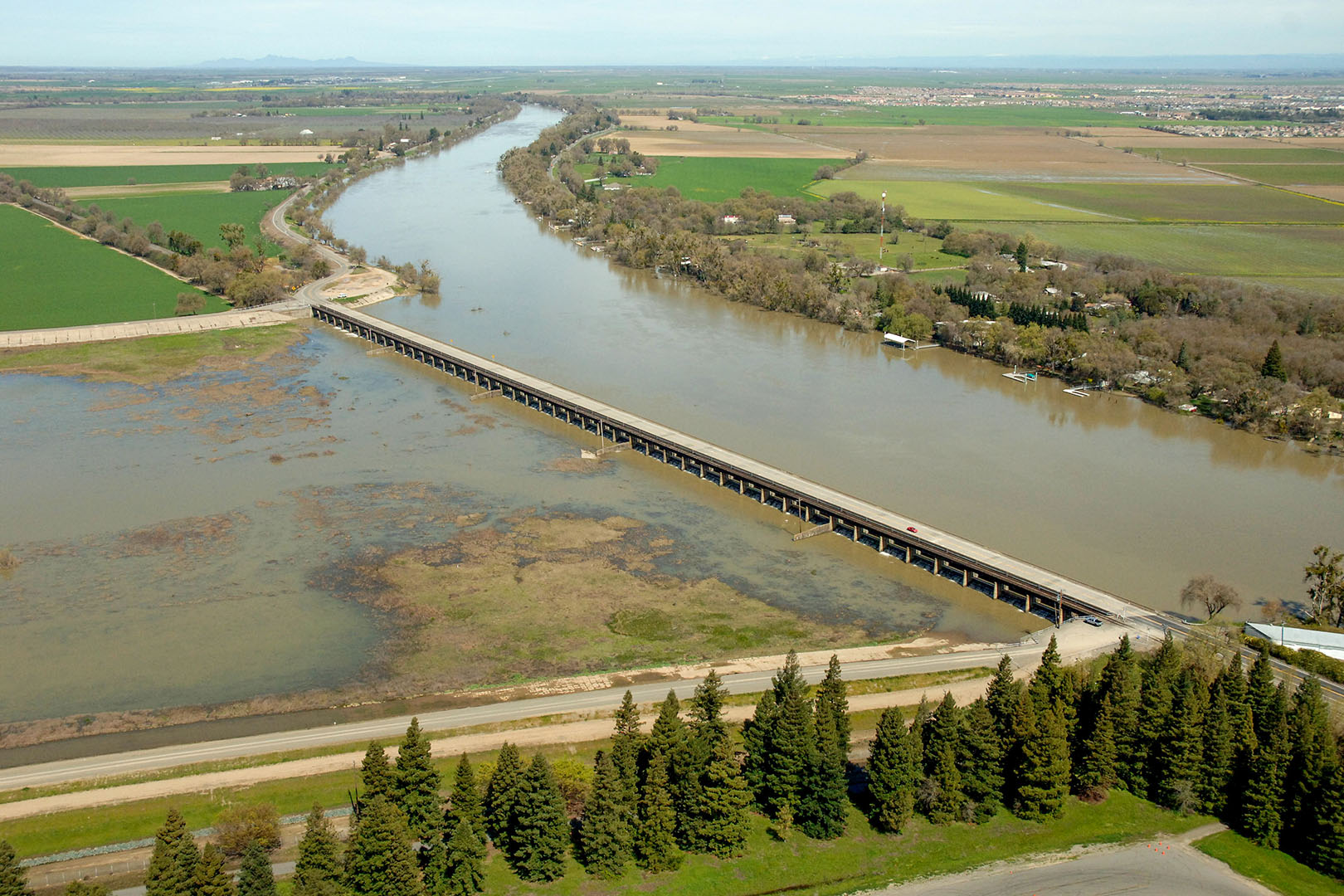
The Sacramento Weir, one of six weirs along a 95-mile stretch of the Sacramento River from Butte City to North Sacramento, has not opened since January 2017. It is the only weir with 48 manually operated gates that hold back floodwaters until DWR’s Division of Flood Management opens them — a step taken only when the river reaches 29.87 feet and the forecast calls for it to continue rising.
Major upgrade underway
The Sacramento Weir Widening Project, the first major upgrade in the structure’s 109-year history, began after the 2023 completion of the Lower Elkhorn Basin Levee Setback Project. The work adds 1,455 feet of passive weir system to the existing 1,950-foot structure and its 48 gates.
The project is a joint effort led by the U.S. Army Corps of Engineers and DWR, in collaboration with the Sacramento Area Flood Control Agency and the Central Valley Flood Protection Board, with an estimated finish date for flood features set for 2027.
The new passive weir will facilitate easier passage of high water into the bypass and will further mitigate flood dangers for the Sacramento metropolitan area, which is one of the country’s most vulnerable locations to the threat of catastrophic flooding.
The Sacramento Weir, completed in 1916, diverts river flows west into the Sacramento Bypass to protect the City of Sacramento from excessive flood stages. The Yolo Bypass, fed by this system, takes 80% of flood flows during storm events from major valley rivers including the Sacramento, American and Feather Rivers.
Related reading

Kirk Cousins and Brian O’Neill Viral Sideline Exchange: No Hard Feelings
Kirk Cousins and Brian O'Neill had a viral sideline exchange during the Minnesota Vikings' 35-10 loss to the...
Ameren Missouri: 123,000 Without Power After Thanksgiving Storm, Restoration Expected to Take Days
More than 123,000 households and businesses in the St. Louis area were without power Thursday morning after a...

Author Argues Thanksgiving Is a Distinctly Christian Holiday
In a column, an author argues that Thanksgiving is a distinctly Christian holiday. The piece centers on the...

Coast Guard Recovers One Buoy Near Florence; Depoe Bay Buoy Pending
U.S. Coast Guard crews have recovered two navigation buoys that washed ashore along the Oregon coast after breaking...