
ASEAN ministers meeting in Manila last September pledged faster implementation of the bloc’s disaster management work programme, yet weeks later neither Indonesia nor Thailand requested regional help as 35 disasters struck the region, East Asia Forum reported.
The gap between commitment and action reflects what researchers call a “counter-dependent” pattern: member states treat asking for aid as a sign of weakness, fearing the perception of state failure and the administrative burden of vetting foreign assistance under national laws.
“In Southeast Asia, asking for help is often perceived as a sign of weakness as the affected state fears being labelled as ‘failed’ and exposed to unwanted — and potentially dangerous — attention from better-positioned neighbours,” Siddharth Anil Nair, research associate at the Centre on Asia and Globalisation, Lee Kuan Yew School of Public Policy, wrote in East Asia Forum.
Jakarta Bangkok hold off foreign assistance
Jakarta signalled on 15 October it would accept regional aid but reversed course by 19 October, deciding to “hold off on foreign assistance,” according to East Asia Forum. Bangkok similarly opted not to seek support despite widespread fires and flooding. Myanmar’s refusal is shaped additionally by the military junta’s desire to control aid flows and punish rebel-held areas, the same analysis noted.
EU mechanism offers contrast
The European Union’s Civil Protection Mechanism, which shares structural features with ASEAN’s agreement — state consent, a coordination centre, assessment teams and relief stockpiles — has been activated more than 900 times since 2001, compared with 31 ASEAN Emergency Response and Assessment Team deployments from 2008 to 2030, East Asia Forum reported. An EU “activation” occurs when a state requests aid; the ASEAN figure reflects actual deployments.
The EU mechanism is also open to non-EU states, including ASEAN members.

Larger EU countries such as Belgium and the Netherlands have requested help for fires and floods, reframing the act as pragmatic. The EU pool co-finances 75–100 per cent of costs, reducing administrative loads, while ASEAN’s system relies on external financing and requires case-by-case negotiation.
Malaysia pushes operational changes
Deputy Prime Minister Datuk Seri Dr Ahmad Zahid Hamidi, speaking after the 14th ASEAN Ministerial Meeting on Disaster Management (AMMDM) in Jakarta, said senior officials should meet more frequently to close the long gap before the next ministerial meeting in Laos in October 2027, The Star reported.
“We would like senior officials to meet more often if possible, so that we can coordinate our efforts and get aid quickly to countries hit by natural disasters,” he said.
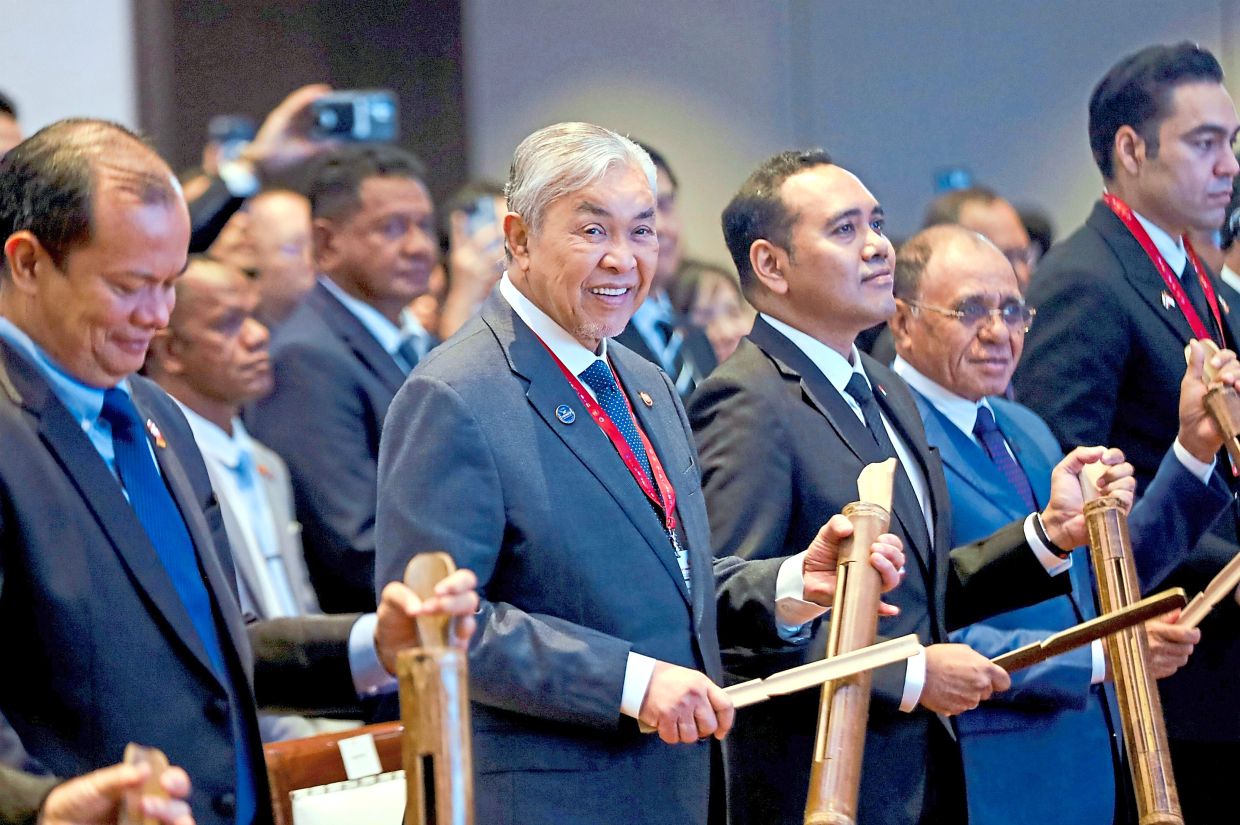
Zahid also said Malaysia is ready to assist ASEAN members and support joint humanitarian missions beyond the region, “subject to requests from affected countries and the availability of resources,” Newswav reported. He stressed that “every early warning must be followed by agreed action before a disaster strikes” and that agencies must already know evacuation responsibilities, transport, relief centres and emergency fund mobilisation.
Funding and technology projects advance
Malaysia will coordinate a RM19.7 million ASEAN-China disaster management project through the National Disaster Management Agency (Nadma) until October 2028, covering rescue training, ICT support and a mobile command system for field teams, The Sun Malaysia reported. ASEAN has also launched 2026–2030 work plans with China, Japan and South Korea, focusing on community preparedness, early warning systems and digital dissemination of disaster information.
Zahid proposed that Nadma and South Korea’s Ministry of the Interior and Safety identify joint training opportunities while a draft memorandum of understanding undergoes legal review, and said Malaysia is exploring officer placements in South Korea under the PRESTIJ Programme to adapt early warning practices locally.
Deployments of the ASEAN Emergency Response and Assessment Team (ERAT) require explicit consent from the affected member state, a condition rooted in the bloc’s principle of non-interference that researchers describe as creating a “counter-dependent” pattern where governments avoid requesting aid to prevent perceptions of state failure, East Asia Forum reported.
Malaysia will continue contributing US$100,000 annually to the ASEAN Coordinating Centre for Humanitarian Assistance on Disaster Management (AHA Centre), Zahid said, adding that the One ASEAN, One Response framework should extend beyond emergency response to prevention, preparedness and early action.
Worth a look

Slate’s Dear Prudence: Columnists Flag Boyfriend’s Quilt Demand as Controlling Sign
Slate's Dear Prudence column on Nov. 26 examined a dispute over a wedding quilt that columnists Jenée Desmond-Harris...

Ombudsman Orders Graft Charges vs 3 Ex-LandBank Officials, Businessman Over Loan Anomalies
The Office of the Ombudsman ordered the filing of graft charges Thursday against three former Land Bank of...
Genomic Sequencing Identifies Dasatinib Target for Rare Blood Disorder
Sisters with a rare blood disorder are the first patients to receive a repurposed drug, after genomic sequencing...

Cabinet to Approve Key Changes Friday for Amended Delimitation Bill
Lok Sabha reconvenes November 30; Rajya Sabha on December 2; both conclude December 3. Cabinet will clear the...