
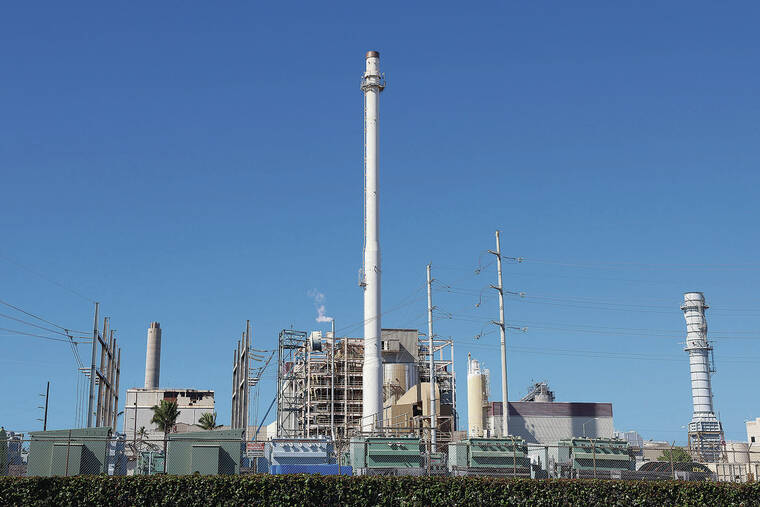
An estimated 403,000 gallons of diesel fuel leaked from an underground pipeline at Honolulu’s city-owned H-POWER waste-to-energy plant between January and May, but the public was not informed until November 19. Governor Josh Green ordered a formal review on November 24 and required immediate public notification of any future oil release.
Federal, state and city officials inspected the site at Campbell Industrial Park on Monday, November 23, joined by operator Reworld. The U.S. Environmental Protection Agency, U.S. Coast Guard, state Department of Health and Reworld walked the shoreline at Kalaeloa, about 1,600 feet from the plant, though a state health official said they were “just looking,” Hawaii News Now reported.
Spill discovered in May, scope realized in July
A Reworld employee noticed a fuel-level discrepancy on May 4 and found stained soil where piping entered the ground. Excavation by hand revealed the source on May 12: a 2.5-millimeter hole on the underside of a 3-inch underground pipe, roughly the size of a sesame seed. Reworld notified the state Department of Health and the city Department of Environmental Services at the time, initially estimating a 6,500-gallon release.

By July, monitoring wells showed the spill was actually 403,000 gallons. Reworld informed DOH’s Hazard Evaluation and Emergency Response Office of the revised figure in July, but Mayor Rick Blangiardi said he was not told until late October and learned the full magnitude only this week. The governor was notified on November 18; the city announced the spill publicly on November 19, according to the governor’s office.
Communication breakdown triggers executive order
“West Oʻahu residents should have heard about this spill sooner. So should I,” Governor Green said in a news release announcing the executive order.
The order directs three immediate actions: immediate notification to the Deputy Director of Environmental Health, the Director of Health and the Governor when HEER receives any oil-release report; a DOH website posting and internal protocol to ensure those notifications; and a formal review committee chaired by Transportation Director Ed Sniffen with representatives from the Attorney General, Health, and Human Resources Development departments.
“Our administration has been working closely with our state and federal partners to better understand the full extent of the contamination and ensure that every appropriate measure is being taken to protect public health and our environment,” Mayor Rick Blangiardi said in a news release.
The committee must deliver a preliminary report within 30 days and a final report within 60 days, determining the cause and scale of the spill, evaluating responses by Reworld, the city and DOH, establishing who knew what and when, and recommending changes to improve future responses.
Recovery underway, monitoring expanding
To date, roughly 5,500 gallons of fuel have been recovered, an increase from the approximately 4,600 gallons reported as of November 11. Current recovery operations are yielding 30 to 50 gallons per day. The underground pipeline has been taken out of service and replaced with an above-ground connection; H-POWER continues to operate normally.
Reworld has retained Deloitte to conduct a third-party forensic audit expected to be completed in early December, intended to provide a more detailed accounting of the fuel loss and a precise timeline of the release.
Additional environmental investigation on neighboring property is expected to begin next week to determine the contamination’s extent, with a longer-term remediation plan anticipated in early 2027. Reworld has pledged the company, not taxpayers, will cover cleanup costs.
Plume near endangered-plant sanctuary
A map from Reworld shows the fuel plume extends just off-site, with two monitoring wells showing detections close to a sanctuary where nonprofits have been planting ʻewa hinahina, a federally protected Hawaiian shrub. Since last November, caretakers say nine of the endangered plants have died for no apparent reason.
“It flourished and then out of the blue it died and then we are like, what’s going on,” said Kamaʻehu Maria of Kiawekupono o ka Ua.
“We are trying to understand why things are dying or declining out of the blue,” said Ulukoa Duhaylonsod of Ka’uikiokapō and Ho’ōla Hāni’o, which cares for the sanctuary. The sinkholes with brackish water that feed the plants now show only dried twigs.

Drinking water not threatened, but movement uncertain
According to the state Department of Health and Board of Water Supply, no immediate threat to human health or drinking water exists. Hydrogeologist Chris Shuler of the University of Hawaii’s Water Resources Research Center said the large volume is unlikely to stay contained in the limestone reef aquifer.
Asked how long it could take for fuel to reach the ocean, Shuler called it “the million-dollar question” dependent on permeability, “which essentially just means how fast water moves through the rocks in that area. So that’s something that we don’t fully understand.”
The inspection focused on the limestone reef aquifer that hydrogeologist Chris Shuler identified as a permeable pathway where the 403,000-gallon release could move unpredictably toward the ocean, a vulnerability heightened by the area’s geology.
The Kalaeloa vicinity, which includes the Barbers Point Harbor and Campbell Industrial Park, sits along Oahu’s southwestern tip where industrial facilities border sensitive marine habitats. Monitoring wells in this corridor confirmed the plume’s expansion by July, prompting the EPA and Coast Guard to evaluate shoreline contamination risks as recovery operations continue near the coastal zone.
EPA representatives indicated Reworld should have updated its initial National Response Center notification from May 5 as the estimated volume increased, according to the city. The Honolulu City Council plans a special hearing on the spill in December, though not during its regular December 2 meeting, Council communications director Aron Dote said.
Related reading

Striking Portland City Workers Could Lose Health Coverage Dec. 1, Officials Warn
Striking Portland city workers represented by the City of Portland Professional Workers Union could lose employer-paid health coverage...

Indiana No. 14 in CFP Rankings; CBS Projects Hoosiers Outside 12-Team Bracket
Indiana fell six spots to No. 14 in the fourth College Football Playoff rankings released Tuesday, leaving the...

BBC Radio 4, NPR’s Embedded Launch Podcast Searching for Austin Tice
A new investigative podcast series launches a real-time search for Austin Tice, the American journalist missing in Syria...
Ski Vermont Unveils 2026-27 Poster Supporting Snow Angel Foundation Safety Mission
Ski Vermont has unveiled its 2026–27 season poster, with five dollars from each sale directed to the Snow...