“When we have multiple failure points that we’re experiencing and we’re not able to identify what the actual issue is, it’s the men and women, the air traffic controllers, who guide those planes down safely,” said Steph Winder, Northwest Mountain Regional vice president for the National Air Traffic Controllers Association.
A nationwide ground stop on Nov. 13 halted departures across the United States for nearly five hours after cascading technology failures disrupted communications between pilots and controllers and destabilized radar feeds, the most sweeping halt since Sept. 11, 2001, Daily Inter Lake reported.
The Federal Aviation Administration traced the instability to excessive data flooding its network from sites in El Dorado, Arkansas, and Amarillo, Texas, after L3Harris installed a new Juniper router at the El Dorado site; as of Nov. 17 the agency had not determined precisely why the system failed. The outage affected 17 of 22 regional air traffic control centers and spread into several terminal radar approach control facilities.
Rural infrastructure exposed
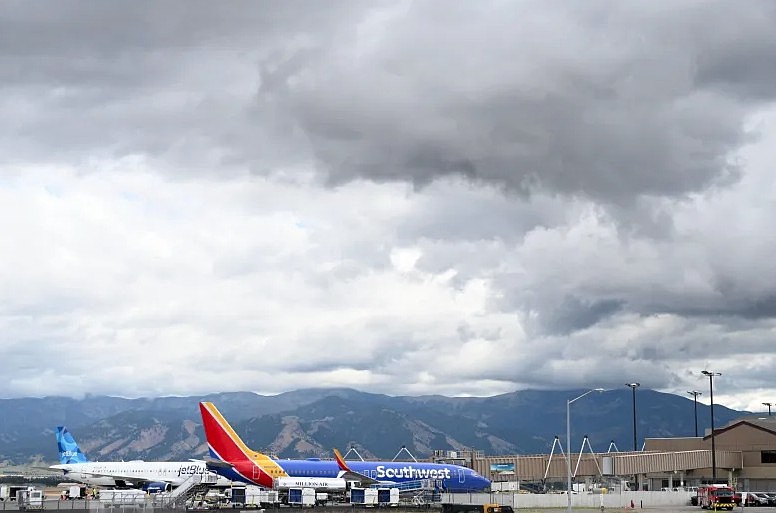
In Montana, the disruption laid bare infrastructure that still relies on paper flight strips and 1980s-era floppy disks. Great Falls controllers use floppy disks for some chart updates, converting files through Microsoft Paint before uploading them, Winder told Daily Inter Lake. Bozeman Yellowstone International Airport CEO Brian Sprenger said eight airliners were grounded — seven on the ground and one en route that returned to the terminal — stranding passengers and raising crew-timing complications, he told Daily Inter Lake.
Standard two-pilot crews work only eight to nine hours before they must be relieved, Sprenger said.
Copper wiring from the 1960s remains part of the FAA’s national communications network and is being swapped out for fiber-optic cable.
At Salt Lake Center, controllers use touch-screen voice switch communications systems Winder compares to iPads, allowing direct voice lines to facilities such as Bozeman, Great Falls or Billings. But Winder said many facilities in the Northwest Mountain region still use paper strips, writing on physical flight plans to track traffic sequence.
Funding dispute intensifies
Transportation Secretary Sean Duffy urged Congress in September to approve $30 billion for air traffic and airport modernization; the Trump administration increased the request to $50 billion on Nov. 17. Sen. Ted Cruz, R-Texas, chair of the Senate Commerce, Science and Transportation Committee, said on his podcast Monday that H.R. 1, the 2025 One Big Beautiful Bill Act, included $12.5 billion for the FAA, of which $3 billion to $4 billion has been spent replacing copper wires with fiber. “This was a brand-new router that, for whatever reason, failed,” Cruz said.
Democrats on the Senate Commerce Committee wrote to the FAA on Monday asking it to pause deployment of additional Juniper routers.
The FAA complied Tuesday, pausing installations and disabling the suspect functionality on more than 60 routers already in the system. According to L3Harris, the copper-to-fiber transition requires converting 3,648 routers to Juniper devices; roughly 400 have been installed and 69 are operational.
In September the Government Accountability Office warned that continued reliance on severely outdated systems leaves the FAA vulnerable to equipment failures affecting more than 45,000 flights a day.
GAO also found the agency lacks a comprehensive lifecycle cost estimate for its “Brand New Air Traffic Control System” and an integrated master schedule for the thousands of projects involved, and noted the FAA plans to modernize voice radio systems nine years earlier than originally planned.
Steph Winder, Northwest Mountain Regional vice president for the National Air Traffic Controllers Association, represented the workforce during the Nov. 13 nationwide ground stop, telling Daily Inter Lake that controllers guide planes down safely when multiple failure points prevent identification of the actual issue.
The union, certified on June 19, 1987 as the exclusive bargaining representative for FAA controllers, actively pressures Congress and the FAA to hire more controllers and accelerate installation of advanced air traffic control systems, a role Winder emphasized while describing Montana facilities still relying on paper strips and 1980s-era floppy disks.
Staffing crisis compounds technology gaps
Winder said the bigger problem facing Montana air traffic control is staffing. The FAA is severely understaffed and approaching a wave of retirements as controllers reach the mandatory retirement age of 56. Applicants generally must be younger than 31, and certification takes one to four years. “I feel like it sells itself,” Winder said of Montana. “It’s such a beautiful place, but it is very expensive to live in Bozeman.” Strict medical requirements also sideline controllers for common medications including NyQuil, Benadryl and DayQuil due to cognitive side effects, she said.
Montana’s congressional delegation is split on the ROTOR Act, which would expand requirements for aircraft to electronically identify and track nearby aircraft. Sens. Steve Daines and Tim Sheehy support the measure; Reps. Ryan Zinke and Troy Downing opposed it in a February House vote.
Downing told Montana Free Press on Tuesday the bill imposes too many mandates on airlines and cautioned against giving more money to the FAA unconditionally. “We need solutions that deliver meaningful improvements, not more federal requirements that fail to solve the problem,” Downing said. Cruz announced Tuesday that House and Senate negotiators reached an agreement in principle on aviation safety legislation intended to break the stalemate.
More on El Dorado
This map shows airline traffic during the FAA's nationwide ground stop on Nov. 13, 2026, only including aircraft types that were built for passenger service. The stop began around 3:54 p.m. ET and ended at around 8:15 p.m. ET. https://t.co/kSfmeM4NgP pic.twitter.com/e5QvxvqQ70
Western Fire Chiefs Association Publishes Live Fire Map With AI Verification
The Western Fire Chiefs Association has published a live fire map that fuses multi-satellite heat detection with an...

Michigan Upsets No. 4 UCLA 18-16 in Triple Overtime to Secure Bowl Eligibility
Michigan upset No. 4 UCLA 18-16 in triple overtime on Saturday, securing bowl eligibility for the first time...

Avelo Airlines Will Not Operate 31 Routes This Winter That It Flew a Year Ago
Avelo Airlines will not operate 31 routes this winter that it flew a year ago, removing 25 domestic...

Broncos O-Line Rankings Tumble but Veterans Bolles, Meinerz Improve
Broncos offensive line rankings have tumbled from fourth and eighth in run-block and pass-block win rate to 11th...