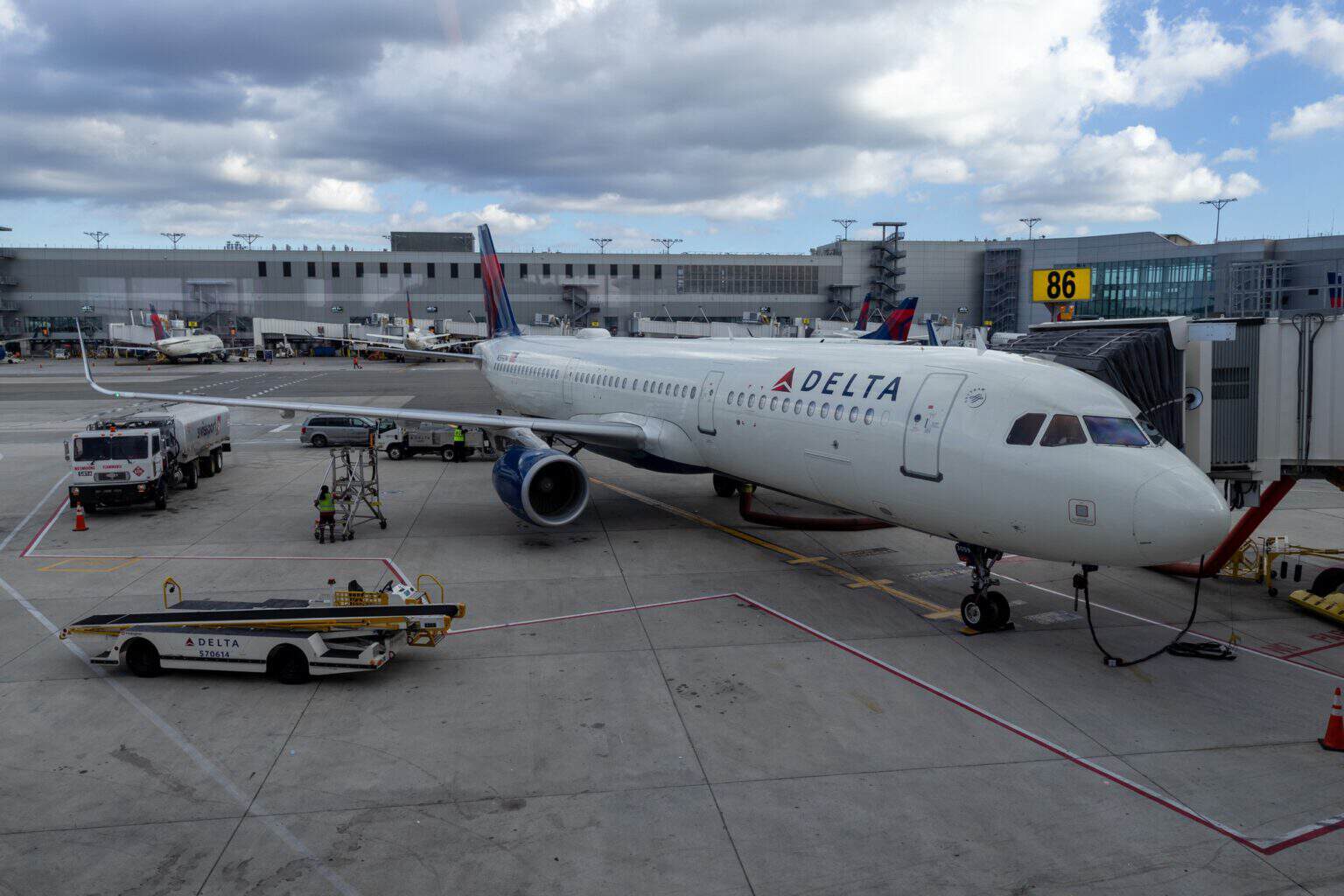
Fog grounded departures to three major airports Sunday before Thanksgiving, with LaGuardia hit by two ground stops in less than two hours.
The Federal Aviation Administration held flights bound for LaGuardia, Newark Liberty and Houston Hobby on the morning of Nov. 22 as low visibility cut arrivals. All four ground stops were canceled by 9 a.m. Eastern, but delays outlasted them. LaGuardia’s first stop began at 6:46 a.m. Eastern and covered departures from airports under the Washington, New York, Cleveland and Boston en route centers.
The FAA canceled it at 8:13 a.m., noting that weather had improved to Category II minimums. Eight minutes later, with aircraft in holding stacks, the agency issued a second stop for departures from the Washington, Cleveland and Boston center areas. Newark’s ground stop was narrower, taking in only the Washington center area. Hobby’s applied to departures from the Houston and Fort Worth center areas.
| Airport | Stop issued | Stop canceled | Average delay | Maximum delay |
|---|---|---|---|---|
| LaGuardia, first stop | 6:46 a.m. ET | 8:13 a.m. ET | 65 minutes | 95 minutes |
| LaGuardia, second stop | 8:21 a.m. ET | 9:00 a.m. ET | 77 minutes | 138 minutes |
| Newark | 8:18 a.m. ET | 8:43 a.m. ET | 26 minutes | 49 minutes |
| Houston Hobby | 6:35 a.m. CT | 7:37 a.m. CT | 29 minutes | 101 minutes |
The trouble was wider than those three airports. At 7:51 a.m. Eastern, the FAA warned of airborne holding and arrival delays up to 30 minutes across the Northeast, including Boston, JFK, Philadelphia and Washington-area airports.
It also activated diversion recovery, its tool for handling diverted flights, for Hobby and the Northeast. The advisories warn that those flights are not automatically exempt from a ground stop or delay program. Atlanta’s Delta-only ground stop and delay program Sunday was a separate event, requested by the airline.
Category II is a more precise version of the standard instrument landing system approach. Coming in from the other end, on Runway 4, the FAA’s chart calls for 4,000 feet of runway visual range, or 2,400 feet with a flight director or head-up display. Sunday’s readings at 6:51 and 7:51 a.m. were below both figures. Runway visual range on Runway 4 was 1,200 to 1,400 feet.
Newark reported mist and visibility of half a mile at the same time. Central, and the FAA said it was below most operators’ minimums. The FAA’s advisories did not say which runway arrivals were using. Those who cannot start the approach must wait for an improvement or go elsewhere. Controllers also have less flexibility.
Eastern, and at Newark, Teterboro and JFK after 2 p.m. National Weather Service forecasts updated at 9:18 a.m. Federal rules make no weather exception to your right to a refund.
Keep reading
Sports Illustrated Names Three Potential Trade Partners for Yankees’ Ryan McMahon
Ryan McMahon hit .213 with 11 home runs and 41 RBIs in 124 games during his first full...

Woman Dies at MDC, Pushing Jail’s Annual Death Toll to Record High
A woman died Thursday at the Metropolitan Detention Center after weeks in custody on a drunken-driving charge, pushing...
Court Orders Sunday Response on Iowa Army Plant Lead Azide Detonation Plan
The Iowa Army Ammunition Plant near Middletown could detonate nearly 10,000 pounds of unstable lead azide as early...
Delta Automation Failure Halts Atlanta Flights Before Thanksgiving
An automation failure halted Delta Air Lines flights to Atlanta on the Sunday before Thanksgiving, stranding thousands at...