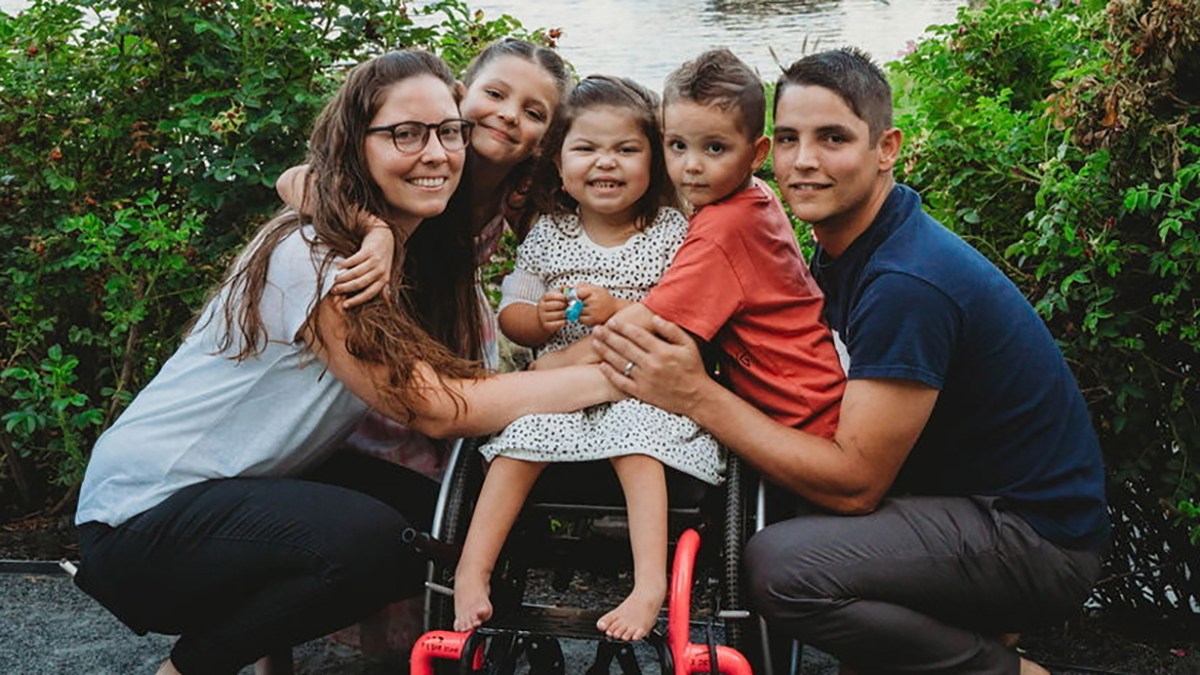
Thirteen years after a birth at a military installation in Japan ended in a permanent, life-altering brain injury for their daughter, the Walker family is challenging the federal government in court.
The case, which highlights a stark disparity in how the U.S. military handles medical malpractice claims, pits a family seeking lifelong care against a legal doctrine that prevents them from suing for damages simply because of where their child was born.
Brandon Walker was serving on Navy orders at Misawa Air Base in 2013 when his wife, Kyla Walker, went into labor. During a cesarean section, the placenta detached, cutting off oxygen and blood flow to their daughter, Kira, for six minutes. The resulting hypoxic brain injury left Kira with epilepsy, cardiomyopathy, and a reliance on around-the-clock care, according to reporting by Task & Purpose.
The family is now suing the Air Force in federal court in Washington, D.C., arguing that their constitutional rights were violated by a rigid federal law. While the Federal Tort Claims Act allows families to sue the government for medical malpractice at domestic military hospitals, that same law explicitly excludes claims arising in a foreign country.
This leaves families stationed overseas with no recourse other than the Military Claims Act—a system the family’s lawsuit describes as “toothless” because it offers no path to a day in court.
The Struggle for Basic Care
The Walkers, who now live in Texas, have spent over a decade managing the financial and emotional toll of Kira’s condition. Kyla Walker, who is currently studying for her nursing degree, provides full-time care for her daughter, assisting with daily tasks like dressing and hygiene.
“It's a balancing act to make sure one of us is available for what she needs. We have learned to live within our means,” Kyla Walker said.
In 2015, the family filed a claim under the Military Claims Act. The Air Force responded with a $225,000 compromise settlement, which notably included no admission of fault. The family is now seeking $11.9 million to cover the projected costs of Kira’s care, an amount their lawyer, L. Lee Thweatt, argues is necessary to secure her future.
“Why should a brain-injured child born at Camp Pendleton get much better treatment in the courts and in the claim system than a child with a brain injury born in Japan or in Germany or at any other U.S. military installation overseas? There’s no valid or legitimate reason for that, legally or otherwise. It’s crazy, and this system has to change.”
— L. Lee Thweatt, the Walkers’ lawyer, told Task & Purpose.
A Disparity in Legal Precedent
The Walkers’ case shows a growing tension regarding how the military handles medical negligence. In recent years, families within the United States have successfully pursued litigation under the Federal Tort Claims Act.
In 2022, a case at Tripler Army Medical Center in Hawaii resulted in a $38 million settlement, and earlier this year, a similar suit at Fort Campbell, Kentucky, ended in an $11 million settlement. These cases highlight the gap between the legal remedies available to military families stationed domestically versus those serving abroad.

The Air Force has declined to comment on the ongoing litigation. For the Walkers, the situation is about more than just a past error; it is about the long-term viability of their family’s life. As they wait for a response to their appeal, the reality remains that their daughter’s condition demands resources that the current administrative claims system was not designed to provide.
The lawsuit requests a bench trial to prove liability and secure damages. “It changed our entire lives. It affects my kids and who they'll be,” Kyla Walker said. “It’s not just a, ‘Well, this accident happened,’” she told Task & Purpose. “It’s our whole family.”
Worth a look

Tax Retreat Opens Registration for 2027 Minneapolis Event
Registration is officially open for the fourth annual Tax Retreat, which will take place July 28–31, 2027, at...
Woman Dead, Man Injured in Detroit East Side Double Shooting
A double shooting on Detroit's east side left a woman in her 20s dead and a man in...

Boston Celtics face Philadelphia 76ers at Xfinity Mobile Arena
Just ten games into the 2026 season, the Boston Celtics travel to face the Philadelphia 76ers for their...

Dr. Enrico Novelli to Lead Sickle Cell Disease Care in Maryland
Dr. Enrico Novelli has taken the helm of a major regional effort to transform care for patients with...