The Federal Communications Commission voted Thursday to allow state prisons to use cellphone signal jammers, a tool Oklahoma corrections officials have long sought to combat contraband devices.
Oklahoma Watch reported the decision Thursday.
“This itself is not going to be a silver bullet,” FCC Chairman Brendan Carr said during the hearing. “But I think it’s time we stop denying this technology to state and local officials.”
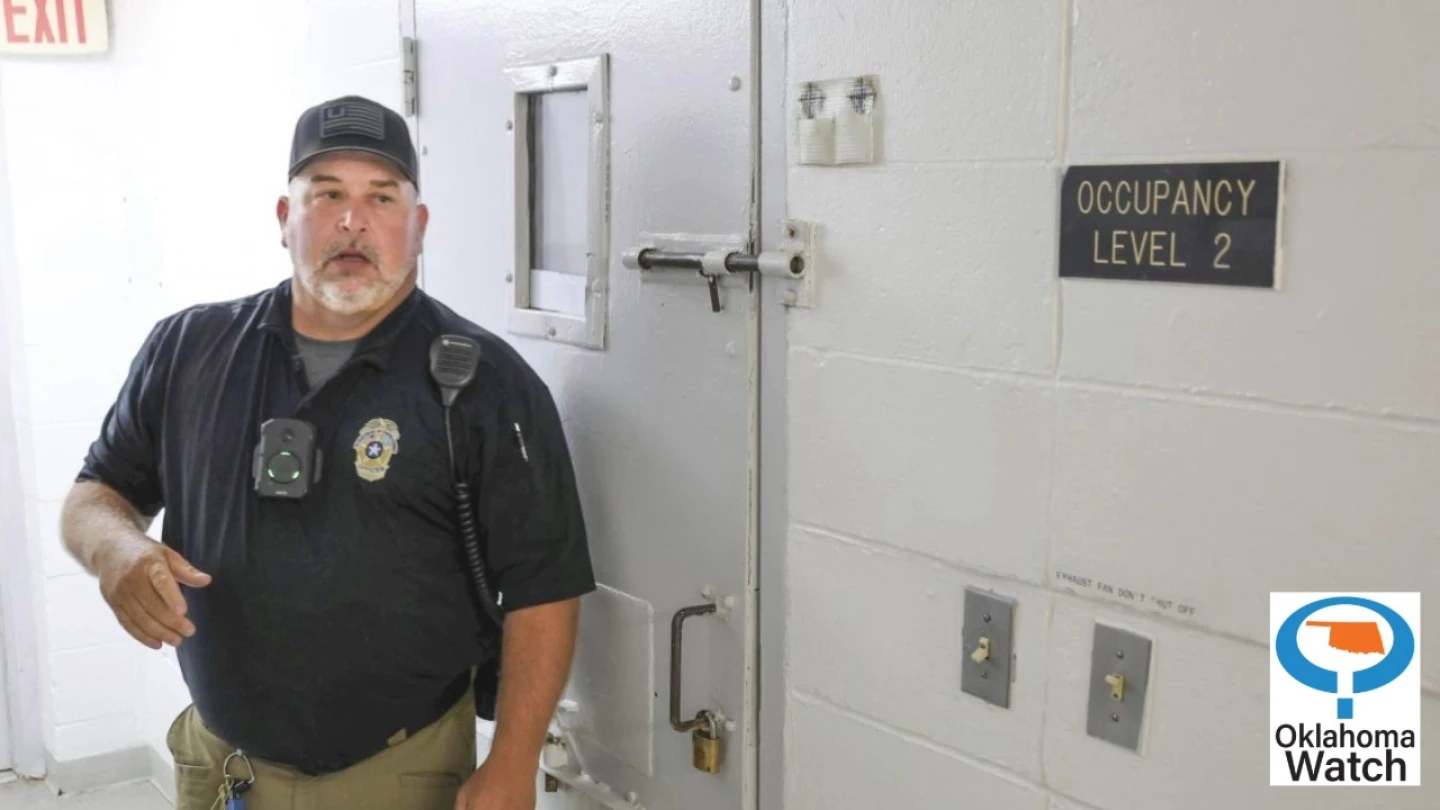
The ruling arrives as Oklahoma’s prison system drowns in contraband. Staff seized 5,758 phones from January through September — roughly one for every four people in state custody, according to Department of Corrections Chief of Public Relations Kay Gallamore.
A pipeline of phones and violence
Visitors, corrupt staff and even drones ferry devices past the fence, often for a hefty fee. A 2024 Oklahoma Watch investigation found the phones are routinely used to extort families — pay up or your loved one gets hurt — and to coordinate drug shipments and hits inside the walls. Experts told the outlet many cases go unreported because witnesses fear gang retaliation.
“Contraband cellphones undermine order, compromise investigations and put lives at risk,” Corrections Director Justin Farris said in a written statement after the proposal was announced in September 2025. “We believe the FCC’s proposal is a historic and necessary step to help secure our facilities effectively.”
Gov. Kevin Stitt and Attorney General Gentner Drummond backed the rule change, arguing jamming would complement existing enforcement.
Why the technology sat on the shelf
Signal jamming — flooding a frequency with noise so handsets cannot reach a tower — has existed for decades. Federal regulators blocked state use because stray signals could knock out calls for neighbors, businesses and first responders.
Oklahoma tried alternatives. In 2020 the Department of Corrections piloted wristbands that would detect phone signals on inmates; gang members threatened violence against anyone who wore one, and the program was scrapped.
In 2021 the state won federal approval to install managed-access systems at the Oklahoma State Penitentiary in McAlester and Dick Conner Correctional Center in Hominy. Those systems identify and disable illegal phones in coordination with carriers, but they are expensive and limited to two facilities.
New rule requires multiple testing rounds and FCC approval
The new rule requires each prison to run multiple rounds of testing to prove signals do not leak beyond the perimeter. Wireless carriers, emergency responders and neighboring communities must be notified before testing begins. States also need FCC approval to move jammers or change frequencies.
Gallamore said officials will review the final rule and available technology before finalizing plans. The department has said it will prioritize maximum-security sites such as the Oklahoma State Penitentiary.
The cost of a call
“It’s cheaper for families, and that’s why a lot of the guys do have a phone,” said Emily Barnes, founder of the prisoner advocacy group Hooked on Justice.
“But I’m really in favor of them putting [signal jammers] in. As much as I want to be against it, I can’t, because a lot of hits on inmates are coming in over cellphones. Drugs are coming in over cellphones.”
Barnes told Oklahoma Watch that some inmates use contraband phones simply to avoid the $2.10 per 15-minute rate on prison phones — a price that more than doubled in September 2025 after the FCC rolled back rate caps. Phones are also used to report staff misconduct and unsafe conditions. Still, she said the violence fueled by the devices outweighs the communication benefits.
“A lot of inmates have said to me, man, if we had free phone calls, I wouldn’t even need a phone,” she said.
Brendan Carr, born in 1979, has served as an FCC commissioner since 2017 and became chair in 2025. Before joining the commission in 2012 as an attorney, he worked in private practice representing Verizon and AT&T and later became general counsel under Chairman Ajit Pai. He also authored a section of the Heritage Foundation’s Project 2025 Mandate for Leadership in 2023.
Legislative follow-up
Prison officials are also pushing for stiffer penalties. On Nov. 18 the Board of Corrections approved an agency request bill to make unauthorized communication with an inmate a felony, targeting outsiders who coordinate crimes via contraband phones. A legislator must sponsor the measure and file it by the Jan. 14 deadline ahead of the regular session that convenes Feb. 1.
Keep reading

Fargo Man Found With Missing 13-Year-Old in Hotel Arrested, Weeks After Gun Charge Dismissed
Fargo police arrested a 27-year-old man early Friday after finding him in a hotel with a missing 13-year-old,...

Robert “Bob” J. Muszynski, Retired Programmer and Church Musician, Dies at 83
Robert "Bob" J. Muszynski, a retired computer programmer and lifelong church musician, died Tuesday at his home in...

New Castle Man Sentenced to Life for Crash Killing UD Student
A New Castle man was sentenced to life in prison plus 28 and a half years on Friday...
Sacramento Chefs Demonstrate Healthier Soul Food at Holiday Event
Sacramento chefs Claudia Newman and Willie Williams demonstrated healthier takes on soul food classics at a cooking event...