
A federal rule change set for Dec. 11, 2026, will effectively ban most hemp-derived THC drinks and edibles now sold in Minnesota, even though state law still allows them.
The new definition limits finished hemp products to 0.4 milligrams of total THC per container, far below the 2 to 10 milligrams found in a typical Minnesota THC seltzer can. Products made with synthetic cannabinoids such as THC-O already lost federal hemp status on Nov. 12. Once a product crosses the 0.4-milligram line, it no longer counts as hemp under federal law, which matters for banking, card payments, federal taxes and interstate shipping — but it does not override Minnesota’s own rules. The Minnesota Office of Cannabis Management said the federal change “does not change how Minnesota law defines lower-potency hemp edible (LPHE) products,” and that these products can still be made and sold here under state law. Buyers must be 21 or older. Packages may hold up to 50 milligrams of THC, drinks up to 10 milligrams per container, and adults may carry up to 800 milligrams in edibles. A 15 percent cannabis gross-receipts tax plus sales tax still applies. Minnesota’s hemp-THC market generated about $250 million in sales and $45.6 million in state tax revenue since September 2025, according to the Office of Cannabis Management. Total retail sales hit $180 million last year, CBS News reported. Bob Galligan of the Minnesota Craft Brewers Guild called the timing “worst” for an industry already facing rising costs. “Just because people are struggling really right now, just with the rising cost of goods, rising cost of labor. Everything is just changing so quickly on a dime,” he told CBS News. Some payment processors have already stopped handling hemp-THC sales. Square began notifying sellers in August of the incoming federal rules, forcing Northern Coffeeworks in Minneapolis to halt THC product sales, CBS News reported. Barista Kara Bohlen told WCCO she wonders whether prices will have to rise to make up the lost profit. Licensed cannabis dispensaries can also sell lower-potency hemp edibles, and their cannabis products follow separate state rules. The Office of Cannabis Management named four areas that could get harder for products over the federal line: federally insured banking, card processing, federal tax deductions and interstate shipping.
Some businesses are considering cash-only sales or a “store within a store” model, OCM Executive Director Eric Taubel told the Duluth News Tribune. Sen. Amy Klobuchar, D-Minn., and Sen. Tim Sheehy, R-Mont., introduced the Hemp Guardrails Act on Nov. 17 to create a federal framework, but it has not moved. “Minnesota is a national leader in hemp, and our state has shown that we can protect kids and support responsible hemp businesses,” Klobuchar said in a statement to the Duluth News Tribune. “But a looming federal ban on hemp products — that I have strongly opposed — is threatening farmers, brewers, small businesses, and consumers across Minnesota and the country.”
Klobuchar and Sen. Tina Smith led a one-month delay enacted in September. “We must pass bipartisan legislation to give Minnesota’s hemp producers, retailers, and customers certainty. I have already introduced several bipartisan bills with [Republican] Sen. Rand Paul, and am working with [Republican] Sen. Tim Sheehy on another,” Klobuchar told WCCO, according to CBS News.
Taubel said the state has been planning for a “worst-case scenario” regardless of a last-minute deal. “Consumers don’t draw a very hard and neat line between cannabis and hemp products,” he told the Duluth News Tribune. “I mean, they both come from the same plant, and it’s the same psychoactive ingredient that gets you high in both cases.”
Minneleaf founder Eric Redlinger said distributors in Wisconsin and Illinois have returned product because they are pulling out of the business. “Because they don’t want to be stuck with a bunch of product,” he told the Duluth News Tribune.
The Office of Cannabis Management advises businesses to list every hemp product and its THC per container, contact banks and card processors, ask suppliers about their plans, review license options and consult a lawyer. A free 15-minute training course for staff is available from Learn Brands, current as of Nov. 24. Whether Congress delays the ban again or passes a replacement framework remains unsettled. Dec. 11 is also the current federal funding deadline, so a fix could ride along with a budget bill.
Keep reading
- Washington and Lee Law Students Demand Dean’s Resignation Over Admission of Student Who Pleaded Guilty to Sexual Battery
- Beamer: Clemson QBs Pearman, Denson Present Distinct Challenge for South Carolina
- Trump Urges DOJ to Speed Federal Executions, Targets Newsom Commutations (archyde.com)
- Thomas Markle indicted on two federal child sex abuse charges in Los Angeles (newsarchyuk.com)

Washington and Lee Law Students Demand Dean’s Resignation Over Admission of Student Who Pleaded Guilty to Sexual Battery
Thirty-eight law students signed demands targeting top administrators on November 24, 2026. The student at the center of...
Beamer: Clemson QBs Pearman, Denson Present Distinct Challenge for South Carolina
South Carolina coach Shane Beamer said Tuesday that Clemson's third-string quarterback Trent Pearman will present a distinct challenge...
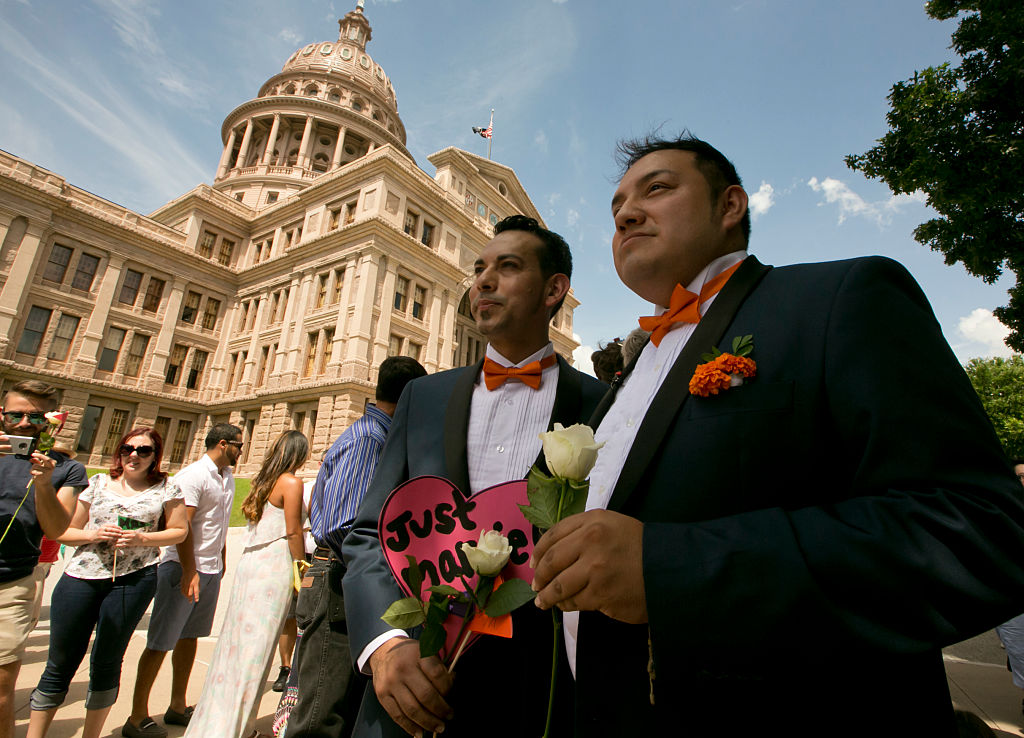
Texas Bill Could Make Officiating Same-Sex Weddings a Felony, Author Says Not Intentional
"It is patently unconstitutional," said Emily Berman, a constitutional law professor at the University of Houston Law Center....

Anchorage Revives Holiday Window-Painting Tradition Across 18 Downtown Storefronts
Local artist Katie Sevigny is leading a revived holiday window-painting project across 18 downtown Anchorage businesses, enlisting professional...