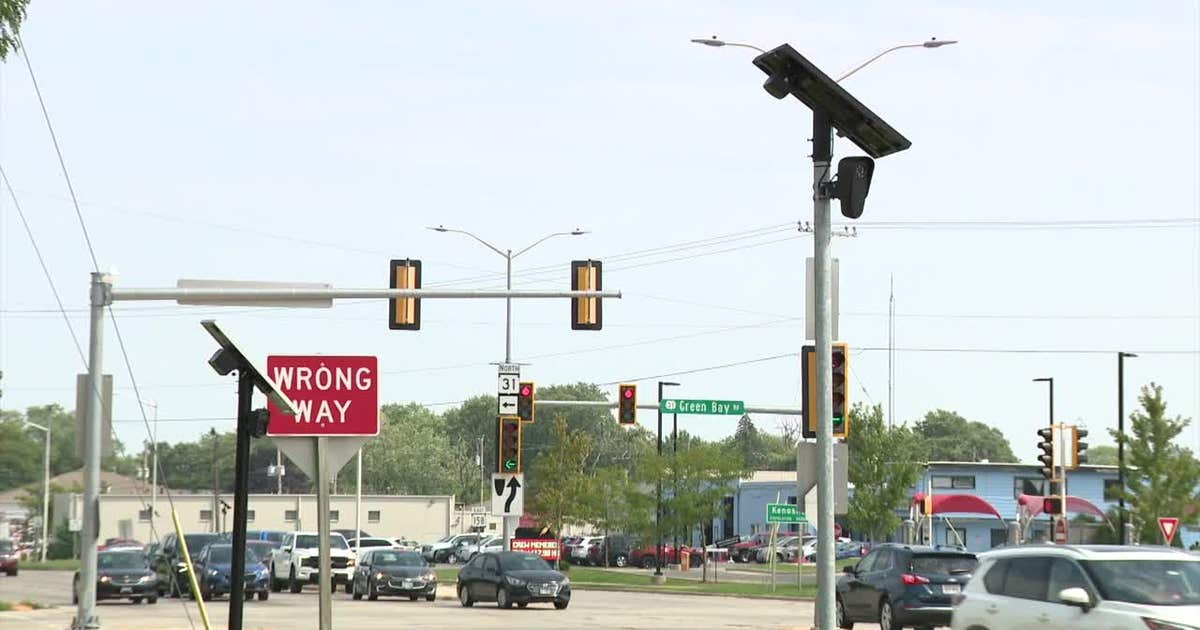
A Pew Research analysis estimates 1,618 Flock cameras are operating across 69 counties in Wisconsin. Milwaukee County has the most with 248 cameras, while a growing number of local agencies have ended their contracts with the license plate reader company.
Wisconsin is home to an estimated 1,618 Flock cameras spread across 69 counties, according to a Pew Research analysis. The cameras, which use artificial intelligence to scan license plates, have become a focal point for debate over public safety and privacy.
What are Flock cameras?
Mounted in neighborhoods across the U.S., Flock cameras take photos of vehicles and record details like the license plate number, make, model and color, along with the time of the scan.

How many cameras are in each Wisconsin county?
Flock has not released a public map of its camera network. To estimate the number of cameras in Wisconsin, Pew pulled data from OpenStreetMap, a crowdsourced mapping project where volunteers log camera locations.
Which Wisconsin counties have the most Flock cameras?
Pew’s analysis identified the following county-by-county estimates:
| County | Estimated Cameras |
|---|---|
| Milwaukee | 248 |
| Waukesha | 124 |
| Brown | 94 |
| Racine | 79 |
| Dane | 63 |
Why are some Wisconsin agencies ending their use of Flock cameras?
Six more southeastern Wisconsin police agencies have ditched their Flock cameras as the backlash against the nation’s largest vendor of automated license plate readers accelerates. They join Kenosha and Sheboygan, which are both asking their common councils to cancel existing contracts.
In Kenosha and Sheboygan, officials covered cameras with garbage bags before moving to cancel their deals. In Milwaukee, three police officers were investigated for allegedly misusing the system to track personal contacts.
What is the national debate over these cameras?
The local cases in Wisconsin mirror a wider national debate over how police use automated license plate readers. The advocacy group contends that police can search and share drivers’ travel histories with little oversight and said that fewer than 1% of scanned cars are linked to a crime.
A national survey by Data for Progress found that 52% of likely voters held an unfavorable view of the cameras, a sharp jump in disapproval over a single month. That disapproval rose to 60% once voters were given a brief description of how the system works.
How is Flock addressing privacy concerns?
Flock and its law enforcement supporters argue the cameras are an essential crime-fighting tool.
Keep reading
Pregnant Woman, Man Killed in Chester Double Shooting; Child Unharmed
A 24-year-old pregnant woman and a 24-year-old man, both Philadelphia residents, were shot and killed Friday night in...
Frankfort Bungalow Listed at $129,900
A bungalow located at 1057 N Clay Street in Frankfort, Indiana, has been listed for sale at $129,900,...

South Dakota Colleges Accelerate Degrees, Expand Online Options as Students Weigh Cost and ROI
South Dakota colleges are accelerating degree paths and expanding online options as students weigh the cost of higher...
UK DWP Confirms Cyberattack Took Pension and Benefits Portals Offline
The UK's Department for Work and Pensions (DWP) confirmed on Saturday that a deliberate cyberattack forced the department...