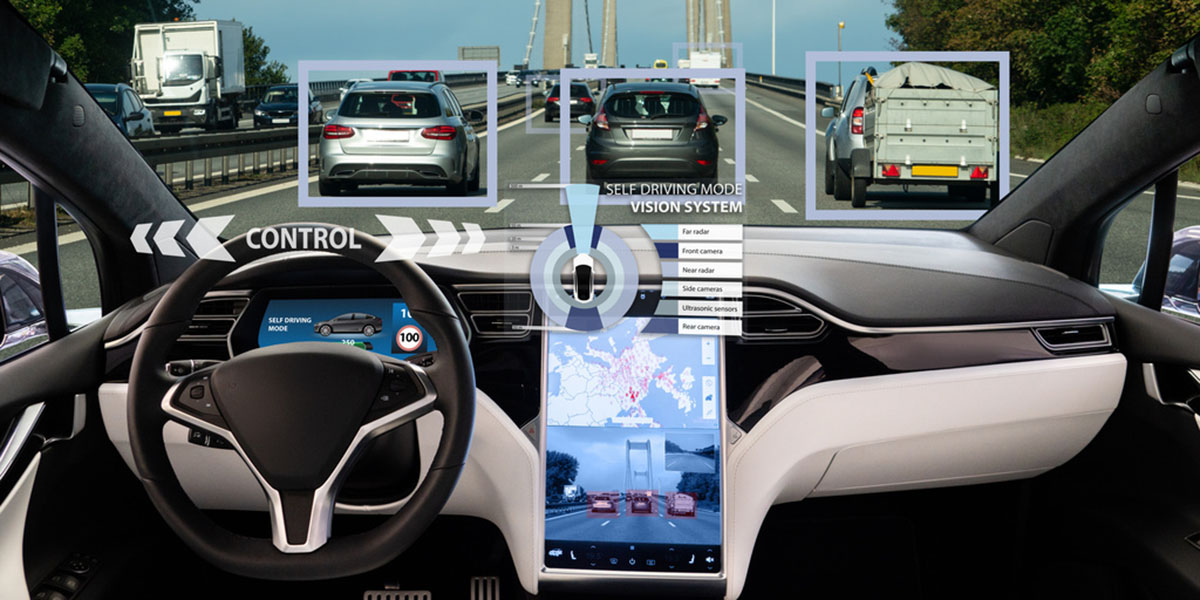
Massachusetts has no law authorizing driverless vehicles to operate without a human behind the wheel, even as Waymo tests cars on Boston streets with drivers present and Tesla counts 1.7 million active Full Self-Driving subscriptions nationwide.
Former state Transportation Secretary Jamey Tesler, who now leads the Mass Mobility Hub, is urging Gov. Maura Healey’s administration to designate the Department of Transportation as the lead agency for autonomous vehicle oversight, dedicate staff and set public goals for deployment, the Gazette reported.
A regulatory gap after 2022
Gov. Charlie Baker signed an executive order in 2016 that gave MassDOT authority to manage AV testing. The order required companies to apply for permission, sign a memorandum of agreement with the host municipality and keep a human in the vehicle during tests. Baker rescinded that order in 2022, saying the policy directives had succeeded and the advisory functions were complete.
“The absence of any executive or legislative authority creates some ambiguity in AV policy and testing,” the Mass Mobility Hub report states.
Lessons from ride-hailing
Tesler said the state’s experience with ride-hailing shows the risk of waiting. Massachusetts passed legislation regulating transportation network companies in 2016, after the services had already gained traction. By 2019, the companies had provided 91.1 million rides in the commonwealth.
“A good example of this is how much food delivery is a significant impact on our cities and towns in the commonwealth, but that was not envisioned in 2016,” Tesler said.
He argued that autonomous technology could present a similar challenge as new applications emerge.
Building capacity before the industry arrives
The report recommends updating testing permits and reporting requirements, creating opportunities for public demonstrations, and establishing measurable goals for safety, accessibility, economic development and connections to public transit. It also calls for clarifying responsibilities between state agencies and municipalities, examining insurance and liability questions, updating transportation network company laws, and considering user fees and Registry of Motor Vehicles rules suited to autonomous fleets.
Massachusetts should help establish national data standards governed jointly by states and cities, the report says, rather than leaving those standards primarily to industry or the federal government.
Tesler pointed to California, where regulators recently restricted Waymo vehicles from highway operations after identifying concerns.
“There was a concern; they worked with industry,” Tesler said. “They had to have the people to have the expertise to identify that concern. They had to have the system and relationship and the legal authority to work with the company and to implement that.”
He acknowledged MassDOT already carries substantial responsibilities and said additional oversight duties should come with dedicated resources.
“One of the things we really tried to do carefully is not to make the mistake of suggesting they take on more work without being mindful that that can disrupt from all the other important responsibilities,” Tesler said.
The report does not advocate for or against autonomous vehicles or any pending legislation. It acknowledges that workforce displacement, accessibility and service outside greater Boston warrant further study.
“This isn’t something you can do overnight,” Tesler said. “That’s not something that doesn’t take real time and investment in people.”
Related reading
- Iowa Beats Nebraska 31-7 to Keep College Football Playoff Hopes Alive
- BYU-Utah Rivalry Enters ‘Brave New World’ as Both Teams Target College Football Playoff Berths
- Pregnant inmate Rebecca Taylor escapes prison transport vehicle in New Mexico (newsarchyuk.com)
- Martín Menem Confirms Deputies Restricted System Access for Security Review (world-today-news.com)
Carys Baker Scores 20 in Second Quarter as No. 3 Louisville Routs Akron 92-48
No. 3 Louisville improved to 10–0 with a 92–48 rout of Akron on Friday, as reserve forward Carys...

Iowa Beats Nebraska 31-7 to Keep College Football Playoff Hopes Alive
Iowa's College Football Playoff hopes stayed alive after a 31-7 win over Nebraska on Friday. No. 13 Iowa...

BYU-Utah Rivalry Enters ‘Brave New World’ as Both Teams Target College Football Playoff Berths
Utah (11-0) and BYU (9-2) can both reach the CFP with wins this weekend Coaches Kalani Sitake and...

Omaha Brothers Face Off as Nebraska-Iowa Rivals in Heroes Game
"I truly love him and he's the reason I play the game," Darion Jones said. Nebraska junior Donovan...