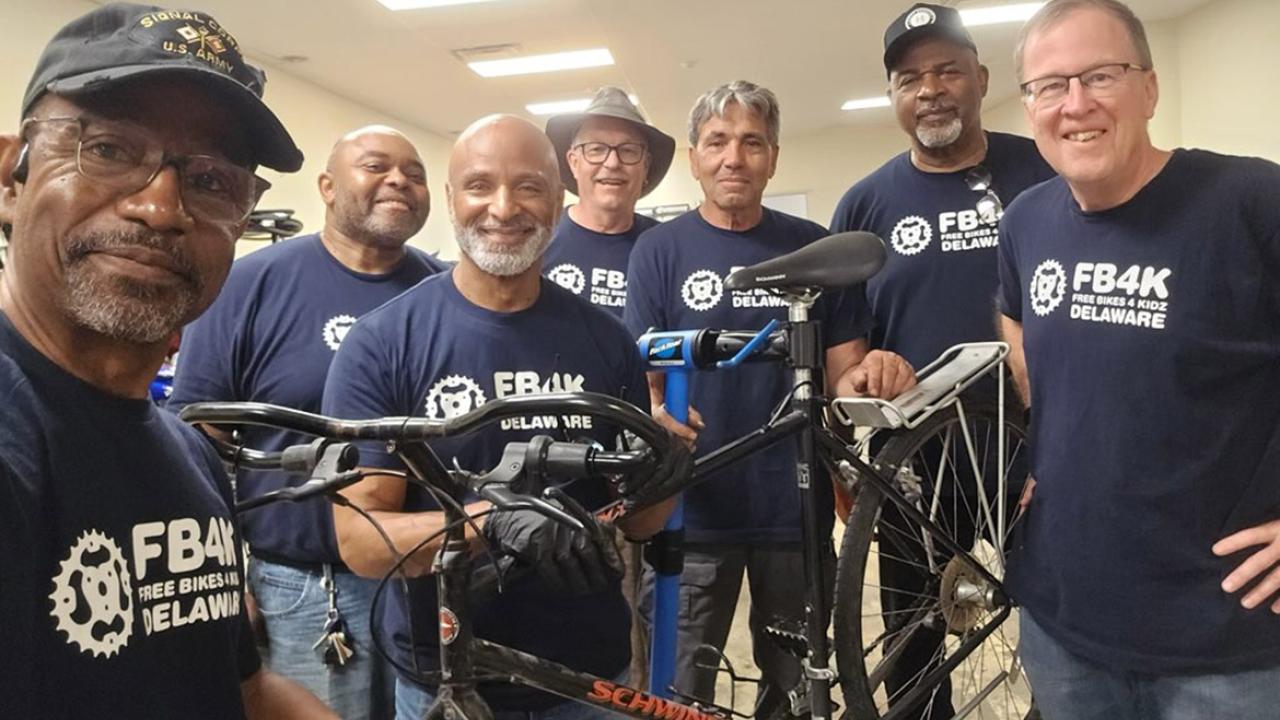
A Delaware health system has helped put more than 1,600 bicycles and helmets into the hands of children since 2023, building a statewide network that turns donated bikes into transportation, exercise and independence for families who cannot afford them.
Free Bikes 4 Kidz Delaware, launched three years ago with Bayhealth’s backing, has distributed the bikes and new, certified helmets at a combined retail value of about $300,000 while operating on an annual budget of roughly $35,000, according to figures the organization provided to the American Medical Association. The cost works out to about $25 per bicycle and helmet delivered — roughly one-eighth of the retail value. The chapter began after Thomas Vaughan, MD, a radiologist and Bayhealth’s chief wellness officer, met FB4K founder Terry Esau during a virtual charity ride early in the COVID-19 public health emergency. Esau encouraged Vaughan to start a chapter, noting that health systems tend to have volunteer pools and marketing reach. Vaughan approached Bayhealth CEO Terry Murphy, who offered the system’s support.
“It takes a lot to run something like this, as you can imagine, and Terry and other leaders have been fully supportive,” Vaughan told the American Medical Association. “The enthusiasm is really just great to see. I mean, very few people are against giving a free bike to a kid who doesn’t have one.”
Timing accelerated the launch. Bayhealth had just converted an old Dover shopping mall into Bayhealth at Blue Hen, leaving a vacant department store. Around the same time, FB4K Delaware received about 200 water-damaged bikes from a cargo shipment — otherwise sound but needing assembly. Vaughan hoped 10 to 15 volunteers would show up to help. One hundred thirty did. That turnout created a core volunteer group that still meets every Tuesday under Mark Douyard, a retired Bayhealth physician recruiter who once owned a bike shop. Four months later, volunteers and Delaware State University’s football team gave away 100 bikes and helmets at the university’s Alumni Stadium in Dover.
“It’s been a great day,” Murphy said in a video from the event. “We’ve had just a huge turnout of families getting free bikes, a ton of volunteers from both Bayhealth and Delaware State University and the community and we really appreciate the community welcoming us in.”
More than 200 children had been identified as eligible, but only half could reach the stadium because their families lacked transportation. “So, we’ve pivoted,” Vaughan said. “We found it more beneficial to work with organizations that are involved with the kids and teens year round so that they identify which kids could most benefit from a bike and let us know if the bike needs to be repaired or replaced.”
About 50 civic and governmental partners — including Boys & Girls Clubs, the YMCA, the Delaware Division of Family Services and the Migrant Education Program — now connect the chapter with families. The chapter occasionally provides bikes to adults overcoming homelessness or addiction who need transportation to work or medical appointments. Bikes come from individual donors, retailers, businesses and community collection drives. Strider Bikes in Rapid City, South Dakota, donates roughly 2,000 balance bikes a year from Amazon returns, split across FB4K’s 20 national chapters. Bayhealth facilities serve as drop-off sites; collection drives in May 2024 expanded to locations in Milton and Dover. Not every bike can be refurbished safely. Those with severe rust, structural damage or missing essential parts are recycled as scrap metal. Cardboard and plastic packaging are recycled; plastic goes to the Frederica Lions Club, which partners with a company to make benches — 10 placed at libraries and schools, two from Bayhealth’s plastic alone. Hitchen’s Tires recycles up to 800 used bicycle tires a year. Bayhealth’s support is systemwide. Materials management handles collection, transport, storage and distribution of bikes, parts and supplies. Marketing promotes drives and events.
The IT department, located next to the workshop, assists with shipments and serves as a drop-off and pickup point when volunteers are unavailable. Four board members are affiliated with Bayhealth; board members Bill Strickland of L&W Insurance and Bill Winters of Mitten and Winters CPAs cover insurance premiums and accounting costs.
“Running something like this was completely out of my comfort zone,” Vaughan said. He has since secured grants of $1,000 to $5,000 each and estimates as many as 500 people have volunteered in some capacity. “After the kids the people who benefit the most are probably our volunteers. It really gives people a sense of meaning and purpose,” especially retirees, he said.
Since 2010, the national FB4K organization has distributed more than 224,000 bicycles through its 20 chapters. “A health care system is involved in the health of the whole community,” Vaughan said. “Certainly exercise, getting out and exploring the environment are helpful for long-term prevention of more serious diseases, which increases costs to the system and the community.”
“Not everything works. Sometimes things fail and you try something else, but this has really worked well and is worth doing,” Vaughan said. “People should really think outside the box about wellness, and something like this really makes people feel good about themselves.”
Worth a look
University of Mary Hosts Tuition-Free Nursing Academy Sessions in Billings Dec. 1
The University of Mary will hold three information sessions in Billings, Montana, on Tuesday, Dec. 1, to promote...

Kansas Jayhawks Host Denver Pioneers at Allen Fieldhouse: Starters, Time, TV Info
Kansas hosts Denver at 7 p.m. Monday at Allen Fieldhouse in Lawrence; the game streams on ESPN+ and...
No. 9 Texas Tech Faces No. 23 Louisville in Players Era Festival Opener: TV, Streaming, Radio Info
No. 9 Texas Tech faces No. 23 Louisville on Tuesday, November 24, at 7 p.m. Central (8 p.m....

Des Moines Nonprofit Knock and Drop Iowa Expands Pantry Hours After County Investment
"Many families are working hard and doing everything 'right,' yet they still struggle to afford basic necessities," said...