
A mobile unit parked outside an O’Rathallaigh Park GAA clubhouse in Drogheda has become the unlikely setting for a shift in how Ireland detects lung cancer. A pilot program run by Beaumont Hospital and the RCSI University of Medicine and Health Sciences is utilizing these community sports hubs to bring low-dose CT scans directly to high-risk populations.
The project, funded by the Irish Cancer Society and the EU4Health Solace programme, has already reached participation rates exceeding 70 per cent, according to The Irish Times.
The urgency of this initiative is underscored by sobering national data. According to the National Cancer Registry Ireland, three in every five lung cancer diagnoses in the country are made at a late stage, when the disease is harder to treat. In contrast, the pilot program has identified nearly 40 asymptomatic individuals with early-stage cancer, 80 per cent of whom were diagnosed at Stage 1.
For participants like 73-year-old Con Shanahan, the screening was life-saving. Despite considering himself fit and healthy, Mr. Shanahan received an invitation after his GP identified him as eligible based on his smoking history and a recent bout of pneumonia. “I would have viewed it as a very deadly disease, really, a fatal disease,” Mr. Shanahan said. After undergoing surgery in January, a follow-up scan confirmed he was cancer-free.

The medical community has long recognized that timing is the primary variable in lung cancer outcomes. While five-year survival rates hover near 57 per cent for Stage 1 diagnoses, they plummet to just 4 per cent for those diagnosed at Stage 4, The Irish Times noted.
The pilot program aims to bridge this gap by targeting adults aged 55–74 who have a smoking history, a demographic where early intervention can drastically alter the trajectory of the disease.
However, the push for widespread screening is not without its complexities. A study published in the Journal of the American Medical Association highlights that while low-dose computed tomography reduces mortality, it carries inherent risks.
More than 10 per cent of participants may receive false-positive results, which can trigger significant anxiety and unnecessary follow-up costs. Furthermore, invasive procedures like biopsies carry risks of pneumothorax or internal bleeding, and there remains the clinical risk of overdiagnosis—identifying tumors that might never have progressed to cause clinical illness.
Despite these clinical trade-offs, the momentum for a national screening infrastructure is building. Lung cancer remains a global health crisis, accounting for 1.9 million deaths in 2024. In Ireland, the disease accounts for about 1,900 deaths annually. The inclusion of lung cancer in the 2022 Council of the EU recommendations on cancer screening has provided a strategic framework that Irish health officials are now testing through this mobile pilot.
For the Irish Cancer Society, the pilot has moved beyond a mere experiment. Chief Executive Nikki Gallagher said that the success of the program in identifying early-stage cancer has already demonstrated proof of concept.
For survivors like Mr. Shanahan, the initiative has fundamentally changed the narrative surrounding the disease. “When the words ‘lung cancer’ were mentioned, you’d almost mention it in whispers; you wouldn’t ask how are they? You’d ask how long have they got?” he said.
As the pilot continues, medical researchers expect to release initial results of its effectiveness in reducing mortality within months.
Related reading

Tamil Nadu Minister Aadhav Arjuna and Wife Daisy Martin Part Ways After 14 Years
Tamil Nadu Minister and Tamilaga Vettri Kazhagam (TVK) leader Aadhav Arjuna and his wife, Daisy Martin, have mutually...

Cloudflare Open-Sources Kitesurf, Allowing Self-Deployment
Cloudflare open-sourced its Kitesurf browser engine on Friday granting developers direct access to the Apache 2.0 licensed code...
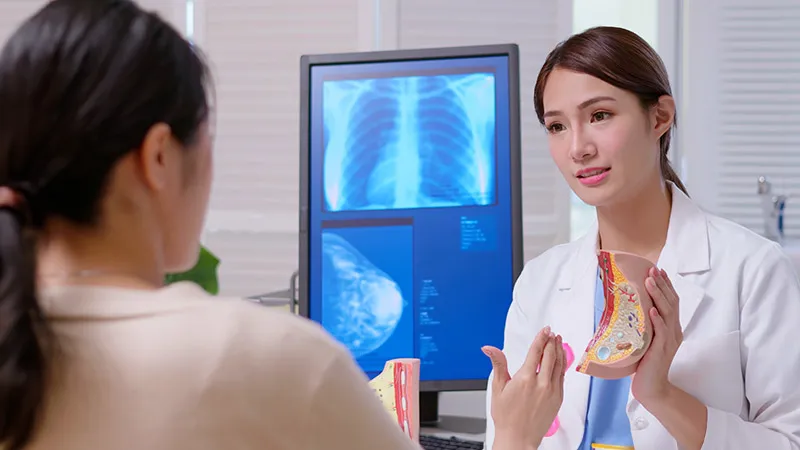
Is Surveillance Mammography Helpful for Older Survivors of Breast Cancer? – Medscape
Surveillance mammography for older breast cancer survivors remains a gray area in medicine because regular screenings do not...
KPK Summons East Java DPRD Staff Suspect in Grant Fund Corruption Case
The investigation centers on the management of grant funds for community groups, known locally as pokmas, drawn from...