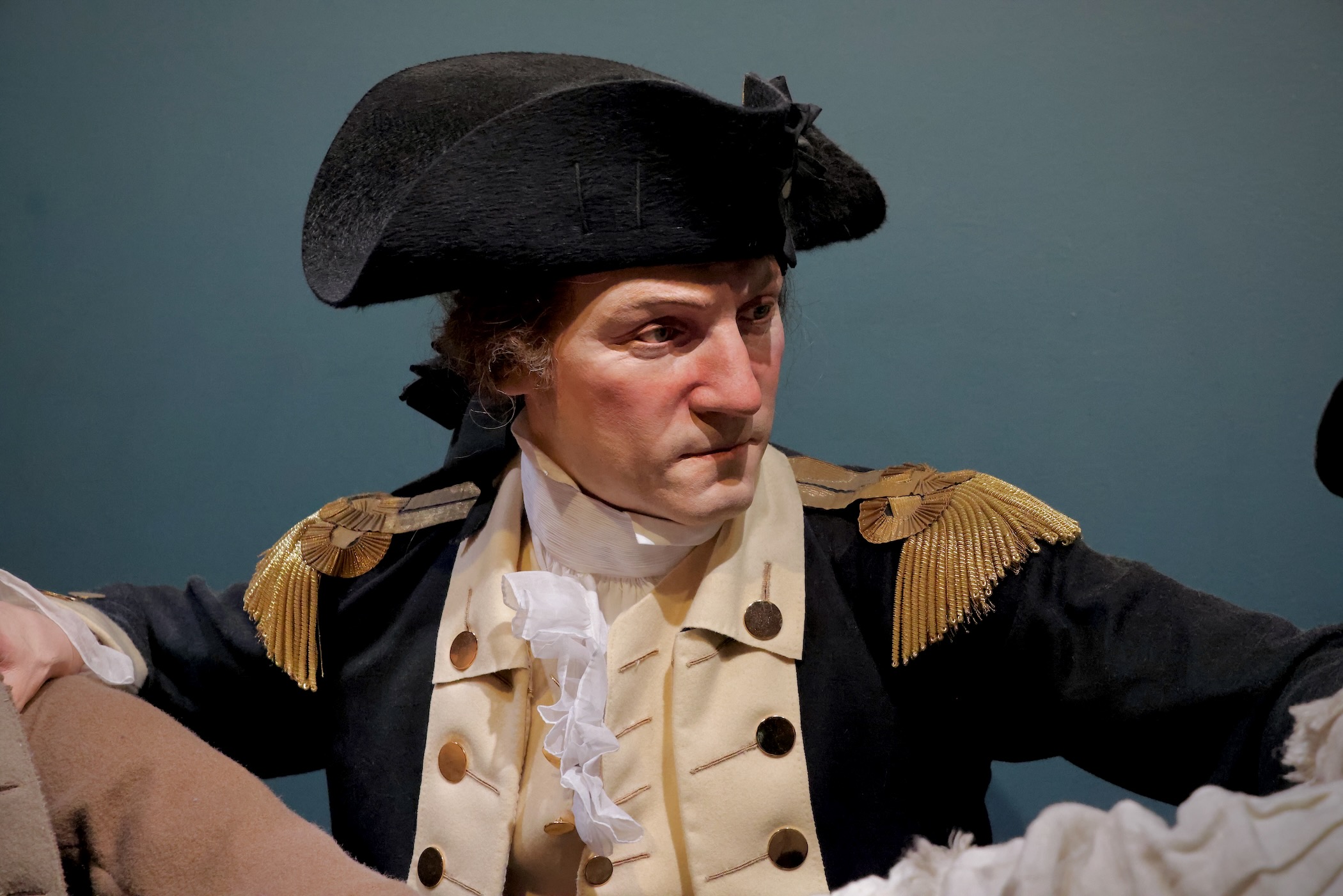
A handwritten letter in which George Washington confessed “I tremble for Philadelphia” is on display at the Museum of the American Revolution through May, on loan from the Dietrich American Foundation, WHYY reported.
The two-part missive, dated Dec. 10 and 17, 1776, was written from Bucks County, Pennsylvania, to Washington’s cousin Lund Washington as the Continental Army retreated through New Jersey into Pennsylvania with roughly 3,000 soldiers — a quarter of its former strength — after being routed from New York, according to the museum’s press release.
The commander feared the British would seize the Revolutionary capital before he could rebuild his force, writing that “the game will be pretty well up” if new recruits did not materialize.
The document captures Washington’s private morale just before the period historians call the “Ten Crucial Days” — the stretch from Dec. 25, 1776, to Jan. 3, 1777, that included the Delaware River crossing and victories at Trenton and Princeton, the museum said. “It looked like the revolution was going to fail within its first six months,” Matthew Skic, the museum’s director of collections and exhibitions, told WHYY.
The letter is exhibited in the Dick and Sally Brickman Gallery beside a tableau depicting brothers James and Charles Willson Peale, reunited on Dec. 8, 1776, while serving in different units during the retreat, the museum’s release noted. James Peale, an officer through the long New York Campaign, was unrecognizably ragged to his brother Charles, a lieutenant in the Philadelphia Associators militia.

He also reported the British capture of Major General Charles Lee on Dec. 13, a blow he described in the same private letter.
The commander told his cousin he believed “the game will be pretty well up” if new recruits did not materialize, the museum said. The missive was written in Washington’s own hand rather than by an aide, allowing him to be more open about the army’s desperate condition.

Matthew Skic, the museum’s director of collections and exhibitions, said the private correspondence offers “an amazing look at Washington’s thought process and emotions,” WHYY reported.
Skic added that historians have long quoted the letter because its words epitomize the army’s plight during the Revolution’s darkest hour. The museum’s release notes that the document captures Washington’s morale just before the Ten Crucial Days that reversed the campaign.
The Dietrich American Foundation, established in 1963 by Pennsylvania native H. Richard Dietrich Jr., has held the letter. Its display marks one of the first times the correspondence has been shown publicly, timed for the 250th anniversary of the Ten Crucial Days, the museum said.
The museum remains open daily; the letter stays on view through May.
Related reading
Washington State Ferry Turns Back for Premature Baby to Seattle Children’s Hospital
A Washington State Ferries vessel turned back to Friday Harbor late Wednesday night to carry a critically ill...

8-12 Foot Surf Drops to 6-8 Feet on Big Island Shores Through Sunday
A north-northeast swell that filled in earlier Saturday has likely peaked, with offshore buoy 51000 showing peak energy...
The New Orleans Pelicans Are Being Outscored by 7.5 Points per Game Through 20 Contests
The New Orleans Pelicans are being outscored by 7.5 points per game through 20 contests. New Orleans has...

Montana Beats Incarnate Word 48-32 in Program-Longest Playoff Game
Montana opened the FCS playoffs with a 48-32 victory over Incarnate Word on Saturday at Washington-Grizzly Stadium in...