German settlers shaped Kentucky long before statehood, and their descendants still number over half a million.
The Kentucky Historical Society traces that lineage from the long rifle and the dulcimer to the 1855 riots that killed at least twenty-two people in Louisville.
By 1790, German Americans made up 14 percent of Kentucky’s population, concentrated in Jefferson County and the Bluegrass region. Isaac Hite surveyed with James Harrod to found Harrodsburg in 1774. Michael Stoner, born Holsteiner, traveled with Daniel Boone. Matthias Harman, originally Hermann, helped Jenny Wiley escape captivity in 1789. In Newport, Heinrich Pickele opened the first tavern in 1795 and Johann Bartel the first brewery in 1798.
Steamboat traffic on the Ohio River accelerated migration after 1815. By the mid-1830s, distinct German communities anchored Louisville and Covington.
Martin Schmidt arrived in Louisville in September 1848 after thirty-five days from Marburg, ran a tannery in Tollesboro, served in the Union Army, and later joined the Grand Army of the Republic, “one of the first advocacy groups in the nation to support voting rights for Black veterans, establishment of veteran pensions, and Republican candidates.” His 1913 death notice called him “one of Louisville’s oldest and most respected citizens.”
By 1850, Germans were Kentucky’s largest immigrant group. Nativist pressure intensified. Jefferson County courts required foreign-born citizens to produce documents and witnesses to prove naturalization while native-born voters simply swore an oath. The American Party — Know-Nothings — organized Kentucky councils by 1854. On August 6, 1855, the Louisville Daily Courier reported the city “in possession of an armed mob” inflamed by newspapers and party leaders.
Armed men intimidated voters; a mob pillaged German- and Irish-Catholic homes, coffeehouses, and churches. Over one hundred businesses and residences were vandalized and at least twenty-two people killed. City officials declared the rioters acted in self-defense; victims received five to twenty dollars each. The Know-Nothings held local power until 1859.
“On its native soil, the German community is not threatened from all sides by a spirit of intolerance and persecution—as is the case here,” the Louisville Anzeiger said.
German Kentuckians built parallel institutions: the Liederkranz singing society in 1848, the Sozialer Männerchor in 1878 — still active as the German-American Club Gesangverein — and Turnvereine that combined gymnastics, libraries, and politics. Turners in Newport and Covington pledged to oppose slavery and prohibition and never to vote for a Know-Nothing. When nativists attacked them at a Covington picnic on May 12, 1856, they took refuge in Newport’s Turner Hall.
The Louisville Anzeiger, founded in 1849, wrote in 1909: “The German press is undoubtedly a vital factor in the development of the German American community; for without the German newspaper—which served as advisor, guardian, and voice of warning throughout its turbulent journey—it would have been scarcely possible for the community to attain such high standing within a relatively short period, nor would it have been possible to preserve its distinct German character to such a degree.”
Four days before the 1855 riots, editor George Doern warned that a country ruled by bigotry and party rage could not call itself free.
The Kentucky Historical Society preserves the record of the 1855 Louisville riots through the Martin F. Schmidt Research Library at the Thomas D. Clark Center for Kentucky History, which holds 1,900 cubic feet of manuscripts, 200,000 historic photographs, 8,000 oral histories, and extensive newspaper archives documenting the violence that killed at least twenty-two people.
Researchers can access the Library’s digital catalog and vertical files for primary accounts of the Know-Nothing mob’s pillaging of German- and Irish-Catholic homes, coffeehouses, and churches.
World War I reversed assimilation. German instruction ended in Covington schools; the Covington Turngemeinde became the Covington Turners Society; the German Pioneer Society disbanded. In Newport, German church services declined, German books left library shelves, and cities altered German street names. Prohibition cut beer revenue that sustained Turner Halls; none of Newport’s German societies survived World War II.
By 1900, acceptance had advanced enough that William Goebel, child of two German immigrants, won the governorship — his tenure lasted four days before assassination. Today, the U.S. Census Bureau counts over half a million Kentuckians reporting German ancestry, roughly 12 percent of the state, second only to English at 14 percent.

Heavy Rain, High Tides Force Oregon Coast Road Closures, Strand Drivers
Heavy rain and high tides forced multiple road closures along the Oregon Coast on Tuesday, shutting sections of...

Ames Scores 24, No. 11 Tennessee Survives 25 Fouls to Beat Maryland 72-64
No. 11 Tennessee survived 25 fouls and a rebounding deficit to beat Maryland 72-64 on Monday in the...

Richmond Fed’s Waddell: Data Center Demand Boosting District Manufacturing
"The manufacturing index doesn't indicate gangbusters activity," said Sonya Ravindranath Waddell, vice president of applied analysis at the...
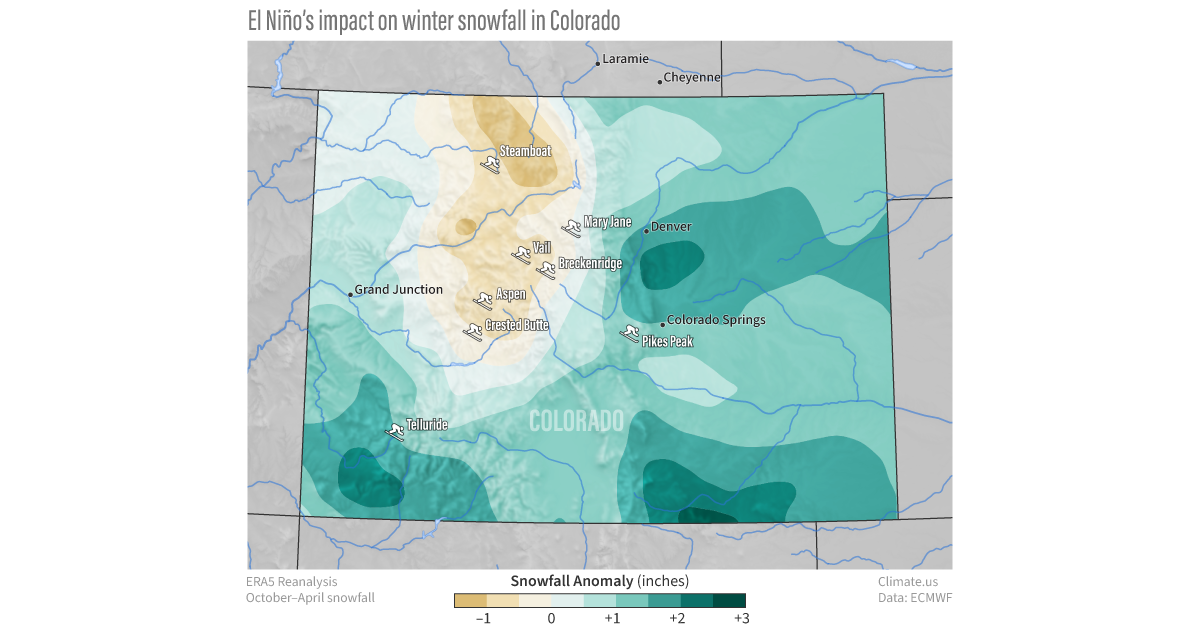
Past El Niño Winters Show North-South Snow Split in Colorado
Colorado’s northern mountains lean toward below-average snowfall this winter while the Front Range and southern basins trend wetter,...