
Gillette left Wyoming’s airline subsidy program on Jan. 1, becoming the first airport to operate without state-backed revenue guarantees.
The Wyoming Legislature recently approved $18.4 million for the Capacity Purchase Agreement that still covers Cheyenne, Sheridan, Riverton and Rock Springs. About $12 million comes from statewide lodging taxes, reflecting the link between air service and tourism. Under the CPA, the state covers 60% of each revenue guarantee and local communities cover 40%.
In September, the National Association of State Aviation Officials gave Wyoming an innovation award for the program. Other states regularly call Aeronautics Administrator Shawn Burke to ask how to replicate it, he told Cowboy State Daily.
Gillette’s blueprint
Gillette’s exit was not just about filling seats. Airlines look for inelastic demand that supports higher fares, Burke said. Gillette’s energy sector helped drive those fares. “Gillette is a blueprint in some regards, but each community is different,” he said. “It’s a blueprint in the sense that’s kind of where we’d like to see markets go.”
To walk away from subsidies, each remaining airport must prove to United Airlines that a regional jet assigned there earns more than deploying the same aircraft elsewhere. “I can take my airplane between Dulles (Washington, D.C.) and Albany, New York,” Burke said. “So what is the difference that makes it so it makes sense for me to fly between Denver and Rock Springs?”
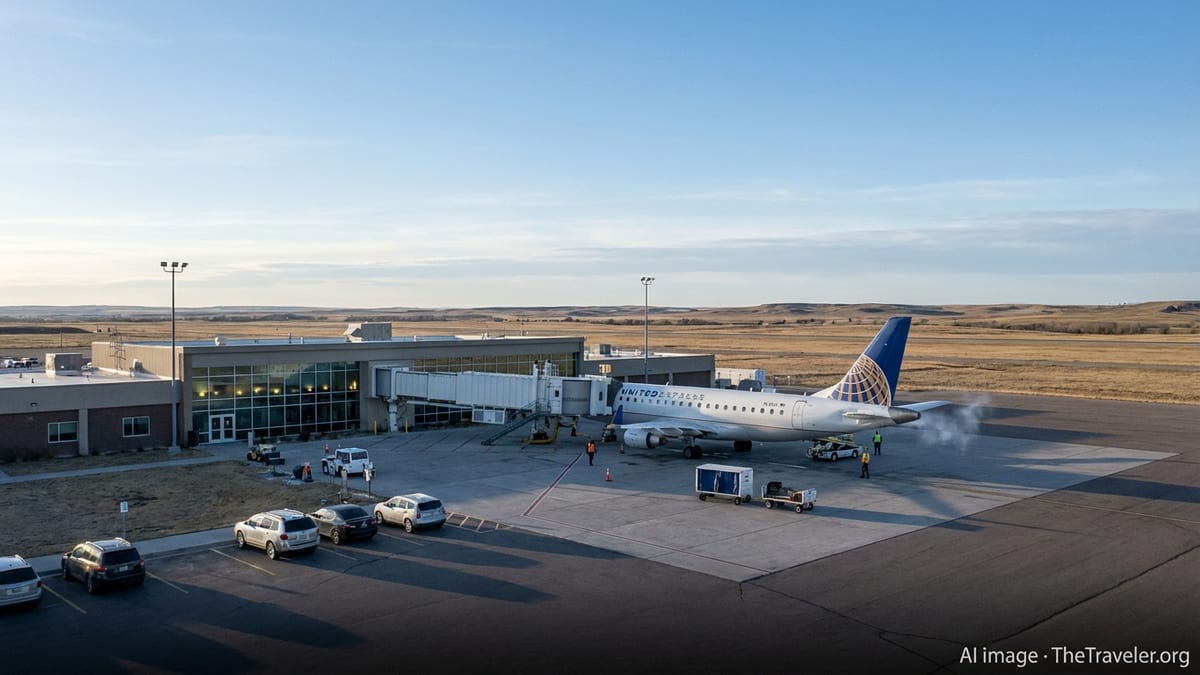
Sheridan and Cheyenne lead the queue
Sheridan and Cheyenne appear closest to making the business case for United to fly at its own risk. SkyWest, which operates United Express flights, is adding four afternoon flights per week in mid-January. Both airports are expected to have three daily round trips by early June.
In Sheridan, passenger counts climbed from just over 16,000 in 2019 to more than 60,000 in 2025, with planes near 90% capacity during peak summer months. Rather than using its $400,000 budget match this fiscal year, Sheridan received a $70,000 credit in July when ticket revenue outpaced airline costs.
“We saw some very high fares in here last summer, which, like I said, I know is not popular locally, but that’s certainly a metric I think United’s going to look at,” Airport Manager Robert Gill told Cowboy State Daily.
Limited seat capacity had held Sheridan back; the additional flight aims to retain passengers who now drive to Billings or Denver.
Cheyenne faces a different challenge: an estimated 94% to 97% of local air passengers drive to Denver International Airport instead. Flights run roughly 87% full, which Airport Director Doug Bullock called a strong indicator the market can support United at its own risk. United agreed to add a third flight.
“Give us a third flight, we’ll fill it up and we’ll demonstrate as a community that we can support that additional lift,” Bullock told Cowboy State Daily.
He described the flight as the “culmination of several meetings with United, with SkyWest. It’s a big win for the community.” Bullock, hired about six months ago, hopes to expand beyond Denver, citing incoming data centers and the Professional Rodeo Cowboys Association relocation as growth drivers.
Riverton and Rock Springs face steeper climb
Riverton and Rock Springs were cut to a single daily flight during the pandemic and have rebuilt from a lower base. Rock Springs shows steady year-over-year growth in passengers and average fares, Airport Director Devon Brubaker said.
But United tracks more than seat counts. “Obviously the butts in seats and buying the fares is important,” Brubaker told Cowboy State Daily. “But how many are buying the premium seats, whether that’s economy plus, business class, first class, in each market? How many people in each market are MileagePlus members that have extensive loyalty to the airline? How many are using co-branded credit cards?”
Co-branded credit cards are increasingly critical to airline profitability, Brubaker said. “If you look at their financials, airlines today, the most successful airlines — United and Delta, specifically — they’re actually profitable because of their co-branded credit cards. If it wasn’t for their co-branded credit cards, they would actually be losing money as a company.”
Nationwide, jet fuel averages $4.80 a gallon, roughly double to triple the price a year ago, squeezing margins. The collapse of Spirit Airlines eased the pilot shortage, Brubaker noted. Planned job cuts at WE Soda could temporarily cool travel demand in Sweetwater County, stretching Rock Springs’ timeline, Burke said.
At Riverton, passenger traffic reached 51,000 last year, a roughly 40% increase over five years, with flights about 75% full.
The airport is upgrading to accommodate 70-seat jets, which face fewer hot-weather weight restrictions near the mountains. Consistent winter runway operations and a marketing campaign — including an Emmy-winning television ad — are also underway, Airport Director Bruce Ransom told Cowboy State Daily.
United has not given any community a single revenue target that guarantees independence. “I don’t think that the goalposts are set in one exact spot,” Ransom said. “Each community is going to be a little bit different.”
Gillette left Wyoming’s airline subsidy program on Jan. 1 after its energy sector created the inelastic demand that airlines require to fly at their own risk. Aeronautics Administrator Shawn Burke explained that Gillette’s coal, oil and coalbed methane industries drive higher fares and premium-cabin purchases, proving a regional jet earns more in that market than deployed elsewhere.
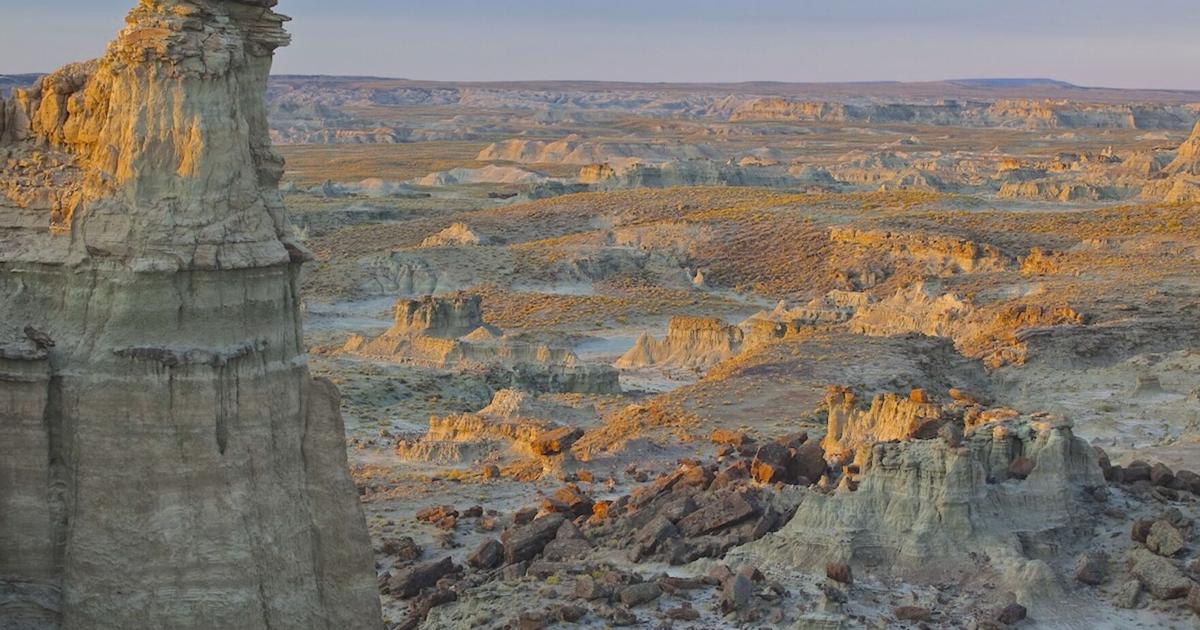
Cody shows the mixed picture
Yellowstone Regional Airport in Cody is not in the CPA. United flew up to four daily Denver flights at its own risk from May through September this year and added a weekly Chicago flight. The federal Essential Air Service program subsidizes Cody from October through May.
The Chicago flight succeeded enough that United plans to keep it and may add a mid-week departure. Cody guaranteed United about $191,000 for the Chicago service through WYDOT’s Air Service Enhancement Program.
“There’s a lot of international travelers that want to get to Cody,” Airport Director Aaron Buck told Cowboy State Daily.
“And Chicago allows that. So, there’s some demand there, and we saw a lot of growth in that with those travelers. Chicago is one of our fastest-growing markets with the (Yellowstone National) park.”
Across Wyoming, aviation supports more than 21,000 jobs and over $3.5 billion in annual economic activity.
“You show me a thriving airport, and I’ll show you a thriving community,” Buck said. “If we can get the airports thriving in all these locations, we’re going to get our communities thriving. So that’s the whole goal of the CPA.”
Related reading

The Terps Led for Less Than Three Minutes
The Terps led for less than three minutes despite 33 bench points and a career-high 12 from Baba...
Tennessee Vols Study Rams’ Two-Back Formations With Bishop, Georges Return
Tennessee coach Josh Heupel studied the Los Angeles Rams' offense last offseason, and the Rams' recent two-running-back formations...

Albany Shoppers Choose Local Boutique Over Big-Box Stores on Black Friday
On Black Friday 2026, nearly every shopper interviewed at Millie’s by SK in Albany, Georgia, chose the local...

Utah Lawmakers Propose Data Center Guardrails Targeting Transparency, Environment
Utah lawmakers unveiled new legislation on Nov. 18 to regulate data center construction, targeting transparency, environmental concerns, and...