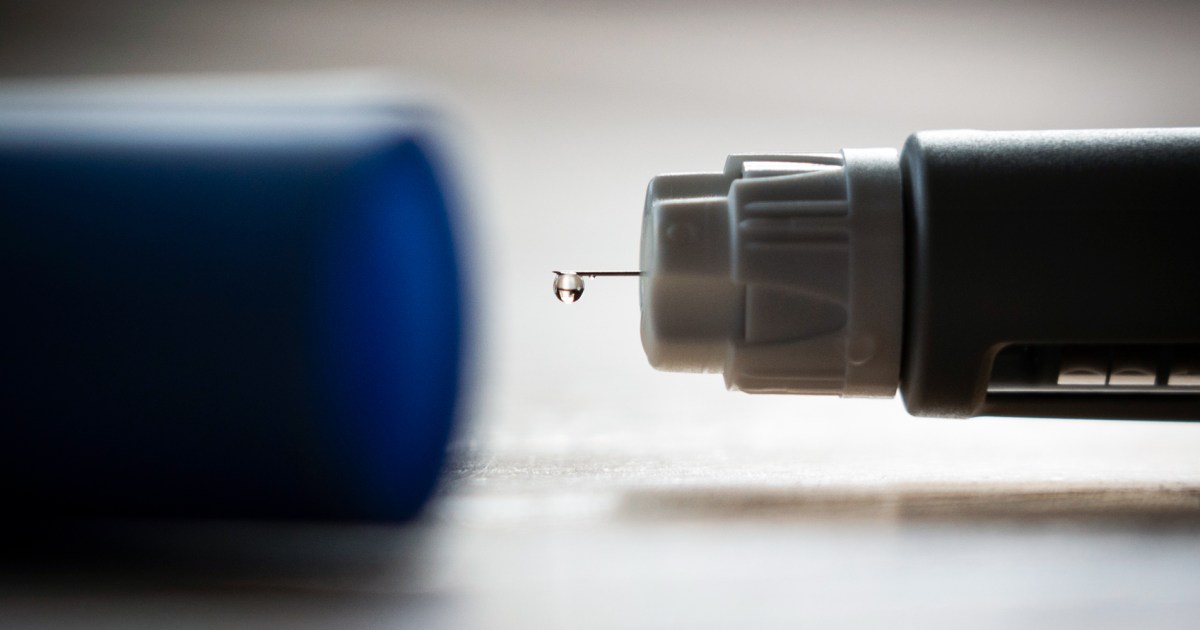
Health Canada and the U.S. Food and Drug Administration have added new warnings to GLP-1 drugs after patients reported sudden vision loss they say was never disclosed.
The condition, non-arteritic anterior ischemic optic neuropathy (NAION), causes painless vision loss from reduced blood flow to the optic nerve. Health Canada described the risk as “very rare but serious” in a safety review released Wednesday. The FDA issued its own labeling order on Nov. 9, saying agency scientists could not identify a causal link but alerting patients and doctors to watch for vision changes.
Risk estimates differ
Baseline NAION rates run about one in 10,000 people with diabetes, said Dr. Herzl Gerstein, an endocrinologist and professor at McMaster University. GLP-1 use may raise that by 30 to 50 percent, reaching roughly 1.3 to two cases per 10,000 patients, he told Global News. The FDA’s pooled review of 126 randomized trials covering more than 134,000 participants found 6.4 events per 100,000 person-years on a GLP-1 versus 3.8 in comparison groups, KevinMD.com reported.
“Saying things like, ‘The risk [of eyesight loss] is one in 10,000.’ But when there are 40 million people taking these drugs every year, one in 10,000 is 4,000 people with permanent sudden vision loss,” Craig Silverman said. “Those are 4,000 real people who are now, to some extent, blind,” he said.
Patients say warnings came too late
Montreal resident Jeffery Gilman started Ozempic in 2024 and woke up five months later with sudden vision loss typical of NAION. “This is something that happens suddenly. You might all of a sudden have loss of vision in one eye, like an area of vision that’s completely dark or black. Unfortunately, there’s no treatment,” he told Global News.
Attorney Craig Silverman said hundreds of patients began contacting law firms in mid-2024 after a Harvard study linked semaglutide to NAION. “Nobody knew about the connection [except for] the drug makers, who we believe knew and hadn’t disclosed that risk to anybody,” he told amNewYork.
Silverman alleged some patients lost vision in a second eye because doctors, lacking a warning, did not stop the medication after the first event.
“Some people experienced the vision loss and were diagnosed with NAION, but because there was no warning or information out at the time from the drug manufacturers, doctors didn’t know to take them off the drug, so they stayed on the drug and lost vision in their other eye, and now have some level of permanent blindness in both eyes,” the attorney said.
Thousands of lawsuits consolidated before federal judge
More than 4,000 state and federal lawsuits have been filed against Novo Nordisk and Eli Lilly. Cases are consolidated before U.S. District Judge Karen Marston in the Eastern District of Pennsylvania. She has ruled that gastroparesis plaintiffs must produce a gastric-emptying test — the diagnostic gold standard — at the time of diagnosis or be dismissed, and is preparing a similar ruling on causal proof for vision-loss claims.
“We don’t view that as a minuscule risk.” Novo Nordisk said it “remains confident in the benefit-risk profile of our GLP-1 medicines” and continues to monitor safety with regulators worldwide. Eli Lilly has not commented publicly on the new label.
Regulators diverge on semaglutide signal
Eli Lilly has not commented publicly on the new label, according to Bloomberg’s reporting on the FDA’s November order.
Attorney vows to pursue manufacturers despite risks
“We don’t view that as a minuscule risk,” Silverman said, adding that “We’re pursuing the drug manufacturers.”
U.S.
What clinicians advise
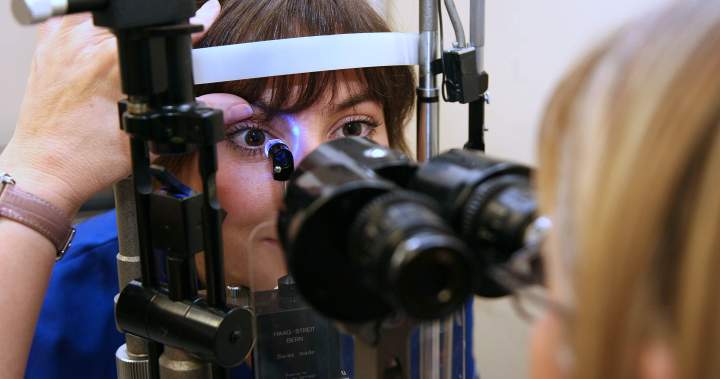
Dr. Marko Popovic, an ophthalmologist at the University of Toronto, said a baseline eye exam before starting a GLP-1 can identify a “disc at risk” optic nerve. “Any sudden change in vision while on these medications should prompt urgent medical attention,” he told Now Toronto. Gerstein cautioned against stopping needed therapy: “It helps overall health,” he told Global News, “cautioning against throwing the baby out with the bathwater.”
Related reading

Multiple Outlets Publish Cyber Monday Laptop Roundups on Nov 29, 2026
Laptops with Nvidia's RTX 5050 GPU now sit in the low $1,000s, while the 16-inch MacBook Pro lists...

L.A. County Tree Lighting Moves Indoors to Dorothy Chandler Pavilion as Rain Expected
The L.A. County Tree Lighting will move indoors to the Dorothy Chandler Pavilion on Monday because rain is...

U.S. Stroke Survivors Projected to Nearly Double to 20 Million by 2050, Costs to Top $423 Billion
Nearly 20 million U.S. adults could be living after a stroke by 2050, roughly double the 10 million...

Tottenville, Erasmus Hall Advance to Fifth Straight PSAL 4A Semifinal
Tottenville and Erasmus Hall will meet for the fifth year in the PSAL 4A football semifinals, with the...