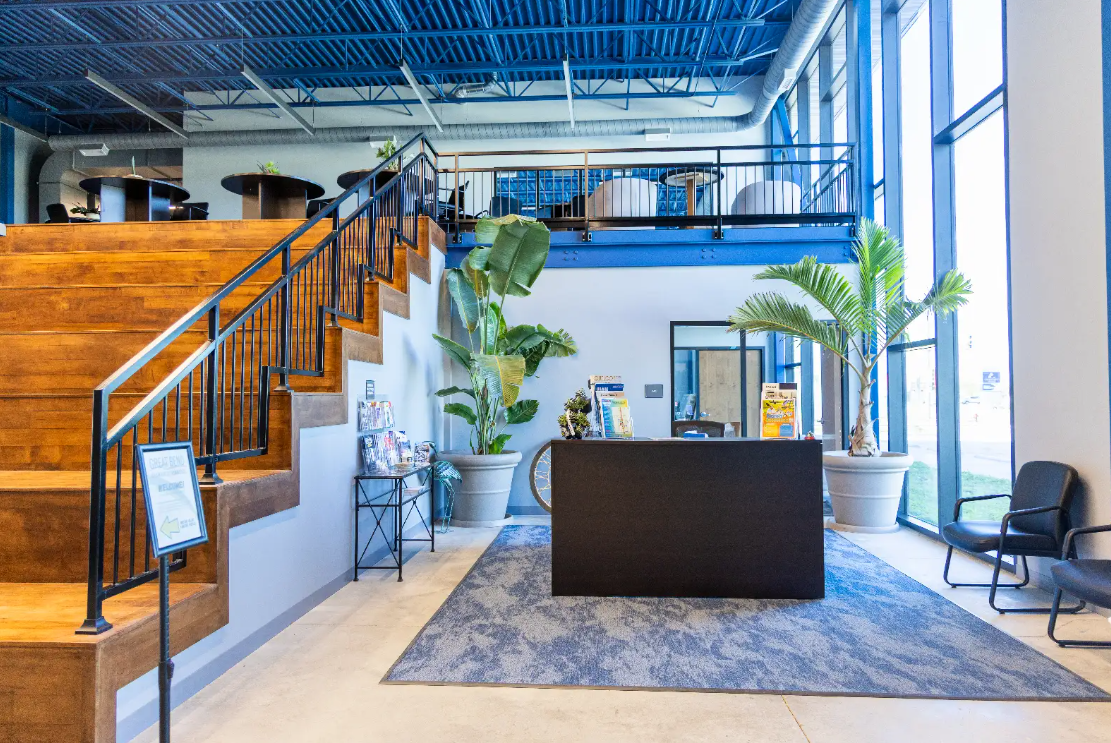
Great Bend Economic Development will open The Forge, a makerspace on West 10th Street, with a ribbon-cutting and open house on Thursday, Jan. 7, 2027.
The Bottom Line
- Public capital deployed for private-sector prototyping: The facility offers commercial-grade printing, embroidery, and fabrication equipment to entrepreneurs who cannot yet justify large capital expenditure.
- Explicit anti-competition mandate: Executive Director Jason Kuilan told Great Bend Post the center “was not created to compete with local businesses” but to develop them, positioning GBED as a partner to existing print shops and fabricators.
- Workforce pipeline as the alpha metric: Success will be measured not in membership revenue but in how many users transition from prototype to payroll, feeding Barton County’s labor market and tax base.
Equipment Access Versus Business Competence
The Forge houses industrial embroidery machines, wide-format printers, and CNC fabrication tools. Kuilan argued that hardware alone does not replicate the intangible assets — client relationships, design expertise, production workflow — that sustain a going concern. “The equipment is a tool. The expertise is what creates value,” he told Great Bend Post.
That distinction matters for Great Bend’s existing service providers. A local print shop owner retains pricing power because turnaround time, color management, and substrate knowledge remain barriers to entry. The Forge lowers the barrier to trial, not the barrier to scale.
From Economic Development Theory to Tangible Assets
Traditional GBED programming — loan packaging, business-plan review, workforce training — operates in the abstract. The Forge converts those services into physical throughput. An entrepreneur can stress-test a product line for the marginal cost of materials and machine time before approaching a bank for a term loan.
Kuilan described the makerspace as "a tangible form of economic development." The phrase marks a move from balance-sheet subsidies — tax abatements, infrastructure grants — to capability subsidies: shared capex that reduces the risk premium on early-stage ventures.
College Alignment Shortens Manufacturer Onboarding
Barton Community College students will access equipment that mirrors what regional manufacturers run on their shop floors. That alignment shortens the onboarding cycle for new hires. Employers gain candidates who already speak G-code or understand dye-sublimation workflows; the college gains a live lab without bearing the full maintenance burden.
The facility also serves nonprofits producing fundraising collateral and hobbyists who might otherwise send orders to online print aggregators. Keeping that spend inside Barton County recirculates sales-tax dollars — a micro-stimulus that does not require a bond issue.
Governance Guardrails
GBED has structured The Forge as a program arm, not a standalone enterprise. No profit-and-loss statement will drive equipment purchases; utilization data and business-formation metrics will. Kuilan acknowledged the long-term value “may be difficult to measure when the doors first open.” The board has committed to a three-year review before any expansion vote.
Opening Logistics
Chamber Coffee begins at 9 a.m. on Jan. 7, followed by the ribbon-cutting. The open house runs until 5 p.m. Admission is free. GBED staff will run equipment demonstrations and schedule orientation sessions for prospective members.
Great Bend Economic Development, Inc. was formed in 2015 when the Great Bend Chamber of Commerce merged its economic development function with the city’s efforts into a single nonprofit corporation.
The organization operates under a cooperative agreement with the City of Great Bend and maintains a seat on the Kansas Department of Commerce’s regional team. Its board includes representatives from Barton Community College, local manufacturers, and the healthcare sector, giving it direct lines into workforce training and capital-access programs that now feed The Forge.
“We cannot know today which of those individuals might eventually launch a successful business, create jobs, or develop something that benefits our entire community,” Kuilan said. “But we can make sure they have the opportunity to try.”
Related reading

Annapolis vs Churchill High School Football Playoffs: Live Stream, Preview & Game Preview
Annapolis and Churchill meet Friday night in a playoff game, according to a report on Universal Hub. The...

Kansas High School Football Sub-State Matchups Set for Friday Night Semifinals
Friday night in Kansas means one thing: teams across classifications punch tickets to state championship games with zero...
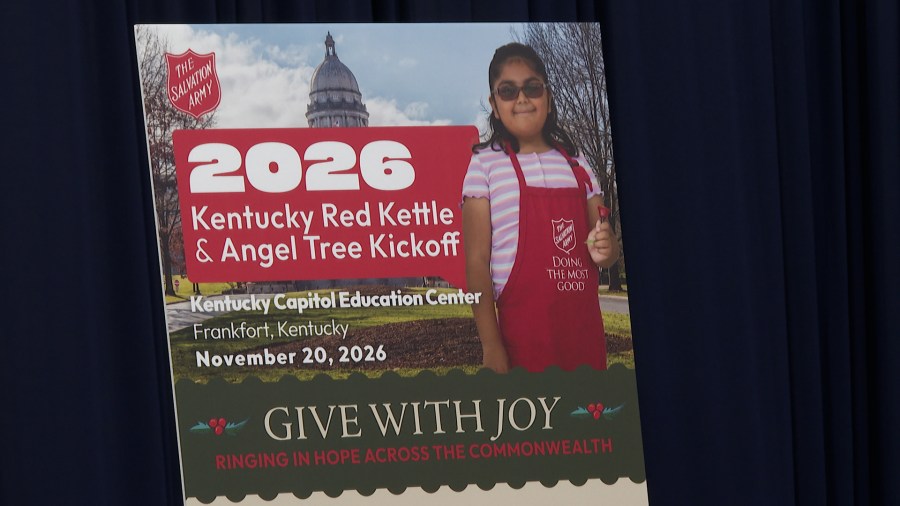
Salvation Army Launches Red Kettle, Angel Tree Campaigns at Capitol
The Salvation Army launched its Red Kettle and Angel Tree campaigns across Kentucky on Friday, officially opening the...

Texas Police Departments Gain ICE Funds With Little Oversight
Pantego, a town of 2,500 people just east of Fort Worth, collected $100,000 in federal cash after a...