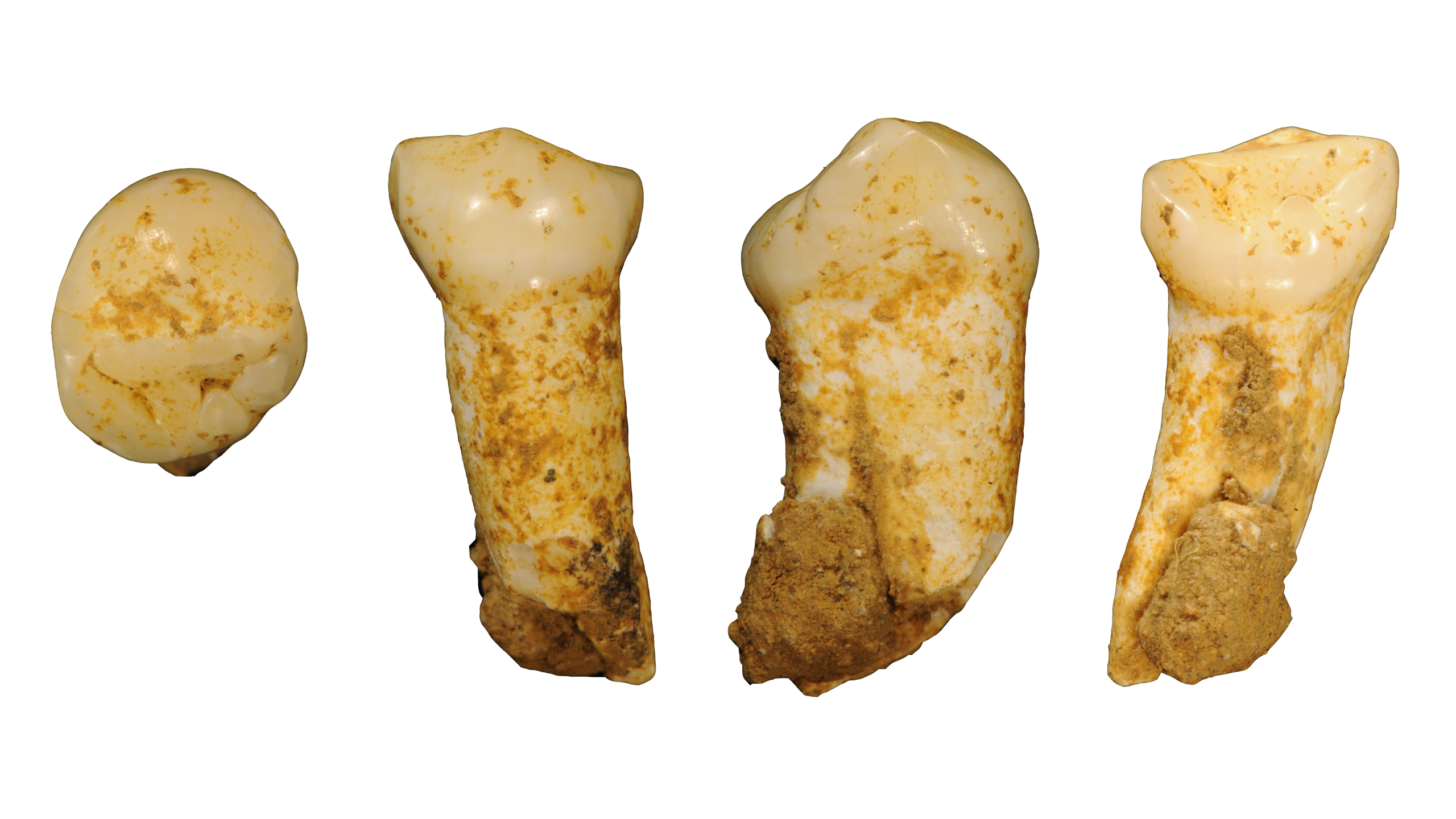
A study published Wednesday in Nature identifies two distinct archaic human lineages in southern China around 100,000 years ago — one clearly Denisovan, the other unclassified.
Researchers analyzed four isolated teeth from Chuanshandong and Longchuandong caves in Guangxi. Proteins extracted from enamel show the Longchuandong teeth carry a variant (AMBN 273V) found in Denisovans from Siberia, the Tibetan Plateau, and Taiwan. The Chuanshandong premolars bear a protein signature seen in late Homo erectus and Homo antecessor but not in any sampled Denisovan or Neanderthal.
- Longchuandong teeth (molar and premolar) match Denisovans through enamel proteins and molar shape; dated 104,500–42,600 years ago.
- Chuanshandong premolars (at least 100,800 years old) carry an erectus-like protein variant and a mix of ancestral and modern crown traits; no species assignment possible.
- Study authors call the Chuanshandong individual an “unresolved archaic Homo” — possibly a late-surviving Homo erectus, a distinct lineage, or a mixed population.
- Findings extend the known Denisovan range from Siberia and Tibet into the subtropical Lingnan region of Guangxi.
Two caves, two stories
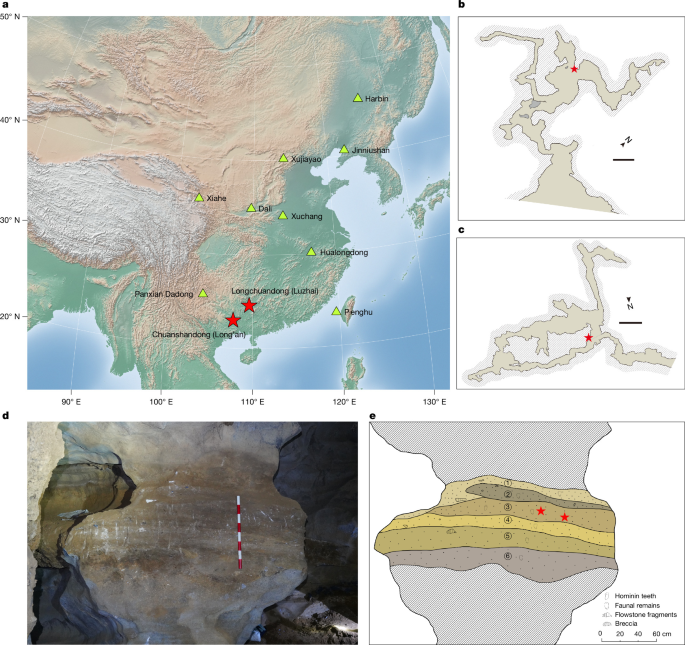
Chuanshandong cave, in Long’an County, yielded two lower premolars likely from one person. Longchuandong cave, in Luzhai County about 15 kilometres away, produced a molar and a premolar. Both caves contained only loose teeth and animal bones — no stone tools, no hearths, no cultural layer. Water likely transported the teeth into the deep chambers after death, the authors note, so burial ages may not match the individuals’ lifetimes.
Uranium-series dating on the Longchuandong teeth returns a broad window of 104,500 to 42,600 years. The Chuanshandong premolars are at least 100,800 years old. Luminescence dating of surrounding sediments and flowstone supports a Middle to Late Pleistocene age for both sites.
Proteins where DNA fails
Ancient DNA degrades quickly in the warm, humid subtropics. The team turned to enamel proteomics, recovering amino-acid sequences from 12 major enamel proteins, including amelogenin (AMELX, AMELY), ameloblastin (AMBN), and enamelin (ENAM). Even with only 14–17 percent of each protein sequence recovered, the variants that appeared carry phylogenetic signal.
The Longchuandong molar and premolar both carry AMBN 273V, a variant previously found in the Denisova 3 phalanx, the Harbin cranium, the Penghu mandible, and the Bianfu Cave molar. A Bayesian phylogenetic analysis placed the Longchuandong teeth alongside the Denisova 3 individual with 100 percent support.
Homo erectus was still living in southern China's rainforests as recently as 184,000 years ago, say two new Nature studies on nine teeth from caves in Guangxi. One tooth may even be a Denisovan's, though the authors say that is still unsettled.https://t.co/CLzlRmKbW7
The Chuanshandong premolars tell a different story. They lack the Denisovan AMBN variant. Instead, one premolar carries an AMBN variant (position 88) otherwise seen only in late Homo erectus from Zhoukoudian and in Homo antecessor from Atapuerca. The same tooth also shows a derived AMELX variant shared with Neanderthals, Denisovans, and modern humans — a mosaic the authors describe as “unresolved archaic Homo.”
Denisovans in the subtropics
Until now, confirmed Denisovan fossils clustered in cold, high-altitude settings: Denisova Cave in Siberia, Baishiya Karst Cave on the Tibetan Plateau, and Tam Ngu Hao 2 (Cobra Cave) in Laos. The Longchuandong teeth place them firmly in the Lingnan karst corridor, a transition zone between subtropical and tropical forests rich in Pleistocene megafauna such as giant panda and Stegodon.
“This is the first evidence of the presence of Denisovans in the Lingnan region,” the authors write.
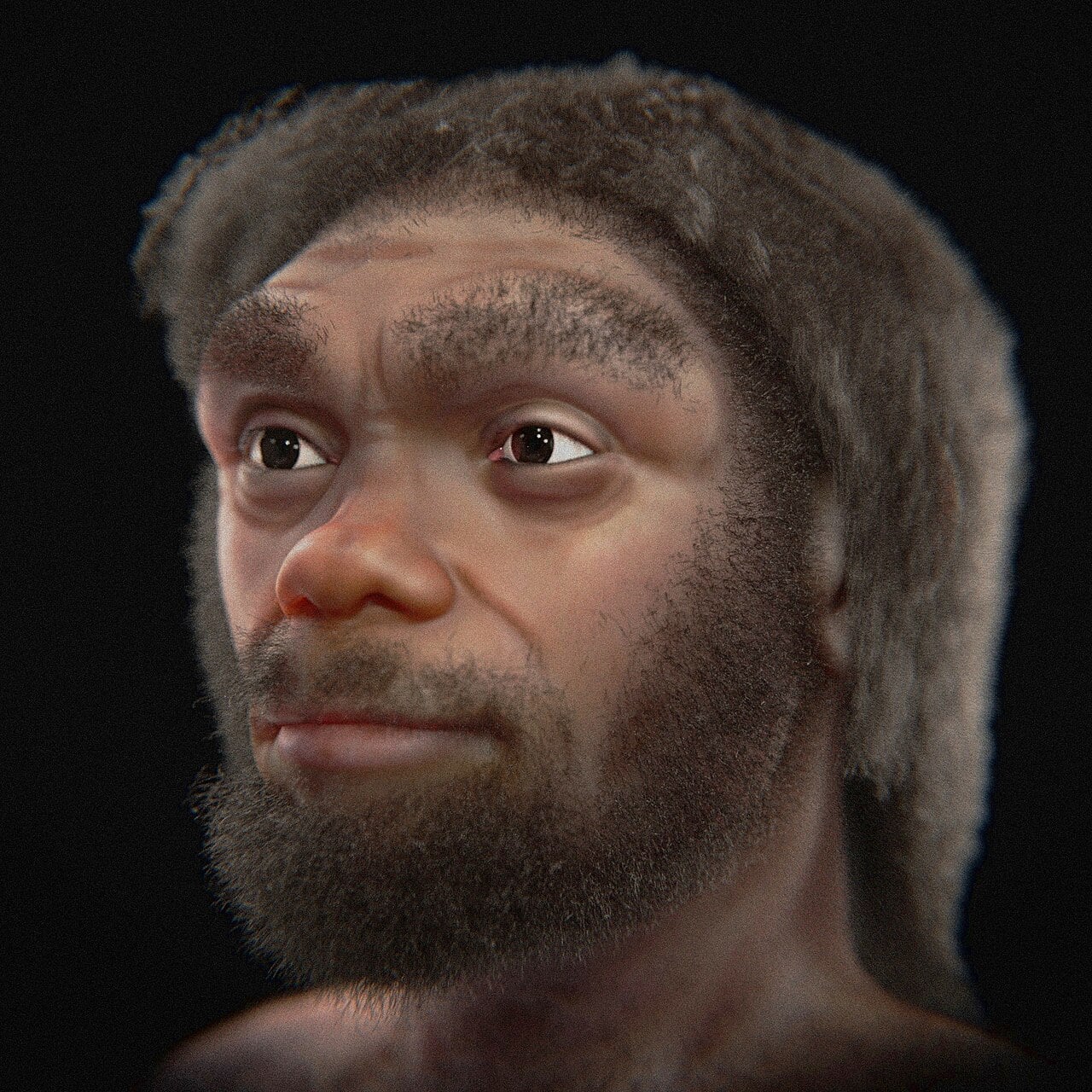
What the Chuanshandong tooth might be
The Chuanshandong premolars combine a complex, erectus-like root system with crowns that are less lopsided — more symmetrical, more sapiens-like. A geometric morphometric analysis of the enamel-dentine junction placed the Chuanshandong individual as a sister group to the common ancestor of Neanderthals, Denisovans, and modern humans.
The integrated evidence indicates that Chuanshandong may belong to a lineage distinct from the Denisovan in mainland southern China.
Song Xing et al., Nature
The authors stop short of naming a new species. They propose three non-exclusive scenarios: a late-surviving Homo erectus population persisting in a subtropical refugium; a distinct, unsampled archaic lineage; or a population with mixed ancestry from erectus, Denisovans, and perhaps other groups. All three scenarios are compatible with the limited protein data.
Outside perspective
John Hawks, a paleoanthropologist at the University of Wisconsin–Madison who was not involved in the study, questions the “unknown Homo” framing. “The paper characterizes this as an ‘unknown Homo.’ I wouldn’t put it that way. The question is which group has variation of the proteome,” he told Live Science.
If Homo erectus carried both the ancestral and derived variants found in the Chuanshandong tooth, the specimen could simply be a late erectus — a species already known from Java until roughly 108,000 years ago and from southern China until about 184,000 years ago (based on the nearby Baxian and Naxian caves).
Qiaomei Fu, director of the Ancient DNA Laboratory at the Institute of Vertebrate Paleontology and Paleoanthropology and a co-author, emphasized the preliminary nature of the inference. “It's not clear whether they are our cousins,” she said. The team is already analyzing new finds from the same Guangxi caves.
Future research seeks clarity
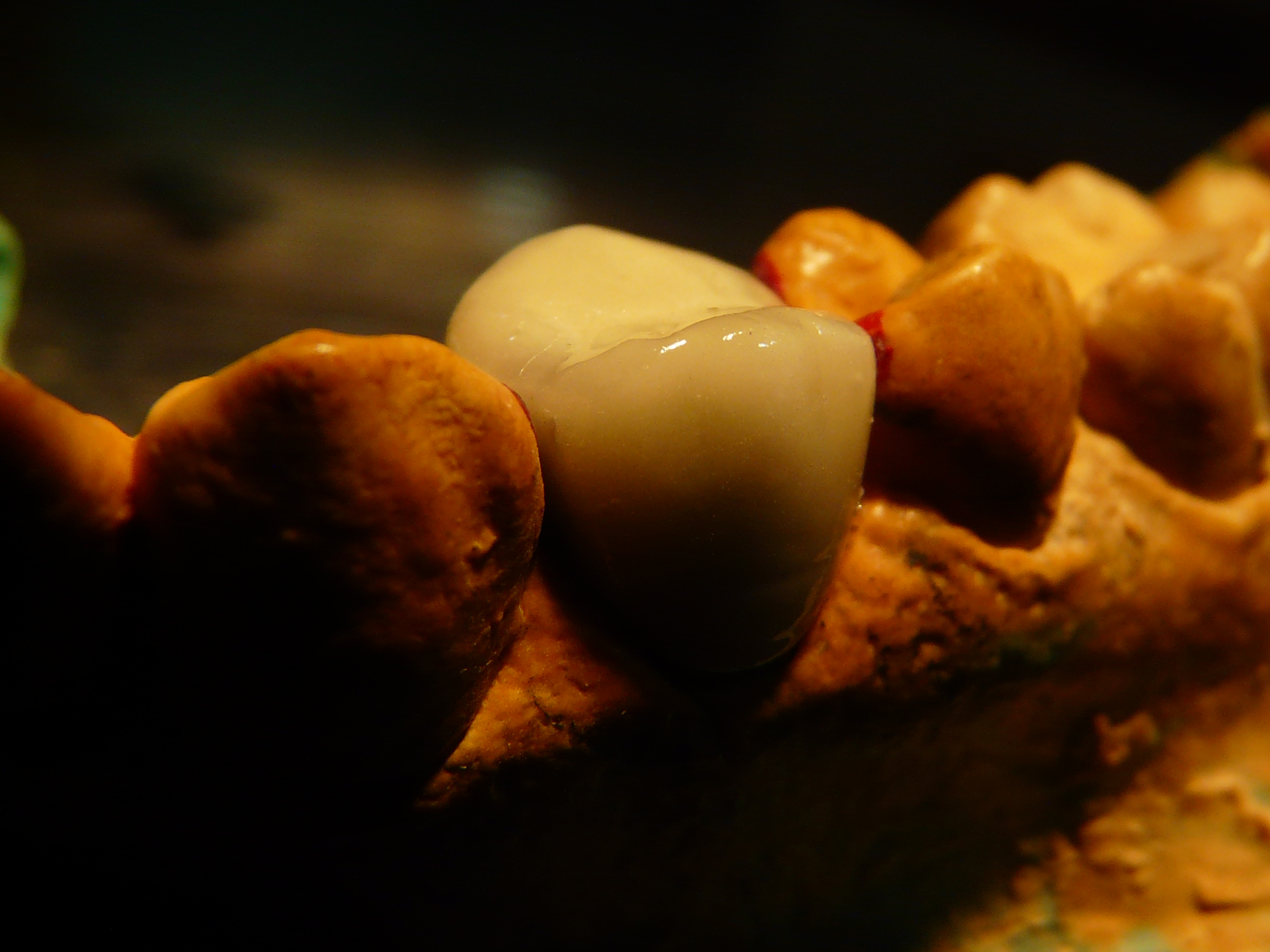
Because the protein sequences were only partially recovered, the researchers describe their phylogenetic results as preliminary. To definitively determine if the Chuanshandong teeth represent a lost branch of the human family tree or a late Homo erectus, the authors told Nature they require more complete fossils and ancient DNA analysis.
Qiaomei Fu informed IFLScience that the team is already performing analyses on additional new finds recovered from the same caves in Guangxi. These upcoming investigations aim to clarify the taxonomic relationships and the potential for interbreeding between the different archaic groups inhabiting the region.
A more crowded southern China
The Longchuandong teeth, taken together with the 2025 protein attribution of the Harbin cranium to Denisovans, the Penghu mandible, the Bianfu Cave molar, and the Cobra Cave molar, create a continuous Denisovan arc from Siberia through Tibet and the Taiwan Strait into subtropical southern China and Laos. Meanwhile, the Maba partial cranium in neighboring Guangdong has been linked to a Neanderthal-related group.
That puts at least three archaic human populations — Denisovans, a Neanderthal-affinity group, and the Chuanshandong lineage — in southern China during the Middle and Late Pleistocene. Whether they coexisted, interbred, or replaced one another remains unanswered. The authors call for ancient DNA and more complete fossils to resolve the Chuanshandong identity and its relationship to Homo erectus.
Worth a look
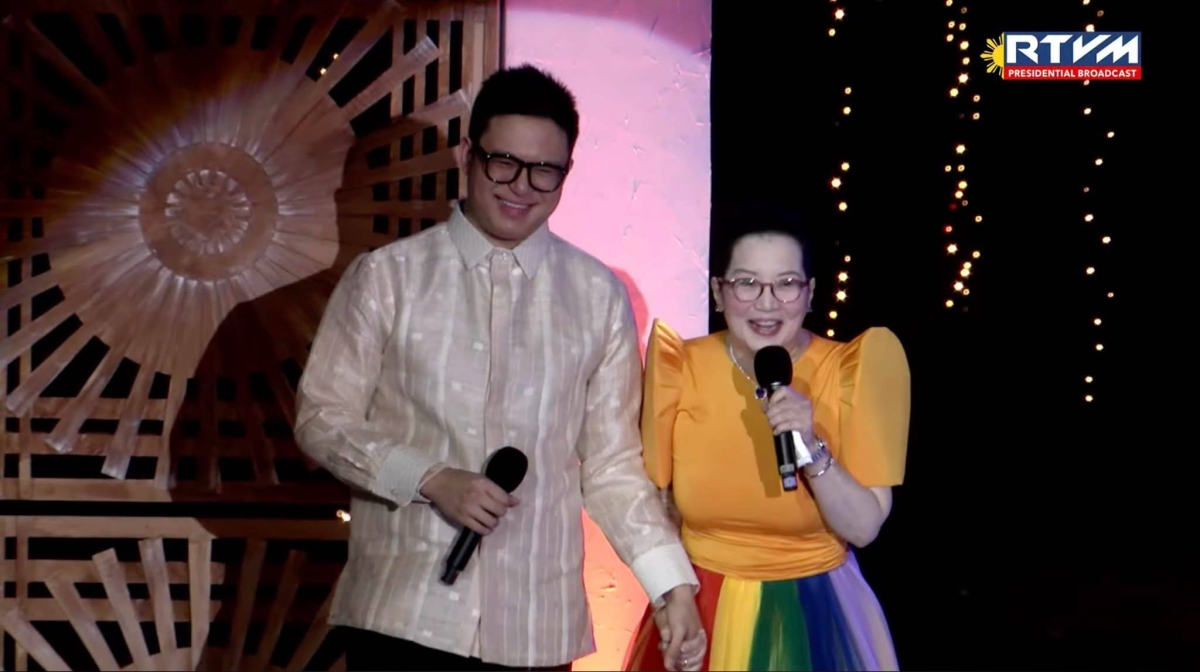
Kris Aquino Returns to Hosting at Malacañang Palace Christmas Celebration with Bimby
Kris Aquino, the Queen of All Media, returned to hosting on Saturday night, Nov. 28, at Malacañang Palace,...

HIV Advocate Kim Canady Demands Leadership Roles, Not Token Compensation
In a column for Forbes, sexuality educator and HIV advocate Kim Canady argues that healthcare, philanthropic, and corporate...

Two Players Met In Unofficial GTA 6 PC Port Session
Two players have met in the same unofficial GTA 6 PC port session, with footage showing character and...

Mark Gurman Reports Apple Staggers iPhone 18 Launch
Apple plans to release the standard iPhone 18 and budget iPhone 18e in early March 2027, while the...