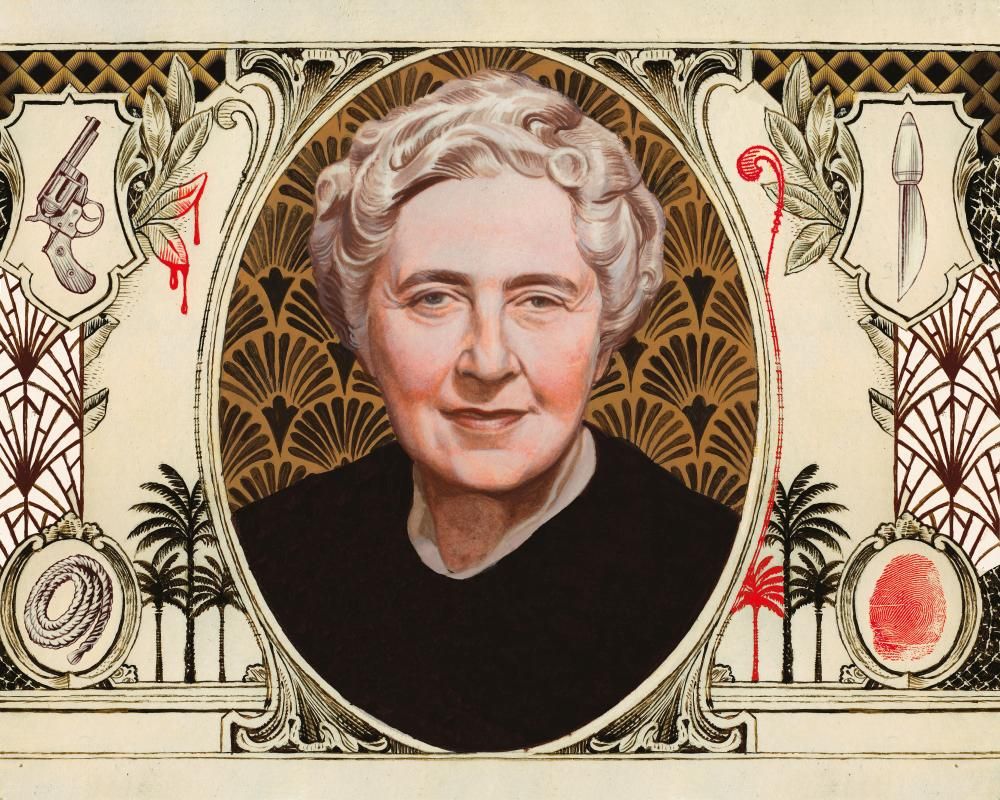
Nearly a century after Agatha Christie vanished for 11 days, her estate is posting record profits and her detectives are everywhere on screen.
Agatha Christie Limited earned a pre-tax profit of £20m last year, up from £13.7m in 2024, The Guardian reported. The surge coincides with a British Library exhibition, a new authorised Miss Marple novel, a film about the 1926 disappearance and a BBC series recasting Poirot as a young, hot leading man.
The disappearance that launched a myth
On 4 December 1926, a woman calling herself Teresa Neele checked into the Swan Hydropathic hotel in Harrogate. She carried cash, a comb, a hot-water bottle and a photograph of a boy marked “Teddy.”
She danced the Charleston “not very well,” shopped, played billiards and placed a Times ad asking friends of “Teresa Neele, late of South Africa” to write to Box R 702, The Guardian reported. On 14 December, police and journalists converged: the guest was Christie herself, missing from her Surrey home while her husband Archie pursued a divorce and her mother had just died.
The press accused her of a publicity stunt.
Adaptations drive the business
James Prichard, Christie’s great-grandson and head of Agatha Christie Limited, said the goal is to avoid “brand slap — bunging the Christie name on anything unworthy.” He approved Lucy Foley’s Murder at the Grand Alpine Hotel, the first new Marple in 50 years, and called Kenneth Branagh’s Poirot trilogy “brilliant,” The Guardian reported.
Screen projects now span tones. Hugh Laurie’s Why Didn’t They Ask Evans? (2022) leaned into humour. Sarah Phelps, who adapted The ABC Murders and And Then There Were None, prefers the “long shadows.”
She told The Guardian she had never read Christie before the 2015 BBC commission: “I was astonished, because it is as remorseless as a Greek tragedy. You can whine and beg forgiveness, but you, on this bleached rock, are held in the white eye of God and you are going to die.”
Phelps is now adapting Endless Night, a late novel Christie wrote partly as a riposte to Patricia Highsmith, who dismissed whodunnits as “a silly way of teasing people.” Phelps said Christie “wants to shock a bit. But she can’t sustain the narrator’s voice — working class, young, masculine, talking about ‘birds’ and sex: you can feel her slightly straining.”
Subversion beneath the surface
Biographer Lucy Worsley told The Guardian that The Murder of Roger Ackroyd (1926) functions as a war novel: “She gradually chips away at all the bosses, which I find very subversive.” Authority figures — especially doctors — are “very often bad.” Poirot, a Belgian refugee, exploits English xenophobia, and Christie “toys with your prejudices,” Worsley said.
Cathy Rentzenbrink, author of The Agatha Christie Cure, described the novels as a game the writer plays with the reader: “She likes the reader. She’ll say, ‘The clever reader will think this, but they’d be wrong.’”
Richard Osman, whose Thursday Murder Club series has sold more than 17m copies, rejects the “cosy crime” label. “Christie is classic crime, telling stories about the times she lived in,” he told The Guardian. “She is the Beatles of 20th-century writing.”
Prejudice and the estate’s calculus
HarperCollins removed racist language from several novels in 2023. “Every book published before yesterday contains attitudes which may cause offence,” Worsley told The Guardian. “You will encounter antisemitism.” Prichard said the family will remain “experts on the brand” when copyright expires in 2047.
Personal crises that shaped the 1926 disappearance
Christie’s mother Clara had recently died, and she was struggling to finish a novel she had grown to hate, The Mystery of the Blue Train, according to The Guardian. Her husband Archie was then in love with Nancy Neele and seeking a divorce, and the couple were together at Hurtmore Cottage on the night Christie vanished.
The press accused Christie of a publicity stunt and questioned what kind of mother would leave her seven-year-old daughter Rosalind, The Guardian reported.
Phelps notes Christie strained to sustain male narrator voice
Prichard was five when Christie died in 1976. “I always tease him that he was the most spoilt grandchild of the 20th century,” he said of his father Mathew, adding Christie “was the best listener he ever met.”
Keep reading

Irish Times Columnist Argues Gilbert O’Sullivan Remains Ireland’s Greatest Songwriter
In a column for The Irish Times, the author argues that Gilbert O'Sullivan remains one of Ireland's greatest...

Dave McSavage Says PJ Gallagher Helped Launch Joanne McNally’s Career
Comedian Dave McSavage has revealed how mutual friend PJ Gallagher was instrumental in launching the career of comedy...

Colin Farrell Opens Home for Emma Fogarty Doc ‘The Slightest Touch’ on HBO Max from 25 November
Colin Farrell opened his Los Angeles home to filmmakers for the first time in 25 years for the...

Jersey Fraud Losses Top £5.7m in 2026, Police Say
More than £5.7m has been lost to fraud in Jersey so far in 2026, according to new police...