
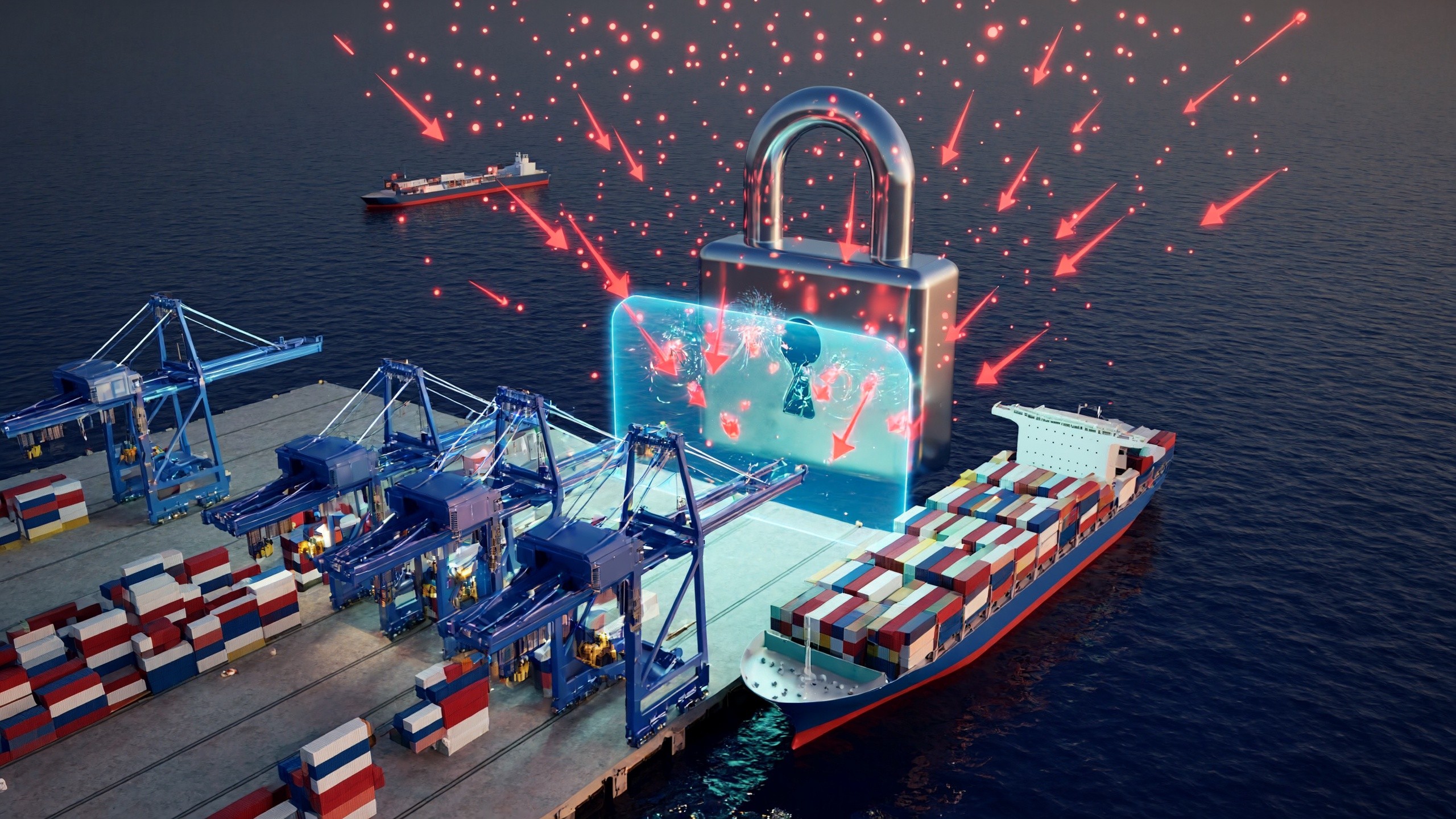
Hackers are bombarding U.S. ports and cargo ships with thousands of attempted cyber intrusions each day, a surge that has escalated sharply in recent months and now threatens the digital arteries of global trade and energy exports.
The Financial Times reported Sunday that the Port of Corpus Christi, the nation’s largest crude oil export gateway handling roughly 2.3 million barrels a day, faces “hundreds if not thousands” of daily attempts. Attackers are probing networks for vulnerabilities and sending phishing messages that impersonate senior executives to trick staff into granting access.
The Port of Los Angeles said it blocked 120 million attempted attacks in August — nearly double its 2023 monthly average. The Coast Guard recorded a 17% rise in reported maritime cyber incidents last year.
“They're poking at our systems and trying to find vulnerabilities,” Kent Britton said. “With AI, it'll only get more complicated.” He added that the attempts come from what he describes as known bad-actor states and organizations seeking high-profile targets.
Agencies board compromised tankers near Galveston
In August, the Coast Guard and FBI boarded two foreign-flagged tankers bound for Galveston, Texas, after indications their networks were compromised near the Strait of Gibraltar. The vessels carried crude oil and liquefied petroleum gas from the Mediterranean. Investigators have not publicly identified those responsible.

On Aug. 4, a cyberattack disrupted operations at all three North Carolina Ports facilities in Wilmington, Morehead City, and Charlotte. The agency activated its contingency plan, brought in state and federal partners including the Coast Guard, and transitioned to manual gate processing while IT teams worked on recovery.
Officials said there was no indication sensitive data had been compromised, but they had not identified the culprit or given a timeline for full restoration at the time of local reporting.
Ports implement analog backup systems
Ports are layering analog contingencies alongside digital defenses. Corpus Christi relies on tugboats to escort vessels through sections of the channel. The harbor master’s office can fall back on two-way radios, binoculars, and paper records to maintain traffic flow if systems fail. The Port conducts monthly employee training and drills with the Coast Guard. “We're an economic pinch point,” Joe Harris said. “Getting taken offline is not an option.”
Meanwhile, a Coast Guard final rule issued in 2025 requires covered U.S.-flagged vessel owners, facility operators, and Outer Continental Shelf facilities to report qualifying cyber incidents to the National Response Center and provide annual cybersecurity training. By July 16, 2027, they must designate a cybersecurity officer, complete an assessment, and submit a cybersecurity plan for Coast Guard approval.

The rule does not apply to foreign-flagged ships like the two tankers boarded in August, though the Coast Guard emphasizes cybersecurity during Port State Control exams and can detain, deny entry, or restrict movement of vessels with unresolved cyber risks.
Experts link threats to foreign actors
Experts cited in the Financial Times report link maritime cyber risks to actors associated with Iran, North Korea and China. Separately, cybersecurity company Shieldworkz said Russia’s Noname057(16) threatened European operators in October.
SOCRadar describes the n0n extortion gang as financially motivated, while Cydome says it does not attribute the group to any country.
Coast Guard mandates Fortinet patches
In its September advisory on Fortinet equipment, the Coast Guard specifies the remedies it expects from marine transportation partners: remediate the most targeted FortiGate vulnerabilities, such as CVE-2026-24858 and CVE-2025-25252.
Rear Adm. Rob Compher, Assistant Commandant for Prevention Policy, said early preparation is absolutely critical.
The final rule, Cybersecurity in the Marine Transportation System (33 CFR Part 101, Subpart F), already obligates covered companies to report cyber incidents to the National Response Center and deliver annual cybersecurity training for personnel with access to IT or OT systems. The Coast Guard also announced a new Office of Maritime Cybersecurity Policy on 31 August.
AI tools accelerate the arms race
The FBI warned last week that hackers are using an AI tool called Artex to automate attacks, enabling malicious groups to identify and exploit weaknesses faster than many organizations can respond.
“If you're playing defence, you have to get it right every time … if you're planning offence, you only have to get it right once,” Kent Britton said, echoing a framing that Gene Seroka summarized: attackers have to get it right one time and the threat is front of mind every day.
A new Justice Department and Homeland Security hub now connects more than 30 federal agencies with hundreds of state and local partners to triage victim complaints, map criminal networks, and provide a direct channel to private-sector organizations positioned to disrupt operations.
Related reading

Australian Music Icon Molly Meldrum Dies Aged 83
Ian “Molly” Meldrum AM, the television host and music producer who steered Australian pop culture for more than...

Gate Theatre’s It’s a Wonderful Life Musical Leans Into Joy But Loses Film’s Dark Heart
Mary Elliott Nelson's stage adaptation of It's a Wonderful Life at Dublin's Gate Theatre transforms Frank Capra's 1946...

Sun-Square-Jupiter Boosts 5 Zodiac Signs: Taurus, Gemini, Cancer, Virgo, Aquarius Pursue Joy Nov 23
Taurus decides to do something new starting November 23, such as revisiting a beloved childhood place or updating...

The Journal Publishes Vampire Quiz for ‘Robert Pattinson Week’
The Journal published an interactive quiz testing readers on vampire lore across film, television and literature to mark...