
A state pilot program aimed at halving housing development timelines is moving toward its first project in Kapolei, West Hawaii Today reported, with a local firm cleared to pursue 60 to 120 units on a vacant 2.8-acre strip zoned for agriculture but surrounded by urban uses.
The Hawaii Housing Finance and Development Corp. board unanimously approved Kobayashi Group’s conceptual plan on Oct. 8 as the inaugural project under “Hawaii Builds,” a five-year pilot established by Senate Bill 2544, enacted July 8 as Act 216. The agency may loan up to $20 million a year from its existing dwelling unit revolving fund, prioritizing these projects over other affordable-housing loans.
The law replaces county council reviews with an “expedited review team” of state and county officials. County planning directors must decide on zoning exemptions within 45 days, and the state Department of Health must rule on water safety within 60 days unless it provides written justification for more time.
HHFDC Executive Director Dean Minakami said the primary benefit is “collaboration to devise and permit projects more quickly” by convening all stakeholders at the outset.

Over half the units must be affordable to households earning at or below 140% of the county median income. On Oahu, that caps monthly rent at $3,773 for a studio, $4,042 for a one-bedroom, $4,851 for a two-bedroom and $5,607 for a three-bedroom, tied to annual income limits of $150,920 for a single person, $172,480 for a couple and $215,600 for a family of four.
Maximum sale prices range from about $550,000 for a studio to around $790,000 for a larger family unit. The final mix of price points remains undetermined, though at least 60% of units must meet the affordability threshold.
“Speeding up permitting processes should not be done at the cost of taking away counties’ discretionary control, or meaningful public input,” the union said in written testimony.
Board member Garth Yamanaka, a real estate appraiser, questioned the unspecified state funding commitment at the Oct. 8 meeting: “OK, so right now we’re basically approving any contracts related to this?” Minakami confirmed the board’s approval covers project contracts as they arise, and said the next step is establishing a project budget subject to board approval.
The project could be rental, for-sale, or rent-to-own, with development options ranging from 60 to 120 units in two buildings of 30 to 60 units each, built in one or two phases. Financing amounts for design and construction have not been set.
Related reading

Seattle Public Utilities Activates South Park Emergency Response Plan, Installs Mile-Long Barrier Ahead of King Tides
Seattle Public Utilities activated its South Park emergency response plan Sunday ahead of king tides forecast to peak...

L.A. Court Grants Temporary Restraining Orders for LeBron James Family After Trespassing
A Los Angeles court granted temporary restraining orders Monday protecting LeBron James and his family from two men...

Duke vs. UConn Rematch Highlights Feast Week as Blue Devils Search for Identity
Duke enters Tuesday's rematch against UConn shooting 28% from three-point range, a steep drop for a program that...
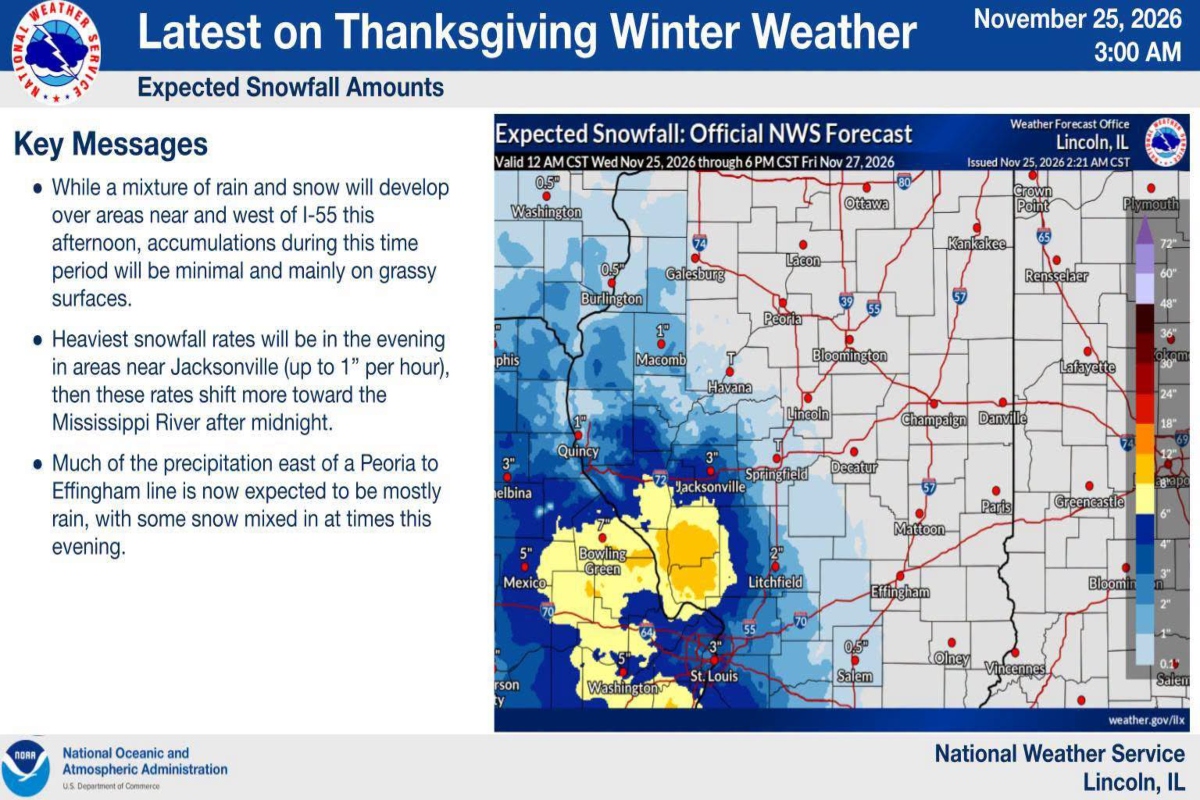
NWS Lowers Springfield Thanksgiving Snow Forecast to 1 Inch, Raises Jacksonville Totals
Rebekka Copple, a meteorologist with the National Weather Service in Lincoln, during a webinar Tuesday said Springfield and...