Michigan contractors and utilities face sweeping new limits on political giving after voters approved Proposal 2 on November 3, a measure that rewrites the state’s campaign finance law and takes effect no later than December 3.
The ballot initiative creates the state’s first broad pay-to-play prohibition, barring companies with government contracts exceeding $250,000 — and a wide circle of affiliated “principals” — from contributing to candidates in the relevant jurisdiction, according to HK Law.
The restriction covers contractors, subcontractors and their principals — defined as officers, directors, 5% owners, agents, lobbyists and certain family members — for the duration of the contract and 18 months after it ends, Inside Political Law reported.
Any entity established, financed, maintained or controlled by the contractor or its principals is also covered. A parallel ban applies to regulated utilities, their connected political action committees and related individuals, prohibiting contributions to a broad range of state candidates.
Beyond contribution limits, Proposal 2 expands the definition of “expenditure” to include any public communication that “promotes, supports, attacks, or opposes” a candidate or ballot question, moving beyond the previous express-advocacy standard.
It also mandates disclosure within 10 days of contributors and distributors for “electioneering communications” exceeding $5,000 — ads that identify a candidate within 100 days of a general election or 30 days of a primary without expressly advocating a vote. Disclaimer requirements now apply to content referencing a candidate in the 100-day pre-election window, and payer disclosure rules extend to internet political advertising, HK Law and Inside Political Law reported.
Penalties for violations may include contract cancellation, debarment or monetary fines determined by the Michigan Secretary of State, HK Law reported.
The law faced immediate legal challenges. On November 3, the Mackinac Center, a Michigan nonprofit that produces issue advocacy advertisements, sued in federal court over the disclosure mandates for electioneering communications and the expanded expenditure definition.
Two days later, a coalition of Michigan utilities, their connected PACs and related individuals filed a separate federal suit challenging only the new utility contribution ban under Section 30a. Neither lawsuit challenges the contractor pay-to-play provisions under Section 30b, HK Law reported.
The contractor restrictions — which directly implicate contributions by senior executives, their immediate families and company lobbyists — remain unchallenged in court, HK Law noted. The pending lawsuits will clarify the constitutionality of the disclosure and utility provisions, while Michigan’s new regime stands as a reminder that states may impose pay-to-play rules even if federal regulators rescind similar restrictions.
Worth a look
NH Trooper Applied for Police Job Weeks After Signing Plea Deal to Leave Law Enforcement
New Hampshire State Trooper James Lamoureux applied for a police job in Massachusetts two weeks after signing a...
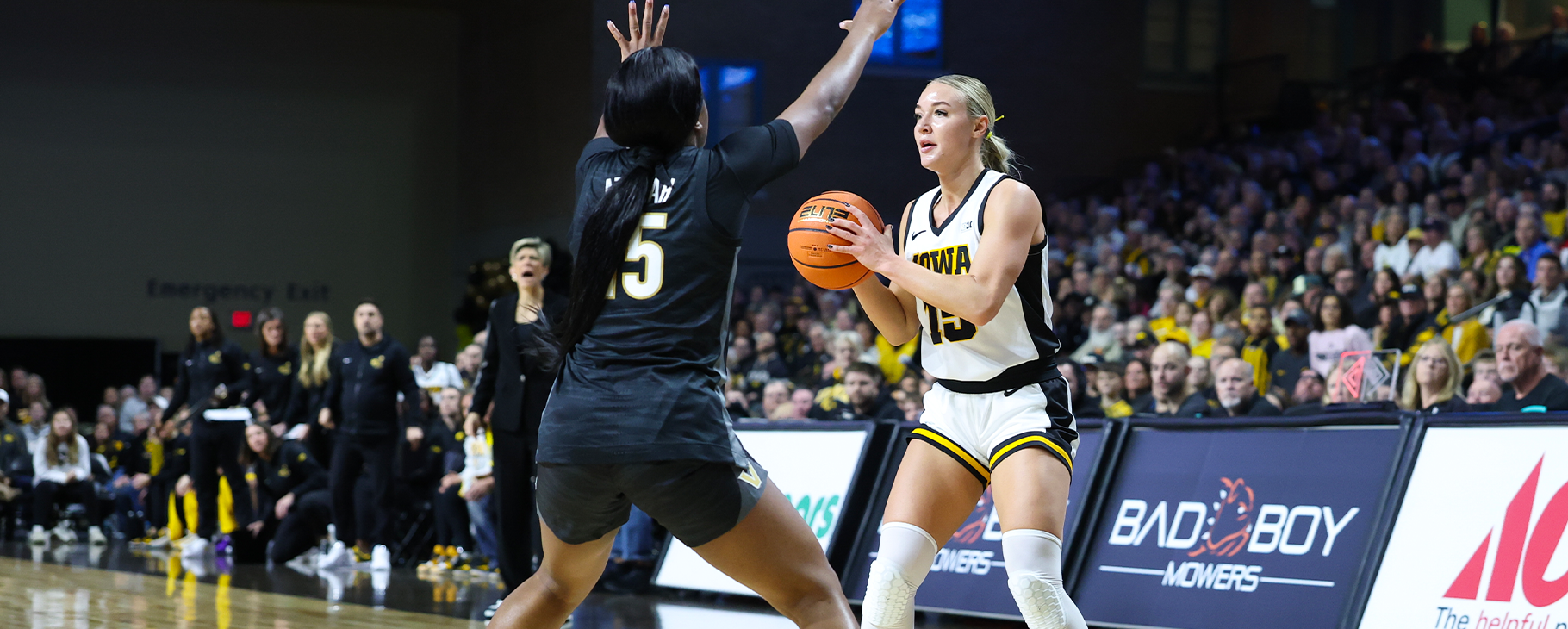
No. 8 Iowa plays Montana State Thursday at Carver-Hawkeye Arena
No. 8 Iowa returns to Carver-Hawkeye Arena Thursday night at 7 p.m. CT to host Montana State in...
Las Vegas Man Pleads Guilty to Armed Carjacking Spree, 120 MPH Chase Across Southern Nevada
A Las Vegas man pleaded guilty to two armed carjackings and a federal firearms charge, admitting he and...

Cynthia Erivo Says James Bond Theme Is Her Dream at Lincoln Center Benefit
Cynthia Erivo stood barefoot in a burgundy floral-motif gown at Lincoln Center on Monday night and told a...