
Honolulu’s Unwanted Feathered Residents
The streets of Oahu have become an unlikely battleground, and the adversaries aren’t human. City officials in Honolulu are currently pleading with both residents and tourists to stop feeding the island’s rapidly multiplying feral chicken population, a surge that has transformed from a quirky local nuisance into a genuine infrastructure and sanitation crisis, the NY Post reported.
The birds are everywhere. They are crowing at all hours, tearing through residential gardens, and leaving behind a trail of waste that is becoming increasingly difficult for the city to manage. For those living in affected neighborhoods, the reality is far from the idyllic island imagery often sold to visitors. It is a daily struggle against property damage and a constant, foul-smelling reminder of an animal population that has surged well beyond natural limits.
The Public Interference Problem
While the City and County of Honolulu have deployed specialized traps and launched a public education campaign, their efforts are being actively hindered by the very people they are trying to protect. According to Hawaii News Now, the city’s pest-control contractors are encountering significant resistance as they attempt to thin the flocks. In some areas, individuals have been caught tampering with or vandalizing traps, and in several instances, people have even released birds that had already been captured.
“While crews are actively trapping feral chickens and putting up educational signage, this is an issue the city simply cannot tackle alone,” said Department of Customer Services Director Kim Hashiro, who oversees the city’s animal-control program. “We need every segment of our community – from residents to business owners – to help us by not feeding these birds and letting our pest-control teams do their jobs safely.”
The city has taken visible steps to curb the behavior, installing “Do Not Feed Feral Chicken” signage in public parks and even on public transportation. Despite these measures, the fundamental question of who is fueling the population explosion remains unanswered. Officials acknowledge it is still unclear whether the primary culprits are locals or tourists, or how the responsibility for the ongoing feeding should be divided between the two groups, the NY Post noted.
Frustration in the Neighborhoods
The frustration among residents is palpable, particularly for those whose properties have been repeatedly targeted by the roaming flocks. Back in 2022, the issue reached the state legislature when Senate Bill 2195 was introduced to secure state funding for feral chicken mitigation. The bill failed to advance, leaving local homeowners to fend for themselves.
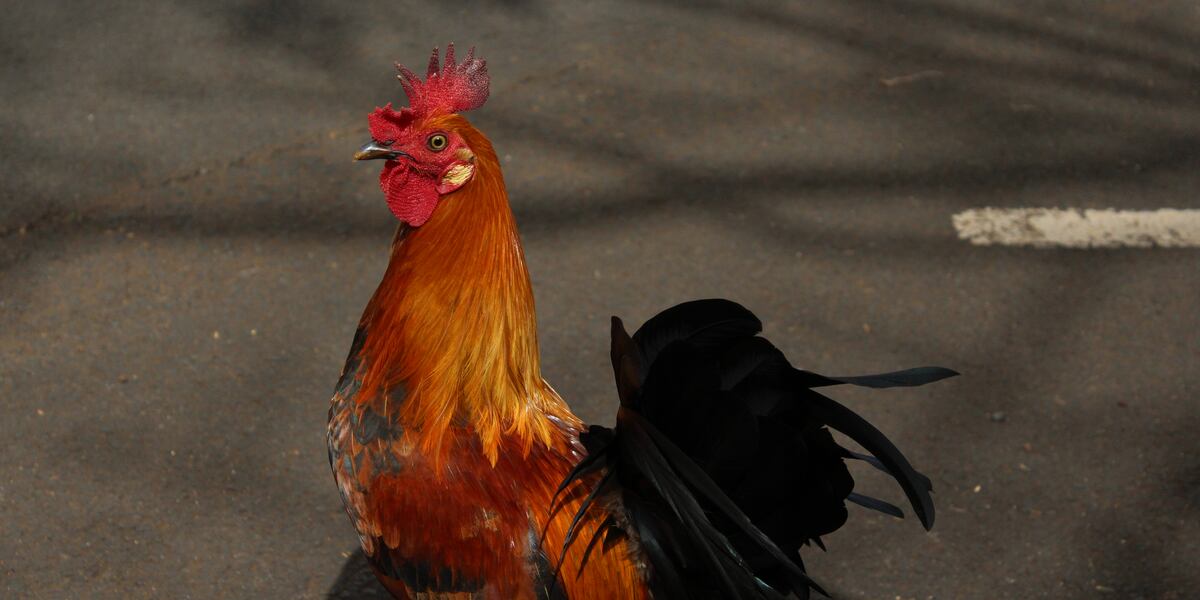
During the testimony for that failed legislation, residents painted a grim picture of their daily lives. Robert Peine of Aiea described the scene in his neighborhood, noting that he had personally counted clusters of 12 to 15 chickens blocking the middle of the roadway. Others, like Maria White, have called for more aggressive government intervention, suggesting that the city needs to either relocate the birds to rural farms or pursue total eradication to reclaim their communities from the noise and filth.
The Connection to Illegal Industry
Beyond the simple act of feeding the birds, some residents believe the core of the problem lies in the island’s illicit activities. There is a persistent argument that the feral population is artificially sustained by the illegal cockfighting industry. Critics of the current enforcement approach point out that Hawaii classifies cockfighting as a misdemeanor rather than a felony, which they argue provides little deterrence for breeders who simply dump unwanted birds into local neighborhoods once they are no longer useful.
As Bonnie Gollero noted in her testimony regarding the 2022 legislation, current fines of no more than $250 are insufficient to stop the cycle. Without a change in how these industries are policed, residents fear that the feral flocks will continue to resurface, regardless of how many birds are trapped or how many signs are posted. For now, the city continues to rely on its public education campaign and private property disposal programs, hoping that a shift in public behavior will finally allow the streets of Honolulu to quiet down.
Keep reading

Cascade Point Ferry Terminal Project Mobilizes Equipment Near Juneau
Heavy Machinery Arrives at Cascade Point Amidst Terminal Dispute Heavy equipment moved onto the site at Cascade Point...
The Real Life Marriage Struggles of Bewitched Star Elizabeth Montgomery
The Reality Behind the Nose Twitch For eight years, Elizabeth Montgomery defined the American suburban ideal as Samantha...
Social Security 2027 COLA of 3.6% offers largest boost in four years
The 3.6% Social Security Adjustment and the 2027 Fiscal Reality The Social Security Administration has confirmed a 3.6%...

Madison Artists Sandra Schoen and J. Myszka Lewis Win $10,000 Forward Art Prize
Madison Artists Secure $10,000 Forward Art Prize Amid Funding Shortfalls Madison artists Sandra Schoen and J. Myszka Lewis...