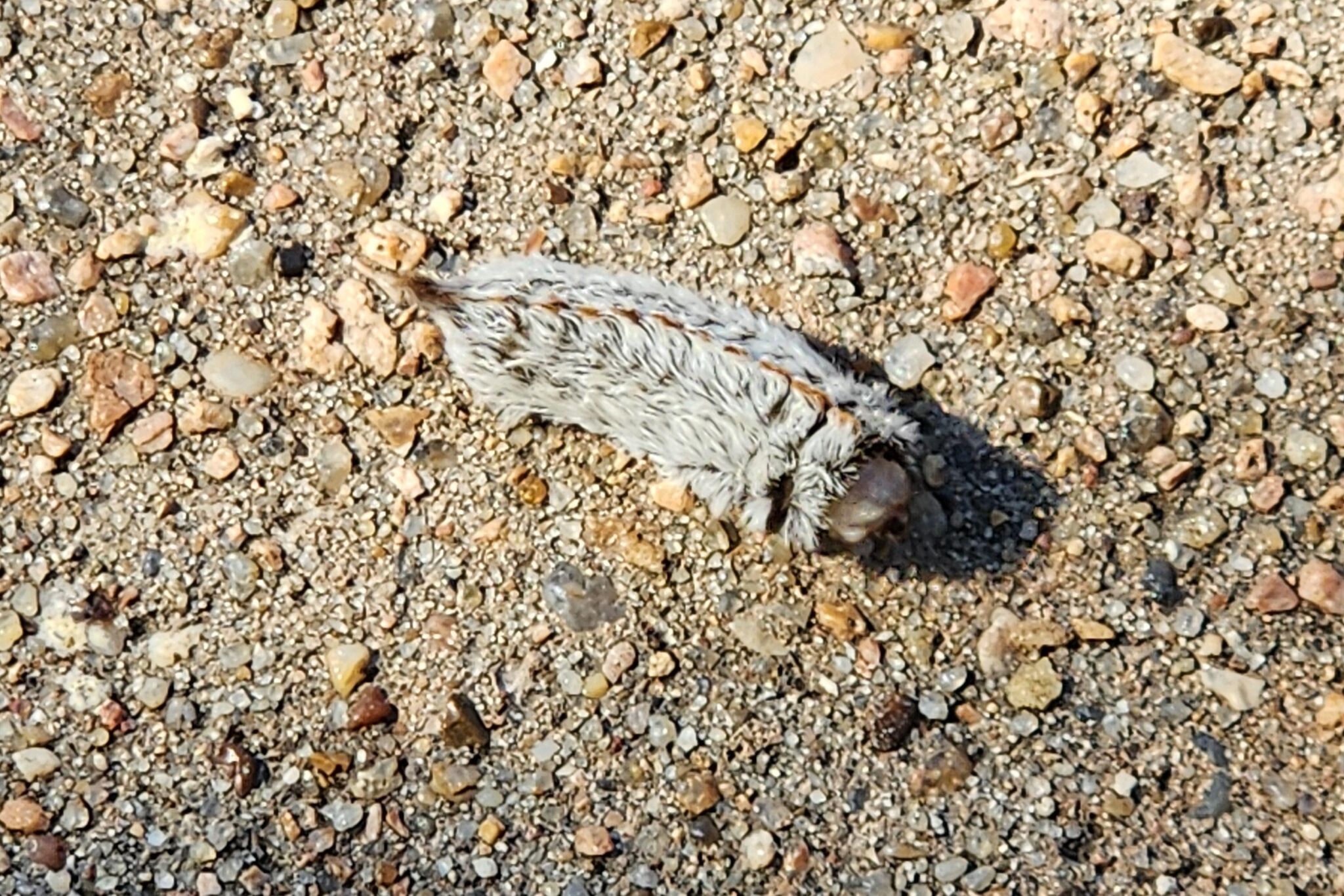
A Houston woman was stung by an asp caterpillar while helping a friend store lawn decorations in the Fall Creek neighborhood, Chron reported.
Tracey Cline initially thought she had brushed against poison ivy. An hour later, she discovered the caterpillar clinging to her shirt.
“It was like I was holding my arm, my entire arm, in an oven,” Cline told Chron. “I’ve been stung by a scorpion before, and I thought that was bad cause my tongue got numb.”
A rash began forming on her arm, which quickly started swelling. Cline, who has previously suffered a bone fracture, said the sting was even more painful. Within an hour, she began feeling nauseous, dizzy and exhausted. “It just kept getting worse,” she said. She slept for the rest of the day; by the next morning the pain and flu-like symptoms had disappeared, though marks remained on her arm days later. She said she had little memory of the evening.
“I did everything wrong,” Cline said.
“I said, ‘Oh, I’ve heard that those are like evil,'” she recalled. “And it was like the very next day, within 24 hours, I got stuck with one.”
“But this caterpillar was awful,” she said.
“I don’t even do exterminating because I have all of these caterpillars that turn into butterflies.” She has since given the insect another nickname: “Satan.”
Asps, also known as southern flannel moth or puss moth caterpillars, are among the most painful stinging caterpillars in Texas, according to Texas A&M AgriLife Extension. Their soft, furry appearance conceals venomous spines that produce intense burning pain when pressed against skin. These teardrop-shaped caterpillars attain a length of approximately 1 to 1.5 inches and come in colors that vary from yellow and gray to reddish-brown.
They consume leaves from trees such as oaks, pecans, elms and hackberries and are generally most prevalent during the autumn.
Symptoms can include throbbing pain, redness, swelling, headaches, nausea and vomiting. Severe reactions can cause breathing difficulties.
Texas A&M AgriLife Extension recommends using adhesive tape to remove remaining spines, washing the area with soap and water, and applying an ice pack. Oral antihistamines can help relieve itching, while severe reactions require medical attention.
She believes rubbing the irritated area afterward only made matters worse.
Keep reading

Goodwill, Southeastern Development Break Ground on Edgar’s Village Job-Training Campus and Residential Community in Putnam County
“It’s going to be a longerterm project,” Putnam County Commission Chairman Bill Sharp said. Goodwill Industries of Middle...

Colts Injury Report: Raimann Returns; Curry Out for Season
The Indianapolis Colts secondary and offensive line moved toward full strength Wednesday as the team prepares for the...

EPA Conditionally Approves San Diego Landfill Flare Rule, Cites Test Method Deficiency
The Environmental Protection Agency conditionally approved a San Diego County rule limiting nitrogen oxide emissions from landfill gas...

Nearly 1 Million Philadelphia Travelers Expected Ahead of Thanksgiving Nor’easter
Nearly 1 million people in the Philadelphia region are expected to travel for Thanksgiving, most of them driving...