James Gleick’s new history of the telephone opens with Mark Twain’s 1877 boast that his Hartford line was the first “ever used in a private house in the world,” a claim The Atlantic reported was incorrect.
Twain soon became “the first author to deploy the telephone in fiction,” publishing a story in The Atlantic Monthly where lovers court and marry without meeting, their conversation “a meeting of minds that have escaped the body’s requirement of place,” The Atlantic reported. Gleick traces how the Bell System turned that novelty into a monopoly that lasted more than a century.
Alexander Graham Bell, a teacher at the School for Deaf Mutes rather than a scientist or engineer, pursued voice transmission through trial and error, reason.com reported. His lawyer secured the crucial patent by bribing a U.S. Patent Office examiner with $100 and a gold watch, The Atlantic reported.
AT&T defended that advantage ruthlessly. When the Hush-a-Phone Corporation sold a $10 plastic cup to make desk phones private, repair crews threatened to disconnect customers who used one, The Atlantic reported. A federal appeals court finally allowed the device in 1956.
The network’s growth created a labor crisis. AT&T’s chief engineer estimated that by 1930, a quarter of New York City’s population would be needed to run switchboards, The Atlantic reported. Automation arrived with the rotary dial, which came printed with instructions: “Remove receiver. Put finger in hole over first figure wanted. Turn to stop and let go.”
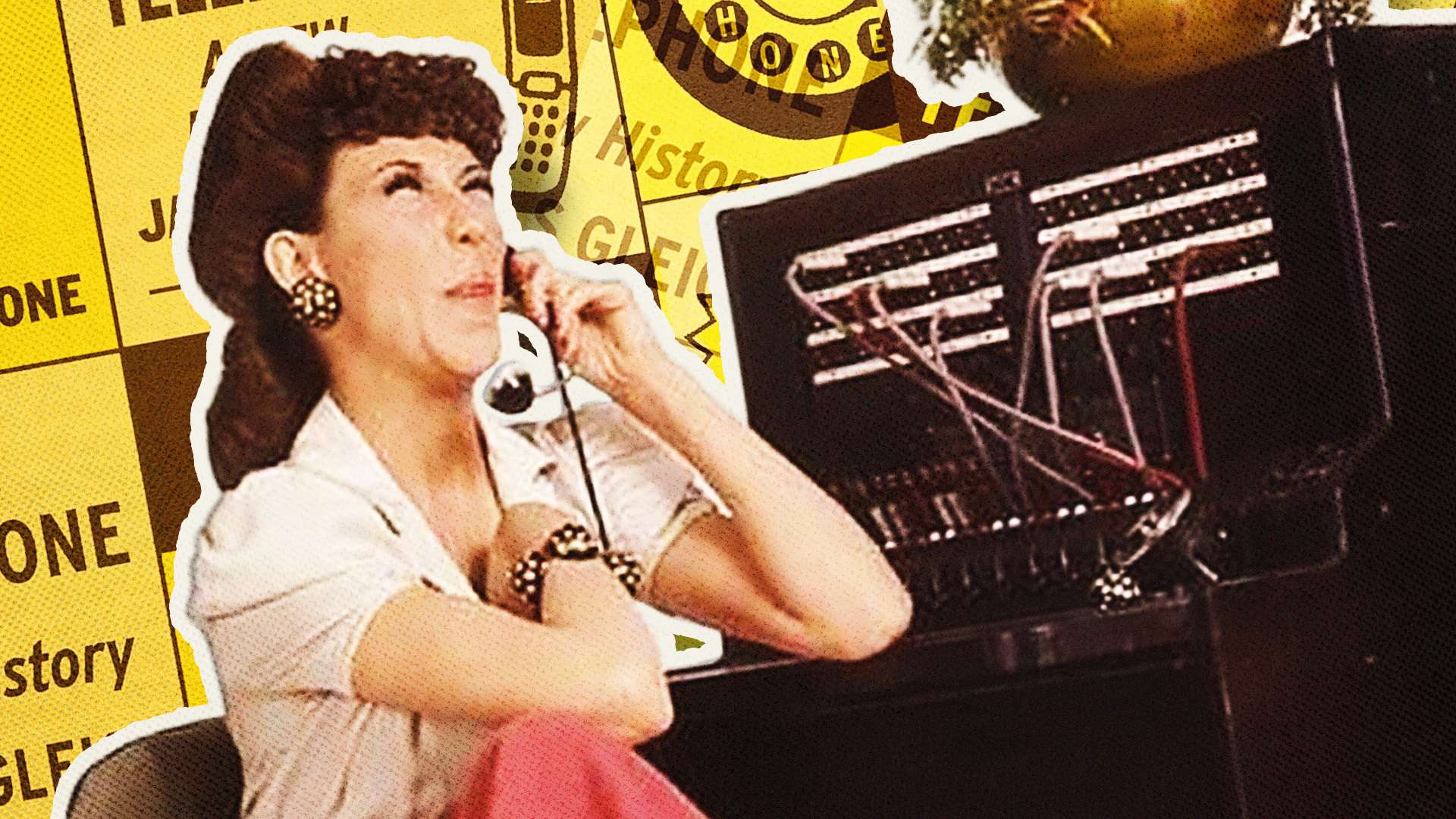
Women filled the operator ranks because “only women were suited to it”—they could sit still and be paid less, Gleick writes, per The Atlantic. During World War I, the U.S. Army hired 33 women for Telephone Unit No. 1, who shipped to France wearing armbands embroidered with “black telephone transmitters and yellow streaks of lightning,” The Atlantic reported.
An antitrust suit broke up AT&T in 1984. By then the telephone had redefined distance, privacy, and women’s entry into the workforce, The Atlantic reported. Today the device itself is fading. “Phones don’t ring, they vibrate or light up or play a tune,” Gleick observes, and a call is more likely a scammer than a friend.
Early Skepticism and Business Efficiency
Bell engineers dismissed their own creation as a snooze, dubbing it POTS for “plain old telephone service,” according to Gleick in Reason. The technology nevertheless promised dramatic savings: instead of New York businessmen sending errand boys with 5,000 daily messages, wired devices could recover 1,000 hours of labor, an “increase in business efficiency” Gleick describes as “beyond computation.”
Despite the productivity gains, the telephone was instantly chastised as a social menace, Gleick writes. George Bernard Shaw, then working for the Edison Telephone Company of London in 1879, snarked that “bellow[ing] your most private communications all over” obliterated “discretion,” and he dismissed his American counterparts as “deluded and romantic…liars, braggarts and hustlers.”
Bell Used Trial and Error to Develop Telephone
“He knew how little he knew,” Gleick writes, “and was undaunted,” proceeding by the “time-honored method of trial and error” and testing materials from iron and steel to mercury and plumbago. Gleick invokes “tinkerers and gadgeteers” as the drivers of innovation in this era.
When Bell demonstrated the device in Salem with Thomas Watson 18 miles away in Boston, “it seemed as if an electric thrill went through the audience,” Bell remembered. “They recognized for the first time—what was meant by the ‘Telephone.’ ” The Atlantic reports that Gleick asks what that recognition meant exactly, a question novelists like Twain and legions of pundits in the “Telephone Century” struggled to answer.
Telephone Created Technical Workforce for Women
Their service marked a new phase in women’s entry into the technical workforce the telephone had created.
James Gleick, the American author and historian of science whose work has chronicled the cultural impact of modern technology since the 1987 international bestseller Chaos: Making a New Science, brings his signature narrative nonfiction to the telephone. The Wall Street Journal has called him “a master” of historical narrative, esoteric theory, and humanizing scientists, a reputation cemented by the 2011 PEN/E.
O. Wilson and Royal Society Winton Prize winner The Information: A History, a Theory, a Flood. His decade as a New York Times science reporter and editor, profiling figures like Benoit Mandelbrot and Mitchell Feigenbaum, and his 1993 founding of The Pipeline, an early New York ISP, ground this history in firsthand experience of the digital revolution the telephone began.
Gleick ends at a disconnected phone booth in Japan, now a shrine “a place to think about the absent and the dead, who have no phone number,” The Atlantic reported. The telephone gave humanity its first taste of the virtual—a reality divorced from presence—and AI is “completing the emancipation from reality that the telephone began.”
Worth a look

Illinois GOP Reelects McCombie, Curran Despite Historic Election Losses
Illinois legislative Republicans reelected their top leaders Tuesday despite losing 11 seats in the midterm elections, extending Tony...

UCLA Hosts Delaware After Narrow Win Over Fullerton
UCLA hosts Delaware on Sunday at Pauley Pavilion after a 75-71 escape against Cal State Fullerton on Wednesday...

Iowa Sits 9-2 After 34-17 Win at Illinois
Iowa sits 9-2 overall and 6-2 in the Big Ten after a 34-17 win at Illinois on Nov....
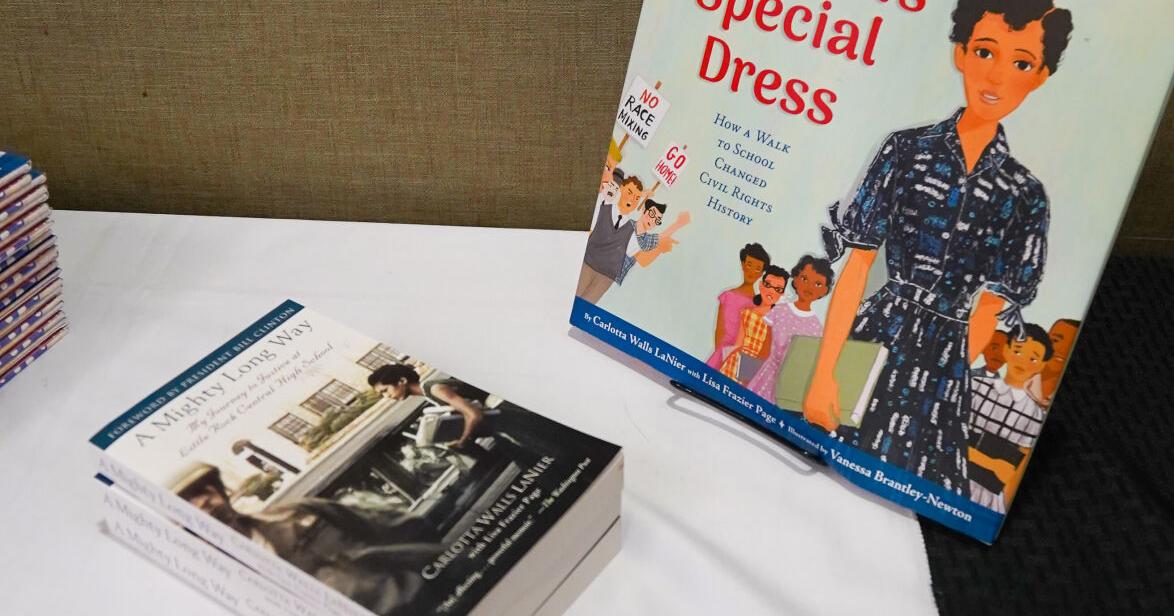
Little Rock Nine’s Carlotta Walls LaNier Publishes Children’s Book on $20 Dress
Carlotta Walls LaNier, the youngest of the Little Rock Nine, has published a children’s book centered on a...