
President Donald Trump’s second-term overhaul of the Department of Veterans Affairs has triggered staff departures and shortages at hospitals, according to an investigation by ProPublica.
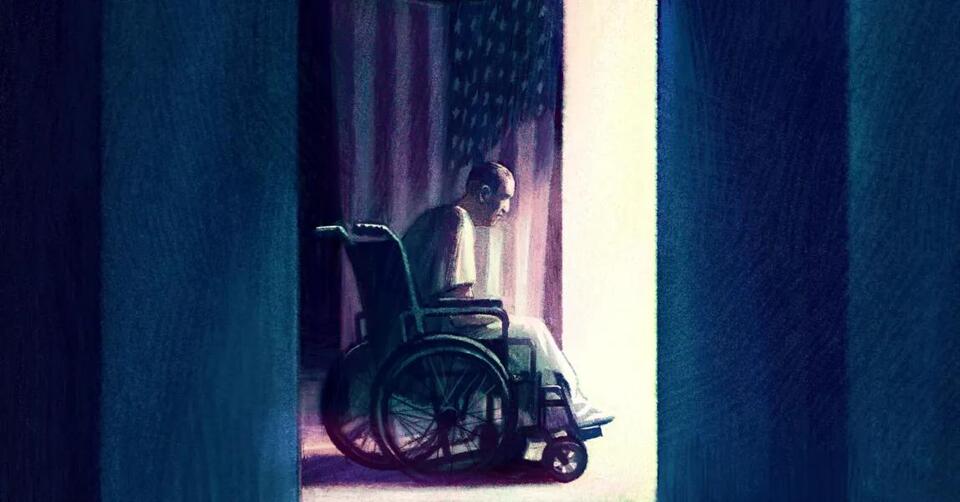
John Falchetto survived a harrowing tour in Vietnam where his river gunboat came under devastating rocket fire. This February, the 80-year-old veteran arrived at the Department of Veterans Affairs medical center in East Orange, New Jersey, suffering from piercing stomach pains.
A CT scan revealed his appendix had burst and turned gangrenous. Hospital doctors wrote that Falchetto required immediate surgery, but the facility’s operating room sat dark. Months earlier, the ventilation system had failed, and a short-staffed repair team left the surgical suite unusable, forcing Falchetto to wait seven hours for intervention.
Nothing at the East Orange facility had been normal since President Trump returned to office and targeted the massive agency. The VA provides healthcare to 9 million veterans through government-employed doctors and nurses, and studies have consistently shown it achieves better medical outcomes than private sector alternatives.
Shifting Patients to Private Care
The Trump administration has moved to kneecap the government-run healthcare system and shift veterans toward private doctors and hospitals. The administration argued that turning the VA into an insurer paying community doctors would cut needless bureaucracy and give veterans more choices.
“We love our veterans,” Trump said during an Oval Office photo op shortly after his inauguration. “We are going to take good care of them.”
Days later, a leaked memo revealed plans for sweeping job cuts at the agency. “Things need to change,” warned Doug Collins, Trump’s new VA secretary, in a video message to staff.
While pushback from veterans groups forced the administration to retreat from mass layoffs, officials pursued indirect staff reductions. The administration canceled union contracts, ordered remote staff back to offices, and offered early retirement incentives. Russell Vought, before becoming Trump’s chief of the Office of Management and Budget, stated in 2023 that the goal was to put federal employees in trauma so they would not want to come to work.
Thousands of Frontline Vacancies
Despite administration claims that frontline medical workers were immune from cuts, the upheaval prompted an exodus. Six months into Trump’s term, the department’s own data showed the agency had 3,800 fewer doctors, nurses, and mission-critical staff.
The East Orange VA Medical Center lost nearly a tenth of its workforce. A government watchdog report revealed that roles facing severe shortages at the facility tripled from 30 to roughly 90, including oncologists, surgeons, cardiologists, mechanics, and cleaners.
“It’s scary,” an East Orange administrator said in a meeting. “We have no one.”
The agency contended the report simply tracked candidate shortages rather than actual operational impacts.
“There’s actually an excitement about what’s going on,” Collins said in congressional testimony, adding that eliminated healthcare provider jobs were simply not needed.
Collapsing Internal Care
The staffing drain has restricted specialized treatments across the country. Wound care specialists have largely departed, blood clot technicians were missing for months, and radiation treatments were suspended in East Orange after a key specialist left.
“Care has gotten worse for the patients,” a doctor told ProPublica. “The services available. The wait times. We’re not providing the care that we wish we could.”
Similar crises emerged outside New Jersey. In Albuquerque, New Mexico, staff shortages forced the hospital to take beds offline and halt surgeries for severe heart attacks.
“Care is collapsing from the inside,” a longtime oncologist working with VA hospitals nationwide told ProPublica.
As internal care capabilities diminished, veterans were pushed into the private Community Care program. Government reports said that insufficient staffing left private networks overwhelmed and struggling with long wait times.
VA spokesperson Quinn Slaven defended the administration’s record, stating that the agency completed more appointments in fiscal year 2025 than in any year of the Biden administration. Slaven maintained that East Orange outperformed private hospitals on diabetes care and specific cancer screenings.
Family members expressed shock over the conditions uncovered by reporters. Tony Falchetto, whose brother John endured a wait for emergency surgery due to a closed operating room, expressed surprise about his loved one’s care.
Keep reading

CJ Schwan’s Builds $550 Million Production Facility in Sioux Falls
A $550 million private investment will bring a nearly 400,000-square-foot production facility to Foundation Park in Sioux Falls,...

Pawtucket Painting Class Offers Free Parking and Drinks Amid Construction
Free street parking and complimentary beverages await attendees at the painting class in Pawtucket, Rhode Island, as the...

Sean Sweeney becomes Charleston Chief Information Officer
Sean Sweeney took the helm as Charleston’s chief information officer, stepping into local government after leading global security...

Oklahoma Promotes Jason Witten to Offensive Coordinator
Oklahoma promoted Jason Witten to offensive coordinator for the rest of the season after firing Ben Arbuckle, Yahoo...