Central Arkansas companies are turning to artificial intelligence to automate spreadsheets, run financial analyses, and free up time for strategic growth through hands-on training provided by the University of Arkansas at Little Rock.
Businesses often lose valuable hours sorting through administrative tasks, weighing costs, and managing customer service routines. To address those bottlenecks, the university’s Corporate and Community Education division is tailoring artificial intelligence courses to fit the specific workflows of local organizations.
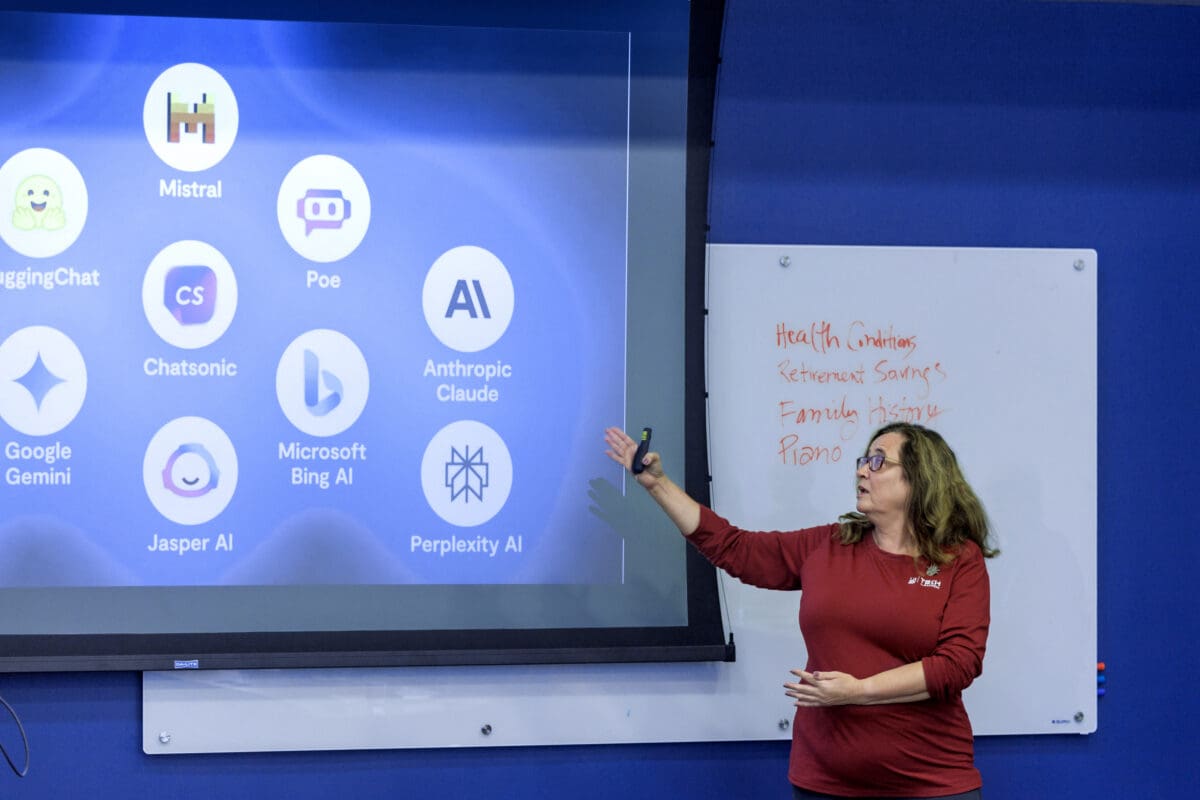
Marla Johnson serves as the tech entrepreneur-in-residence and AI workforce training coordinator at the university. Before leading any workshop, Johnson meets directly with corporate leaders to analyze their operational challenges and design custom sessions suited for participants ranging from novices to regular technology users.
“I really do my homework,” Johnson said. “I spend time understanding their business.”
Flake & Company and McLarty Automotive Group Streamline Operations
Commercial real estate firm Flake & Company enlisted Johnson’s help to manage routine administrative tasks, speed up financial analyses, and support lease pricing evaluations. Jessica Flake Dearnley, the principal broker and owner of the firm, noted the practical benefits of streamlining these behind-the-scenes workflows.
“Hopefully, we can focus on growth and ideas, and what’s next, and not get buried in the weeds,” Dearnley said.
At McLarty Automotive Group, the integration of artificial intelligence focused heavily on strengthening leadership and decision-making skills. Nicole Erlan, the company’s learning and development manager, collaborated with the university to incorporate AI tools into the organization’s sales leadership program.

Employees quickly found unexpected applications for the technology following the initial sessions. Some staff members utilized AI as an executive coach to refine their leadership styles, while others deployed the models to dissect complex business reports.
Simultaneously, the automotive group’s internal IT department worked to establish strict security parameters around the new tools. Kirby McGill, the IT director for McLarty Automotive Group, researched large language models such as Microsoft Copilot, Claude, and ChatGPT to ensure corporate data remained secure.
“One of the biggest challenges for me was figuring out what this does to our security posture and how we protect McLarty data,” McGill said. “A priority is helping people understand why those security guardrails are in place while still giving them the tools to get results.”
Tarco Automates Complex Financial Workbooks
Tarco, one of the largest independently owned manufacturers of roofing and building envelope products in North America, used the university training to overhaul its financial reporting systems across multiple regional locations. Steve Ratcliff, the company’s CEO, had already explored basic artificial intelligence applications before working with Johnson.

The specialized instruction allowed Tarco to build macros that automated manual data entries across a workbook containing more than 60 worksheets. Tasks that previously took at least two hours now take about 30 minutes, and file sizes were reduced by nearly half after removing outdated information.
Ratcliff also used the technology to evaluate commercial loan scenarios and generate amortization schedules in about 45 minutes instead of much of a day. The company also developed a logistical tool that weighs production costs, freight rates, and product availability between its Texas and Pennsylvania plants to fulfill recurring weekly customer orders.
“AI is not replacing the institutional knowledge and experience already inside Tarco; it is helping us apply that knowledge more effectively while people remain responsible for validation, judgment and the final decision,” Ratcliff said.
Johnson continues to push for wider adoption across the region as local industries adapt to shifting technological demands. “I want every company in Central Arkansas to take advantage of these classes,” she said. “They will help you and your team be prepared for now and what’s to come.”

Corben Hall Rushes for 285 Yards in Doddridge County Playoff Win
Doddridge County’s high-powered offense proved unstoppable on Friday night, as the Bulldogs secured a 52-16 victory over Lincoln...

Why Waiting Until Spring to Buy a Home in Topeka Could Cost You More
Waiting until spring to buy a home in Topeka might feel like the natural choice, but seasonal data...

Rangers Fall In Season Opener To Upper Iowa – Parkside Athletics
Parkside opened its basketball season on Friday night with a 78-68 loss to Upper Iowa at Dorman Memorial...

Springfield Catholic Diocese Looking at ‘Classical’ Approach to High School Education
Families across central Illinois are weighing a proposal from the Catholic Diocese of Springfield to establish a new...