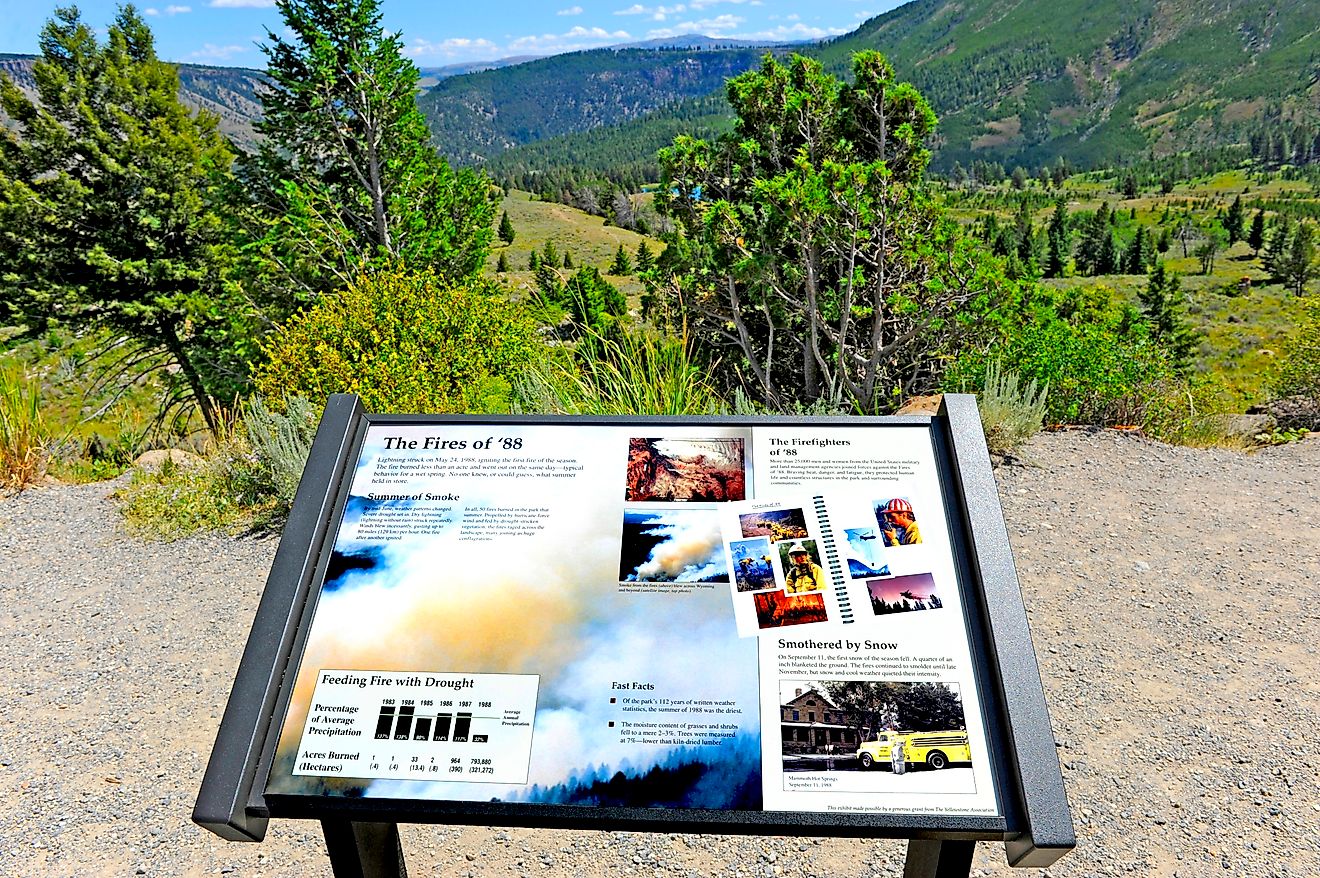
The 1988 Yellowstone fires burned 793,880 acres — 36% of the national park — yet new growth appeared within days in some burned areas. Decades later, a patchwork of young forests, meadows and shrublands covers the scars, shaped by fire intensity, seed sources and the park’s long history with flame.
Lightning storms ignited fires across the Greater Yellowstone Ecosystem during a summer that saw almost three months without measurable rainfall, World Atlas reported.
Fire intensity varied across the area
Unburned patches preserved mature trees, vegetation and shelter for wildlife, helping maintain habitat and providing seed sources for surrounding areas.

Lodgepole pine adaptations drove early regrowth
Some lodgepole pines produce serotinous cones, which remain sealed with resin until heat opens them. The burned area provided open space and nutrients, though regeneration varied based on fire severity, seed supply, soil conditions and moisture.
Grasses and wildflowers returned before trees
Smaller plants responded much sooner than trees. Grasses, wildflowers and other vegetation began returning as soon as moisture allowed, many surviving because their roots and underground growing structures escaped the worst of the heat.
The National Park Service attributes abundant wildflower growth in the first few years partly to favorable precipitation and the short-term release of nutrients from burned vegetation. These plants helped cover exposed ground long before young trees could rebuild a forest canopy.
Satellite imagery documented decades of change
By 2008, many areas showed substantial regrowth, though recovery varied across the burn scars.
Fire policy shifted after the 1988 season
Before 1988, Yellowstone — a 9,000 km² expanse of forests that is 80% lodgepole pine — had a natural fire program launched in 1972 that allowed lightning-caused fires to burn. The unprecedented drought and wind of 1988 produced fires that burned more square kilometers than anyone had ever seen.
Yellowstone did not simply revert to its previous state.
Keep reading

Golf Channel Airs 2026 Masters, Women’s Amateur Films; DP World Tour Opens
Golf Channel will air the official films of the 2026 Masters Tournament and the Augusta National Women’s Amateur...

Pritzker Rejects Trump Voucher Program, Citing Federal Constraints
Gov. JB Pritzker announced Tuesday that Illinois will not participate in the Trump administration’s Federal Scholarship Tax Credit...

Democrat Victoria Broderick Wins Tennessee U.S. House Seat, Party Nears 1990s Majority High
Democrat Victoria Broderick has won Tennessee’s 4th Congressional District, giving Democrats 259 House seats — the party’s largest...
Older Woman Robbed at Gunpoint Outside Ishkooda Church; Teens Located Within Two Hours
A birthday celebration at Mount Zion Baptist Church in Ishkooda turned into a crime scene Sunday when an...