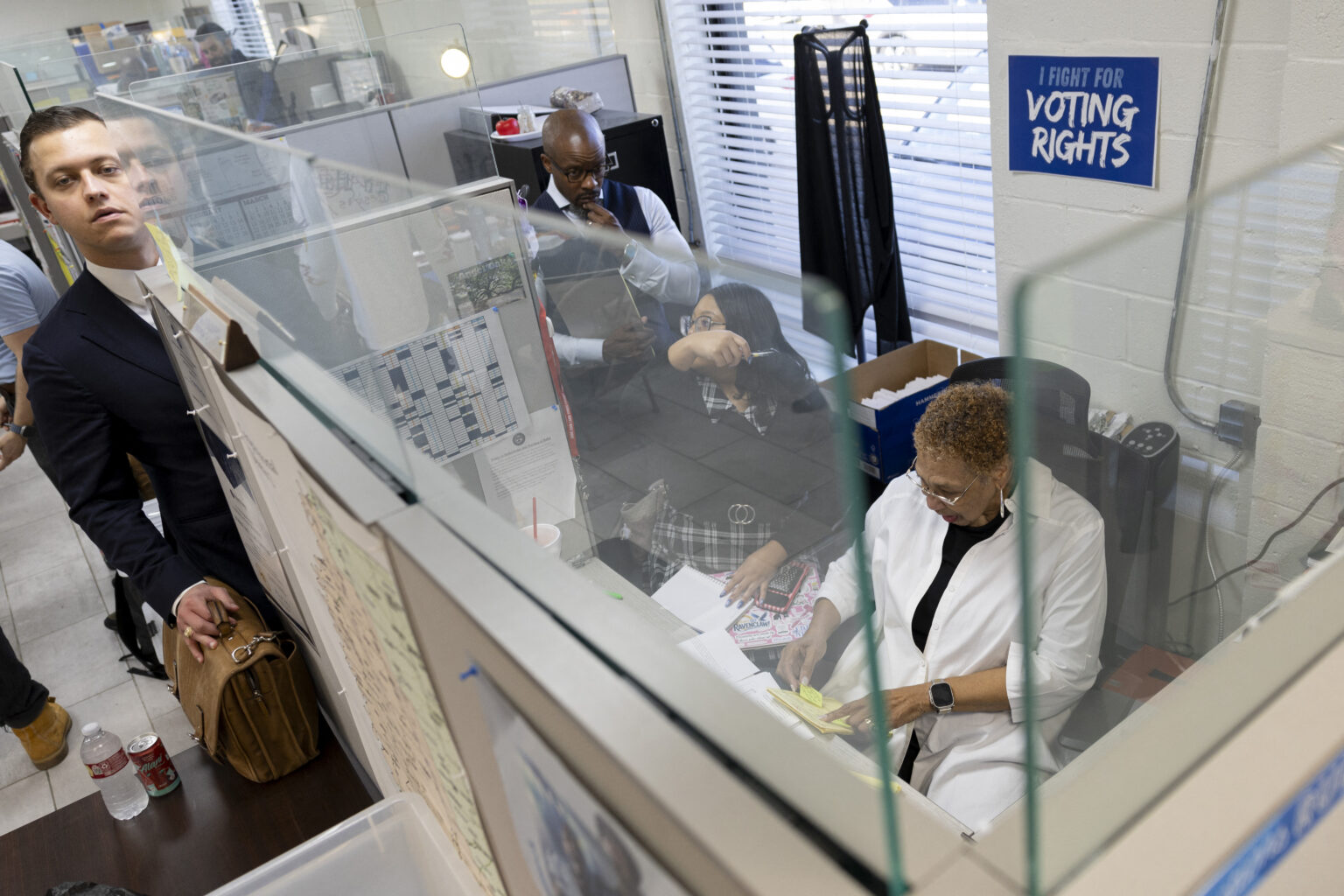
Tensions rise in Hinds County as Senate race hangs on affidavit ballots
Lawyers for Senator Cindy Hyde-Smith (R) aggressively challenged election workers in Hinds County on Monday night, as the Mississippi U.S. Senate race remains undecided.
Democrat Scott Colom holds a lead of approximately 2,500 votes, according to data reported Tuesday morning, but the final outcome likely rests on thousands of outstanding affidavit and absentee ballots.
The confrontation, reported by Democracy Docket, erupted during the processing of provisional ballots in Mississippi’s most populous county. Coy Westbrook, an attorney observing for the National Republican Senatorial Committee (NRSC) and the Hyde-Smith campaign, loudly accused Election Commissioner Bobbie Graves of discussing ballots with Commissioner Jermal Clark outside the view of observers.
Westbrook invoked “public records law” during the exchange, potentially referencing state statutes that mandate public observation of the ballot counting and canvassing process. The incident may indicate that the Hyde-Smith campaign is positioning itself to pursue legal action, as Mississippi lacks an automatic recount law and requires candidates to challenge results through the court system.
A standoff over observation and privacy
The atmosphere in the Hinds County election office turned volatile as the verbal dispute between observers and officials grew loud enough for the entire room to hear. After Westbrook accused Graves of having a private conversation regarding ballot acceptance, the commissioner expressed her frustration with the proceedings.

“I’m through. I’m through for the night,” Graves said to the office. “No conversation. No nothing. I’m done for the day. Anybody have any questions? Don’t even ask me right now.”
Following the outburst, Graves offered to let the observers watch her pack her personal belongings, to which Westbrook replied, “That’s OK, it’s all good, commissioner.” It remains unclear under Mississippi law whether the guaranteed powers of observation extend to private discussions held between election commissioners.
Charles Douglas III, the executive director of the progressive organization Common Power, witnessed the scene while observing for the Colom campaign. Douglas suggested the behavior of the Hyde-Smith observers was intended to intimidate the commission, stating that Westbrook appeared to be “performing” at that point.
“I think there’s a little bit of everything — a little bit of intimidation, a little bit of can we find some stuff,” Douglas told Democracy Docket.
The battle over provisional ballots
The intensity in Hinds County reflects a broader legal tug-of-war occurring across the state. Last week, NRSC lawyers sent a letter to Mississippi election commissioners demanding the separation and preservation of all affidavit ballots cast in the election.
In response, the Colom campaign and the Democratic Senatorial Campaign Committee issued their own warnings, arguing that the NRSC’s demands have no basis in state law and would force officials to violate voter rights.

The stakes for these specific ballots are immense. Because Hinds County is a Democratic stronghold, the processing of these thousands of provisional votes could shift the narrow margin currently favoring Colom. The administrative process for these ballots follows a strict sequence:
- The Hinds County Election Commission is expected to finish processing affidavit ballots by the end of Tuesday.
- Accepted ballots will be referred to the Hinds County Resolution Board on Wednesday.
- The Resolution Board will meet to officially determine which affidavit ballots are accepted for the final count.
Hinds County officials anticipate reporting the final, verified count on Wednesday. While the observers for the Hyde-Smith campaign and the attorney for the Hinds County Election Commission, Ray Chambers, did not respond to requests for comment, the legal questions surrounding the observation process and ballot eligibility remain unresolved.
It is unclear whether the tension in the counting room indicates a constitutional challenge or is merely the result of a razor-thin margin. The final decision on which voters’ voices will be counted rests with the Hinds County Resolution Board.
Keep reading
- Portland’s Camping Ban: A Path to Shelter or a New Obstacle to Housing?
- Oklahoma Pastor Elmer Flores Sentenced to 30 Years for Human Trafficking
- Peanut Allergy Retesting: 271 of 778 Infants Passed a Supervised Challenge (daybreakwire.com)
- Habas steel plant explosion in western Turkey kills 16 workers (newsarchyuk.com)

Portland’s Camping Ban: A Path to Shelter or a New Obstacle to Housing?
For Renee Crisp, a cold April morning in Portland didn’t bring the promise of a fresh start. Instead,...

Oklahoma Pastor Elmer Flores Sentenced to 30 Years for Human Trafficking
Elmer Flores sentenced to 30 years for labor trafficking An Oklahoma man received a 30-year prison sentence following...

New Vietnamese Coffee and Pastry Shop Crème Coffee to Open in Fargo
A new taste of Vietnam arrives in Fargo Tan Tran and Sophie Le are preparing to open Crème...

Top Events in New Jersey: November 10-16, 2026 Guide
Cultural offerings define New Jersey's mid-November schedule New Jersey's arts and entertainment scene features cinematic activism, classic rock,...