West Virginia’s five IBEW Inside halls offer journeyman base rates ranging from $39.01 an hour in Parkersburg to $44.88 in Clarksburg, with 13 open positions posted as of November 28, GoHereBro reported.
The governing rule, 103 CSR 5, took effect May 1, 2024, replacing the retired 87 CSR 2 and running through August 1, 2029 under the State Fire Marshal Regulatory and Licensing Division.
It requires every wireman on the tools to hold an individual state license; a contractor license does not cover employees, and unlicensed work is a misdemeanor carrying fines of $100 to $500 for a first offense and $500 to $1,000 for each repeat offense, with each day treated as a separate violation.
“Every wireman needs an individual license,” the rule says in section 3.1, making the West Virginia Electrical License a hard dispatch requirement on active calls such as United’s three-man request out of Local 141 in Wheeling. A single statewide card covers every city and county, and a licensed Master or Journeyman may supervise no more than three helpers at once.

Exemptions are narrow: direct employees at a chemical, coal, or manufacturing plant owned by their employer, plus public utility and government employees on their employer’s facilities. Outside signatory contractors dispatched into mills, power stations, or industrial plants are not exempt.
IBEW travelers have four paths to licensure. Formal reciprocity without examination applies to nonresidents holding a current, exam-based equivalent license from a reciprocating jurisdiction — Virginia and Kentucky maintain Journeyman and Master reciprocity, while Ohio, Maryland, and North Carolina agreements focus on Master and Contractor tiers.
Applicants must submit a written verification of good standing from their issuing board, and anyone who previously failed a West Virginia exam or let a prior West Virginia license expire is ineligible.
A one-time, nonrenewable 90-day temporary license is available for $50 to electricians who completed a USDOL-registered apprenticeship such as an IBEW JATC program, with at least one year of experience for Journeyman or two years for Master.
The standard exam route requires a $25 nonrefundable application review fee, a 70% passing score on the NEC-based test, and a $50-per-year license fee upon passing. Resident universal recognition applies only to those establishing West Virginia residency.

All West Virginia electrician licenses, including reciprocal ones, expire June 30 each year regardless of issuance date. Renewal costs $50 per year for up to three years; missing the deadline triggers a $50 late penalty, and working while expired is illegal. A previously licensed electrician whose license was never revoked can reinstate within five years without retesting by paying double the current fee.
As of November 28, Local 317 in Huntington lists 10 journeyman openings at the Nucor Steel Mill at $43.55 an hour on a 5x10s plus Saturday schedule for a four-to-five-month run. Local 141 in Wheeling posts three journeyman positions with United at Mitchell at $39.25 an hour on 5x8s with possible overtime, requiring OSHA-10 and a West Virginia Electrical License.
Two West Virginia halls carry active openings as of November 28, 2026: IBEW Local 317 in Huntington posts 10 JW positions at the Nucor Steel Mill, and IBEW Local 141 in Wheeling posts 3 JW positions with United at Mitchell.
| Local | City | JW Base Rate | Total Package | Open Calls |
|---|---|---|---|---|
| Local 596 | Clarksburg | $44.88/hr | 0 | |
| Local 466 | Charleston | $44.73/hr | 0 | |
| Local 317 | Huntington | $43.55/hr | 10 | |
| Local 141 | Wheeling | $39.25/hr | 3 | |
| Local 968 | Parkersburg | $39.01/hr | 0 |
Illustrative weekly gross at Local 317 on a 58-hour Nucor schedule reaches $2,917.85 before taxes, working dues, and lodging, with employer-paid H&W, pension, and NEBF contributions paid on top of the check.
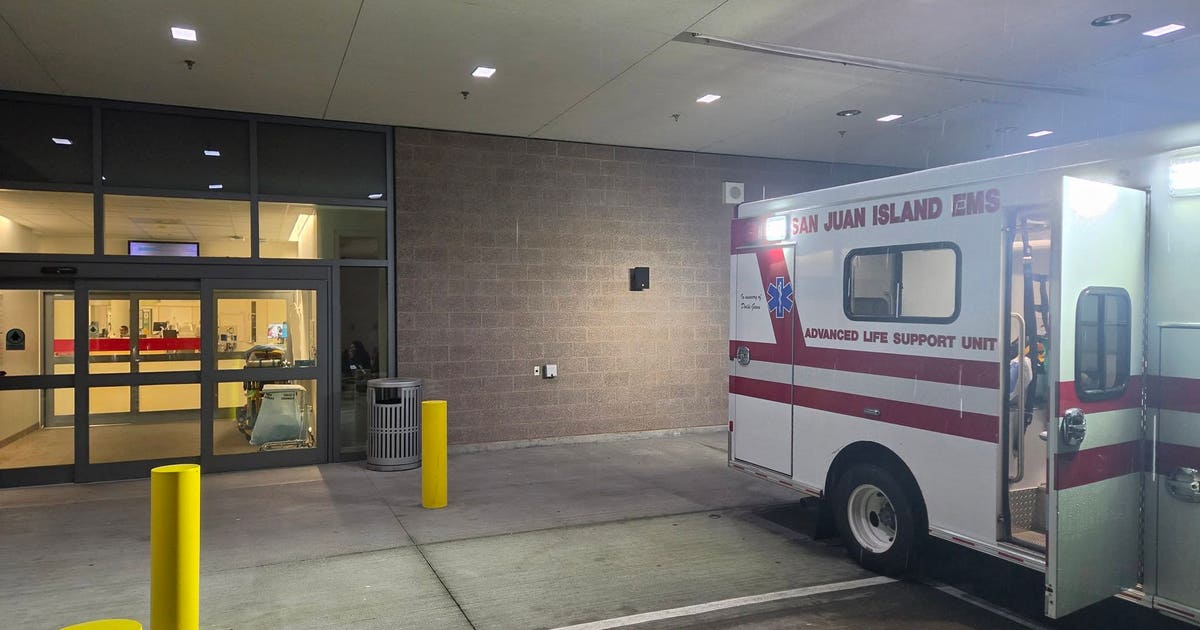
Washington State Ferry Turns Back for Premature Baby to Seattle Children’s Hospital
A Washington State Ferries vessel turned back to Friday Harbor late Wednesday night to carry a critically ill...

8-12 Foot Surf Drops to 6-8 Feet on Big Island Shores Through Sunday
A north-northeast swell that filled in earlier Saturday has likely peaked, with offshore buoy 51000 showing peak energy...

The New Orleans Pelicans Are Being Outscored by 7.5 Points per Game Through 20 Contests
The New Orleans Pelicans are being outscored by 7.5 points per game through 20 contests. New Orleans has...

Montana Beats Incarnate Word 48-32 in Program-Longest Playoff Game
Montana opened the FCS playoffs with a 48-32 victory over Incarnate Word on Saturday at Washington-Grizzly Stadium in...