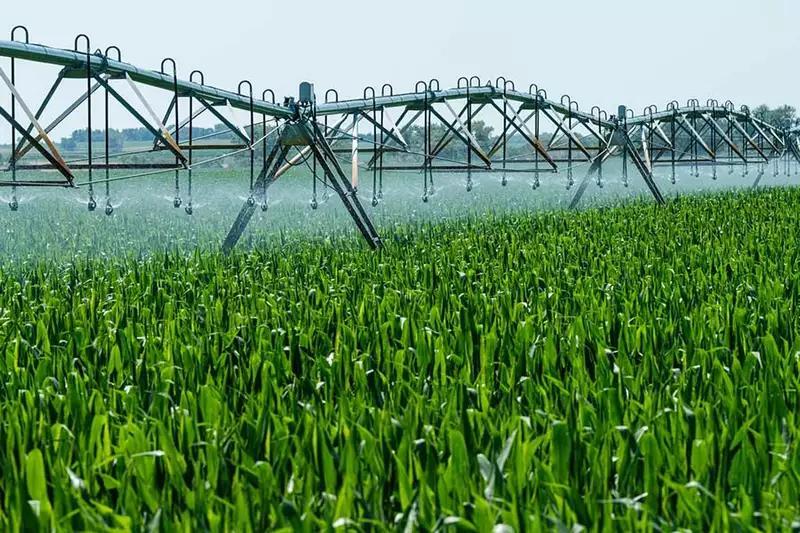
Idaho farmers walked into the 2026 Fall Water Summit at Boise State University on Tuesday already knowing the score: 42 days of water, light bushels, and every acre claimed on crop insurance.
Hydrologists and canal managers delivered a blunt warning — another warm winter could compel growers to reconsider what they plant, how they irrigate, and in some cases whether they farm at all in 2027, EastIdahoNews.com reported from the summit’s opening day.
Troy Lindquist, chief hydrologist with the National Weather Service, told the crowd that precipitation was near normal across much of Idaho, but warmer temperatures stole the snowpack. Instead of banking moisture in the mountains for a slow spring melt, the water fell as rain or melted early, leaving reservoirs short when irrigation season arrived.
“We ran our pivots the whole time and ran out of water,” said J.D. Messner, a board member with the Salmon River Canal Company. “When we harvested our winter wheat, our bushel was light, which is an indication we didn’t water it long enough, but we did the best we could.”
Reservoirs at 19 percent
Brian Stevens of the U.S. Bureau of Reclamation put numbers to the anxiety: Upper Snake River Basin reservoirs sat at 19 percent full on average, just 44 percent of normal. To refill them by next irrigation season, the basin would need 110 to 120 percent of normal snowpack — a tall order in any year.
Layer an El Niño pattern on top of that deficit and the forecast turns murky. Erin Whorton, a hydrologist and water supply specialist with the Natural Resources Conservation Service, said the developing El Niño could be the strongest since 1950, according to the National Oceanic and Atmospheric Administration.
But BSU Geosciences Professor Alejandro Flores cautioned that El Niño’s Idaho impacts are notoriously hard to pin down, making 2027 a genuine unknown.
“These warm winter conditions are detrimental. When it is warm, we do not collect water in the reservoir … which means it will go in the ground. We need that cold weather to hold snow long enough at lower elevations to cover more acres,”
Survival strategies
Panelists laid out the playbook for stretching a shrinking supply. Messner said crop insurance covered every single acre this year — a survival mechanism growers should plan for again. He also recommended planting low-water-demand crops early to push the supply further.
Doug Finkelnburg with the University of Idaho Extension office in Lewiston floated summer fallow — simply not farming ground to preserve moisture — as an option in the driest areas. He pointed to building soil organic matter to “sponge up” water, though he warned it takes time and carries real trade-offs.
Finkelnburg added a second worry: warmer winters let insects and weeds survive in regions where cold once kept them in check.
Shetler said pipeline improvement projects are underway now to conserve every drop, but infrastructure only goes so far without the snow.
Fish hatcheries get $650,000
The Idaho Water Resource Board voted to approve $650,000 for the U.S. Army Corps of Engineers to study options for a new water-supply pipeline that would aid production of imperiled Chinook salmon and steelhead at the Clearwater Fish Hatchery and Dworshak National Fish Hatchery. The two hatcheries have a combined production target of 5.8 million juvenile Chinook salmon and 2.9 million juvenile steelhead.
The next dated milestone is the 2027 irrigation season — and whether the mountains hold enough cold to fill the canals.

They Have Zero Fear’: Aggressive Coyotes Stalk Portland Suburb, Neighbors Say
The coyotes in Raleigh Hills and Garden Home have stopped running when they see people. They stand their...

Minneapolis Ranks 31st on WalletHub Vice Index, 5th in Midwest
Minneapolis landed at No. 31 on WalletHub's latest Vice Index with a score of 43.91 out of 100,...

UCLA 3.5-Point Road Favorite at Michigan as Bruins Chase 10-0 History
UCLA sits at 10-0 for the third time in program history and the first since 1998, yet the...

Massachusetts Sees 60s Through Weekend Before Uncertain Coastal Storm Monday
Massachusetts will string together nearly a week of 60-degree afternoons before a coastal storm threatens heavy rain and...