
Imnaha, an unincorporated community in Wallowa County, Oregon, has evolved from an isolated frontier settlement into a recreation hub serving as the gateway to the upper Hells Canyon region, with a recorded population of 167 in 2024.
Located at the confluence of Big Sheep Creek and the Imnaha River, about 30 miles northeast of Joseph, the community takes its name from Imna, a local Native American sub-chief, meaning “land ruled over by Imna.”
The first Euro-American settler near the site was Jack Johnson, who raised alfalfa hay and later planted sugar cane, establishing a mill to process it into molasses. Another early settler, Alexander B. Findley, became the first postmaster when a post office opened on Jan. 4, 1885.
The townsite was not established until 1901 and was platted the following year. A settlement grew around the Stonehouse Store, a converted residence, followed by a newer store built around 1904, a saloon, a hotel and a blacksmith shop.
In 1900, a man named Kernan introduced sheep to the valley, shifting livestock operations from cattle to sheep. The community remained extremely isolated, accessible only by a steep, rugged road where stage operators braved deep mountain snows to haul mail, passengers and supplies.
Imnaha’s isolation defined its early decades; after the 1901 townsite platting, stage operators alone braved a steep, rugged mountain road to haul mail, passengers and supplies through deep snows. The shift from sheep back to cattle during the Great Depression coincided with the 1935 completion of a better road, which opened the valley to irrigation-fed produce farms and orchards and, crucially, to automobile traffic.
That access transformed the settlement into the recognized “gateway to” the upper Hells Canyon region, prompting construction of a steep road to canyon overlooks and the Forest Service’s establishment of a station and the Hat Point fire lookout on the mountain above the community.
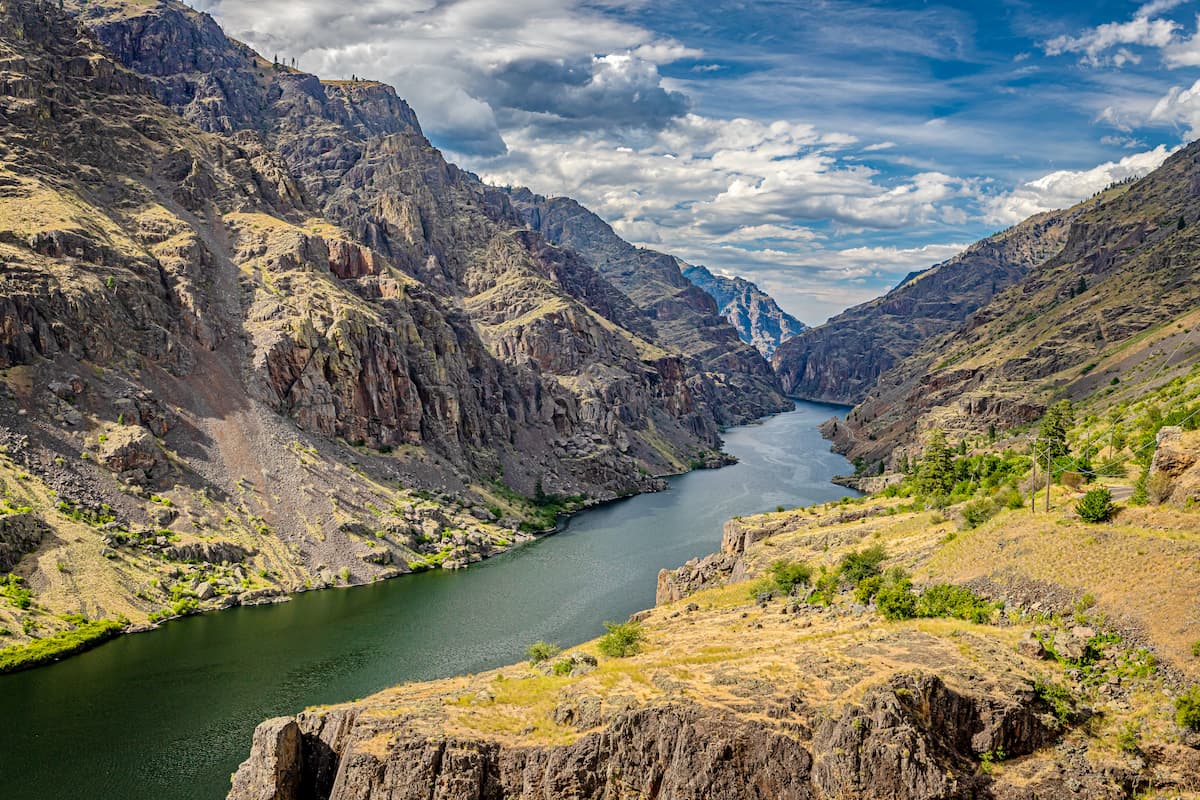
The Great Depression prompted a shift back to cattle as sheep operations declined. A better road completed in 1935 eased travel, enabling the establishment of produce farms and orchards supported by irrigation from the Imnaha River. Automobile traffic and growing recreation interest eventually led to Imnaha’s designation as the “gateway to” the upper Hells Canyon region.
A steep road was constructed from the community to overlooks above the canyon, and the Forest Service established a station and a fire lookout at Hat Point on the mountain above Imnaha. Today, the community serves as a center for recreation enthusiasts exploring the canyonlands.
Related reading

Raiders’ Brock Bowers Questionable for Sunday Night at Cleveland
Las Vegas Raiders tight end Brock Bowers did not practice Friday and is listed as questionable for Sunday...

Oilers Prospect Austin Roest’s Girlfriend Diagnosed With Stage IV Cancer
Austin Roest's hockey career took a backseat to a personal fight this fall. The 22-year-old Edmonton Oilers prospect's...

Colorado Man Arrested in Santa Fe After Machete Confrontation in Storm Drain
Santa Fe police arrested a 46-year-old Colorado man Saturday morning after a confrontation in a storm drain near...

Old Fox Books Annapolis Marks 10 Years as Community Hub
Old Fox Books, an independent bookstore on Maryland Avenue in Annapolis, will mark its 10th anniversary on Small...